Trump’s Surprising Stance on Inflation Gives New Fed Chair Kevin Warsh Rare Breathing Room
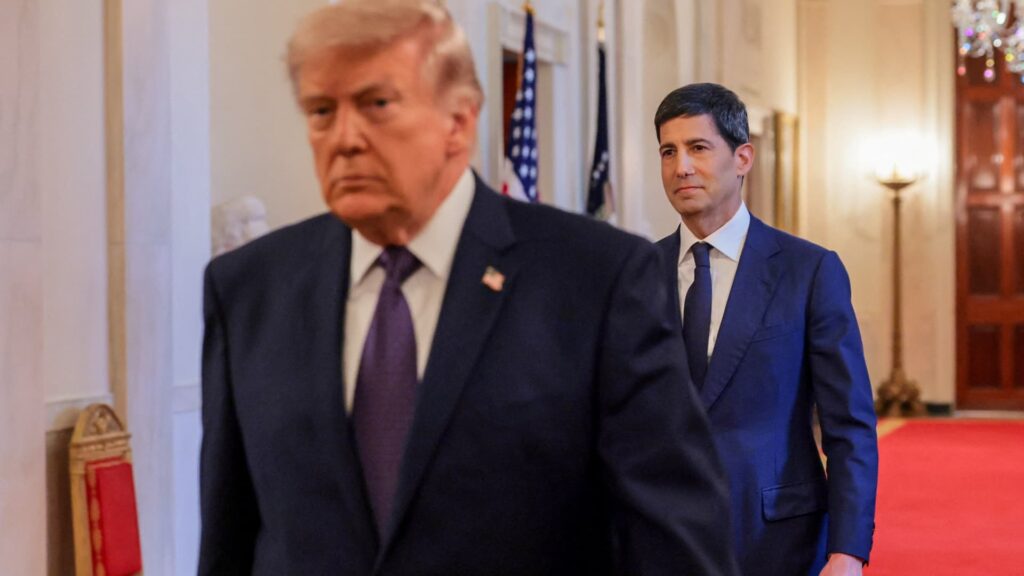
Table of Contents
A Shift in the Political Winds
In a reversal of the public hostility that defined his relationship with former Federal Reserve Chair Jerome Powell, President Donald Trump appears to be granting his successor, Kevin Warsh, an unexpected degree of autonomy. Following the release of Bureau of Labor Statistics data showing annualized inflation jumped to 4.2%, Trump offered a response that would have been unthinkable during the Powell era: “I love the inflation,” he remarked in the Oval Office.
For Warsh, who faces his first rate-setting meeting next week, these comments provide a critical political shield. During the Powell years, the White House was a source of constant pressure, with Trump frequently calling for deep, rapid interest rate cuts and accusing Powell of “spite” and incompetence. Now, as inflation hits its highest level in three years, the president’s lack of alarm suggests that Warsh will not be forced into a premature rate cut to satisfy the administration’s optics.
The Geopolitical Pressure Cooker
The current economic climate is complicated by more than just domestic price hikes. Since March, conflict in Iran has severely disrupted energy markets, with tankers unable to transit the Strait of Hormuz. This bottleneck has pushed energy costs higher, complicating the Fed’s mandate to stabilize prices.
Several Fed officials, including Dallas Fed President Lorie Logan and Cleveland Fed President Beth Hammack, have signaled that they are hesitant to cut rates in this environment. In some cases, they have suggested that further rate hikes might be necessary to counter the volatility. Market odds currently favor the Fed holding the short-term interest rate steady at 3.5%-3.75%, maintaining the plateau established in December.
Warsh is leaning into a strategy known in central banking as “looking through” a supply shock. This approach involves ignoring temporary, external price spikes—such as those caused by the Iran war—to focus instead on the underlying, generalized trend of inflation. During his April confirmation hearing, Warsh emphasized that while AI advancements could eventually justify lower rates, the immediate “inflation risk is still something that’s being talked about around kitchen tables and boardrooms.”
The “Independence” Honeymoon
The contrast between the current and previous Fed administrations is stark. Trump’s attempts to undermine Powell went beyond rhetoric; they included efforts to fire Fed Governor Lisa Cook over mortgage allegations and supporting a criminal investigation into the Fed’s office renovation costs led by U.S. Attorney Jeanine Pirro. Both matters remain entangled in the court system.
By contrast, Trump has publicly championed Warsh’s independence. During the May 22 swearing-in ceremony, Trump told Warsh to “do your own thing and do a great job.” This shift may be strategic. Having exhausted most legal and political avenues to force Powell’s hand, Trump may find more success through a cooperative, albeit independent, relationship with Warsh.
Warsh has already established a working rhythm with the administration, maintaining regular meetings with Treasury Secretary Scott Bessent. While the White House has declined to confirm whether specific discussions regarding the latest CPI data took place between the President and the Fed Chair, the public alignment on the “great” nature of the recent numbers suggests a coordinated effort to avoid market panic.
The June 17 Deadline
The industry is now looking toward June 17, when Warsh is scheduled to hold his first official press conference. This appearance will serve as the first real test of whether Warsh will maintain a strictly data-driven approach or if the “honeymoon” with the White House will lead to a softer, more administration-aligned monetary policy.
If Warsh chooses to hold rates steady despite political pressures, he will be doing so with a rare asset: the explicit, if surprising, permission of the President to let inflation run its course.