Trump Claims ‘Love’ for Rising Inflation as CPI Hits Three-Year Peak, Citing Secret Oil Operations
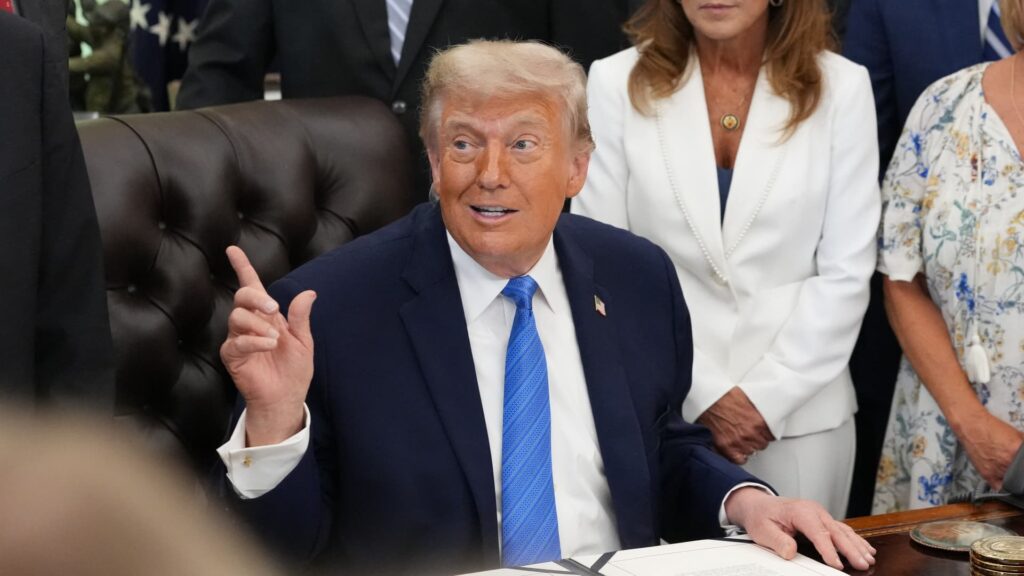
Table of Contents
Economic Volatility Meets Oval Office Rhetoric
President Donald Trump has sparked a new wave of political and economic debate after stating he “loves” the latest inflation figures, despite new data showing the Consumer Price Index (CPI) has hit a three-year high. Speaking to reporters in the Oval Office on Wednesday, the President dismissed concerns over the annual inflation rate climbing to 4.2%, describing the numbers as “great.”
The comments come at a precarious moment for the administration. While the Bureau of Labor Statistics (BLS) reported that core inflation—which strips out the volatile food and energy sectors—remained steady at 2.9% in line with economist forecasts, the headline number reflects a tangible increase in the cost of living for the average American consumer.
The ‘Secret’ Oil Strategy
The most perplexing aspect of the President’s remarks was his attempt to link global inflation and domestic pricing to undisclosed military operations in the Middle East. Trump claimed that inflation would soon “come down like a rock” once the conflict with Iran concludes, suggesting that U.S. forces have been systematically neutralizing Iranian oil capabilities.
“You know what I really love? I love the inflation. You know why?” Trump asked, before claiming that the U.S. has been “taking out millions of barrels of oil” and destroying ships under the cover of darkness. He specifically cited a recent operation involving 22 ships, claiming they were targeted because they lacked radar capabilities. According to the President, these actions are the primary driver behind oil currently trading at $85 a barrel.
However, the narrative of a secret campaign to deplete Iranian oil reserves is not supported by the administration’s own energy officials. Energy Secretary Chris Wright, testifying before Congress on the same day, appeared blindsided by the claim. Wright stated he was unaware of any operations involving the removal of millions of barrels of oil from Iran. While he acknowledged that the U.S. military has been escorting tankers through the Strait of Hormuz—a critical chokepoint between Iran and Oman—to ensure the flow of global commerce, he did not confirm the destructive operations described by the President.
Political Fallout and Market Implications
The President’s admission of “loving” inflation has provided immediate ammunition for political opponents. Democratic lawmakers and strategists were quick to amplify the footage on social media, framing the comments as an indifference to the financial struggles of working-class families. Illinois Governor JB Pritzker took to X, asserting that the struggle of families to afford food is viewed as a “joke” by the White House.
Beyond the political theater, the comments raise questions about the administration’s communication strategy regarding energy security. By attributing price fluctuations to secretive military strikes rather than systemic economic factors or Federal Reserve policy, the President is pivoting away from traditional economic discourse. For market analysts, the disconnect between the President’s claims and Secretary Wright’s testimony creates an ambiguity that can lead to volatility in energy futures.
This development follows a pattern of unconventional economic commentary from the President. In May, he previously stated that he does not focus on the “financial situation” of Americans, prioritizing the prevention of Iran obtaining nuclear weapons over short-term domestic economic anxiety.
As the November elections approach, GOP lawmakers are reportedly concerned that this narrative—and the reality of rising prices—could alienate swing voters and threaten the slim Republican majorities in both the House and Senate. The tension between the President’s optimistic view of inflation and the reality of the CPI data suggests a deepening rift between the administration’s rhetoric and the economic experience of the electorate.