Trump Claims Breakthrough with Hezbollah: A Diplomatic Gamble or a Fragile Truce?
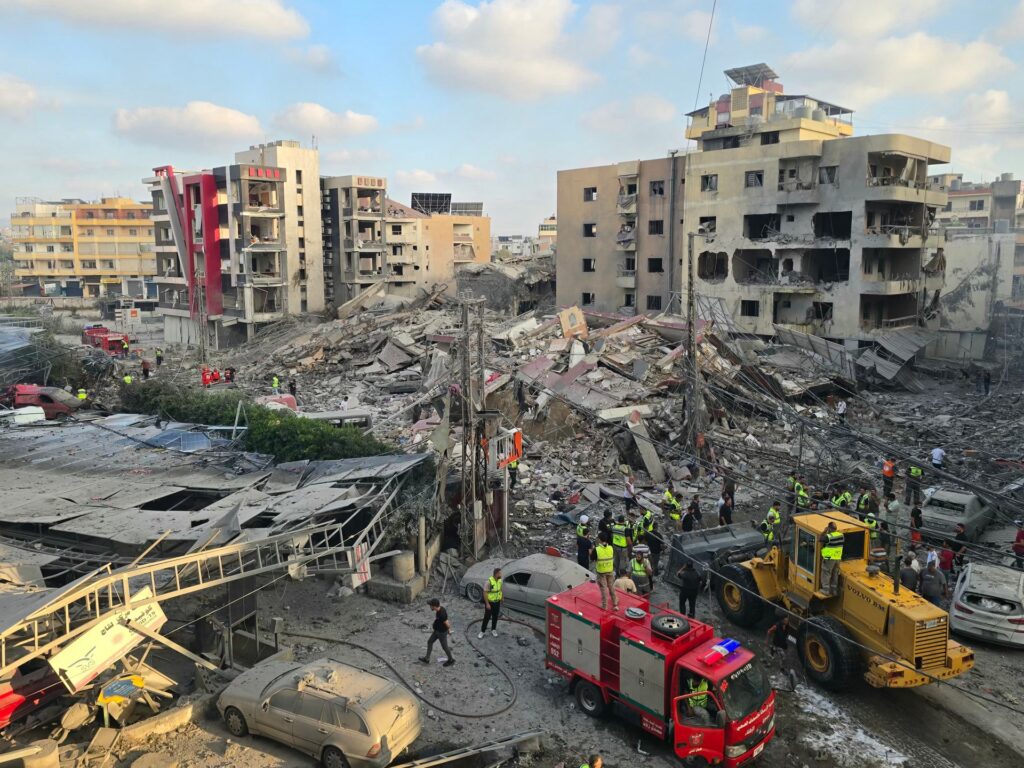
Table of Contents
An Unprecedented Diplomatic Pivot
In a move that defies decades of U.S. foreign policy orthodoxy, President Donald Trump announced Monday via Truth Social that Israel and Hezbollah have agreed to a cessation of hostilities. The announcement marks the first time a U.S. president has claimed to facilitate a deal with Hezbollah—a group designated by Washington as a terrorist organization—using “highly placed representatives” as intermediaries.
The core of the proposed arrangement is a mutual halt to attacks: Hezbollah would cease its rocket fire into northern Israel, while Israel would stop its airstrikes on Beirut and its densely populated southern suburbs. Trump stated he had coordinated these terms with Israeli Prime Minister Benjamin Netanyahu, though the commitment from the Israeli side remains conditionally volatile.
The Beirut Standoff and the ‘Yellow Line’
While the White House paints a picture of success, the reality on the ground in Lebanon remains precarious. For weeks, Israeli operations have expanded beyond the so-called “Yellow Line”—a military zone roughly 10km north of the border—into a systemic demolition of Lebanese infrastructure. According to the Lebanese Ministry of Public Health, the escalation since March 2 has left more than 3,412 people dead and over 10,000 wounded, displacing more than a million civilians.
The tension is most acute in Beirut. While Trump claims Netanyahu agreed to pull back troops preparing for an assault on the Lebanese capital, the Prime Minister’s office issued a stark caveat: Israel reserves the right to strike terror targets in Beirut if Hezbollah’s rockets do not stop. This “trust but verify” stance has already manifested in the field; even as the deal was announced, Israeli artillery continued to hit villages like Choukine and Kfar Tibnit in southern Lebanon.
Strategic Decoupling and Iranian Influence
A critical friction point in these negotiations is the role of Tehran. Iran, which provides the financial and military backbone for Hezbollah, has demanded a full Israeli withdrawal from Lebanese territory as a condition for any regional settlement. This creates a complex diplomatic knot: can a Lebanese ceasefire exist independently of a broader Iran-U.S. deal?
Sami Nader, director of the Levant Institute for Strategic Affairs, suggests that “decoupling” the Lebanon ceasefire from the Iranian conflict is the only viable path forward. However, achieving this requires a level of international coordination that currently seems absent, especially as Iranian state media reported a suspension of message exchanges with Washington in protest of recent developments.
A Historic Shift in Engagement
If verified, this engagement represents a seismic shift in U.S.-Hezbollah relations, which have been characterized by hostility since the group’s inception in 1982. The move is particularly surprising given the rhetoric of the current administration’s own cabinet; Secretary of State Marco Rubio has previously identified Hezbollah as the primary obstacle to peace in the region.
From the Lebanese side, the reaction is cautiously optimistic. UN Ambassador Ahmad Arafa commended the “constructive efforts,” and Hezbollah MP Hassan Fadlallah confirmed the group’s support for a full ceasefire as a precursor to total Israeli withdrawal. Yet, as Parliamentary Speaker Nabih Berri noted, the central question remains: who possesses the leverage to actually force Israel to halt its aggression?
For now, the silence of the sirens over Beirut provides a fragile window of hope, but the continued shelling in the south suggests that the “deal” may be more of a tactical pause than a lasting peace.