Trump Brokers Fragile Truce Between Israel and Hezbollah to Save Iran Negotiations
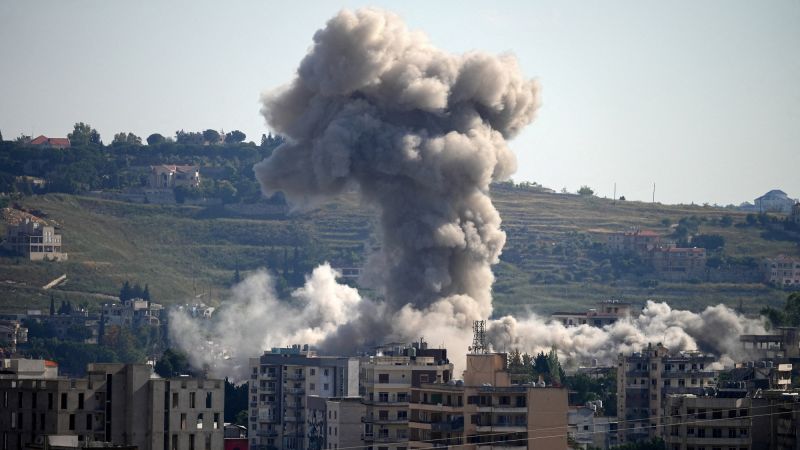
Table of Contents
A High-Stakes Diplomatic Pivot
The fragile architecture of Middle East diplomacy nearly collapsed on Monday as Israeli military ambitions in Lebanon clashed with the White House’s efforts to secure a preliminary peace agreement with Iran. In a series of rapid developments, the United States found itself playing a dual role: pressuring a key ally to scale back its offensive while simultaneously attempting to convince Tehran that the U.S. remains a reliable negotiating partner.
The tension peaked when semi-official Iranian state media announced a suspension of negotiations with Washington, citing Israel’s continued strikes in Lebanon as a direct violation of existing ceasefire terms. This suspension threatened to derail a critical U.S. objective: the reopening of the Strait of Hormuz and a formal extension of the ceasefire with Iran.
The ‘Heated’ Intervention
Behind the scenes, the diplomatic friction manifested in a volatile phone call between President Donald Trump and Prime Minister Benjamin Netanyahu. According to sources familiar with the conversation, the exchange became notably heated as Trump pressed the Israeli leader to abandon plans for a major raid on Beirut. Reports indicate that the President used expletives to convey his disapproval, viewing the potential offensive as a “glitch” that could permanently upend the delicate trajectory of the Iran talks.
The intervention appeared to yield immediate, if precarious, results. Trump later informed ABC News that he had successfully deterred the raid on Beirut, describing the diplomatic friction as a temporary setback that he “turned around very quickly.” While Hezbollah has reportedly agreed to a U.S. proposal to halt strikes on the Lebanese capital, the truce remains incomplete; Netanyahu has maintained that Israeli forces will continue operations in southern Lebanon.
Energy Security and the SPR Gamble
While the diplomatic theater focuses on Beirut and Tehran, the economic fallout of the conflict is being managed through the U.S. Strategic Petroleum Reserve (SPR). The Trump administration has already released approximately 58 million barrels of oil—roughly 14% of the reserve—to stabilize global markets and mitigate the supply crisis triggered by the conflict with Iran.
Federal data reveals the SPR now holds 357.1 million barrels, the lowest volume since January 2024. This aggressive drawdown underscores the urgency of reopening the Strait of Hormuz, as the U.S. cannot indefinitely rely on emergency stockpiles to offset the volatility of the Persian Gulf’s primary shipping lane.
Internal Turmoil in the Knesset
The external geopolitical pressure is coinciding with a deepening domestic crisis within Israel. The Knesset recently passed a bill in its first reading to dissolve the parliament and trigger early elections, potentially occurring between September 8 and October 20. The move is largely driven by ultra-Orthodox coalition partners who are leveraging the government’s instability to secure exemptions from mandatory military service.
While Prime Minister Netanyahu may be able to delay the final vote for several weeks, the legislative volatility suggests a government struggling to balance security imperatives with a fracturing political base. This internal instability complicates the White House’s efforts to secure a consistent commitment from the Israeli leadership regarding the scale of military operations in Lebanon.
President Trump has expressed optimism that a broader deal to restore regional stability is reachable “over the next week,” though he admitted that several critical points remain unresolved before a final agreement can be signed.