Trial by Fire: SpaceX’s Starship Struggles Through Explosive Development Cycle
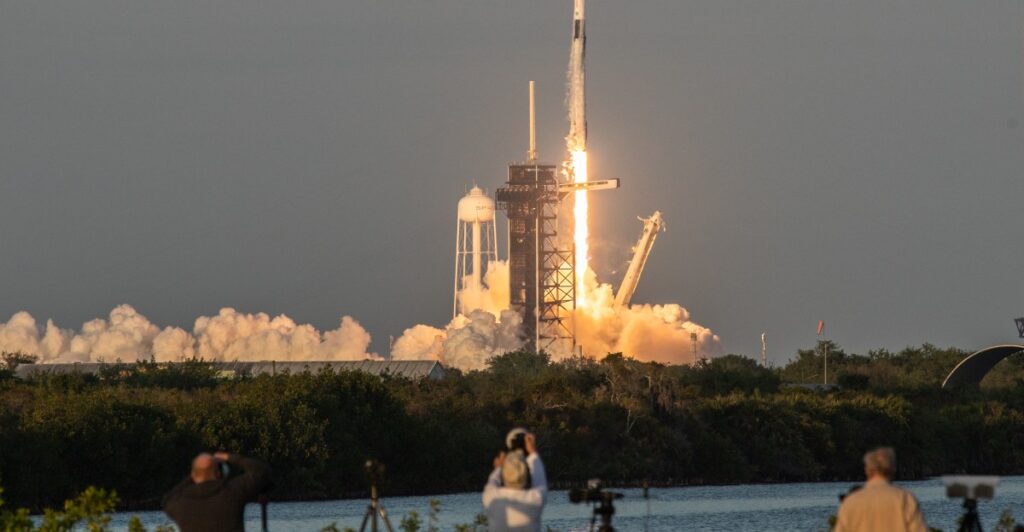
Table of Contents
The High Cost of Iteration
For SpaceX, failure isn’t just an expected part of the process—it’s the primary methodology. The company’s Starship program has become a public spectacle of ‘rapid unscheduled disassemblies,’ characterized by massive explosions and tumbling descent profiles that would be catastrophic for any other aerospace entity. However, in the aggressive culture of Elon Musk’s Starbase in Boca Chica, Texas, these failures are viewed as data points.
The volatility reached a peak recently at the Massey’s Testing Center, where a planned static fire test of Ship 36 ended in a complete loss of the vehicle. The incident occurred during the loading of cryogenic propellant for a six-engine test, resulting in an ‘energetic event’ that damaged the surrounding stand and ignited several fires. While SpaceX confirmed that all personnel were safe and no hazards reached the nearby town of Starbase, the event highlights the inherent danger of pushing hardware to its absolute limits in a populated region.
A Pattern of Volatility
The struggles aren’t limited to the ground. The ninth test flight of the Starship vehicle faced a litany of issues, including a failure of the reused Super Heavy booster, which broke apart six minutes into flight rather than achieving its planned splashdown in the Gulf of Mexico. The mission further deteriorated when a fuel tank leak caused the ship to lose control roughly 30 minutes after launch, preventing the deployment of Starlink simulator satellites.
According to Wendy Whitman Cobb, a space policy expert with the School of Advanced Air and Space Studies, this degree of failure is not unusual for technology this complex. However, the pace is what separates SpaceX from the traditional aerospace industry. Where NASA or the European Space Agency (ESA) might spend years in simulation and cautious increments, SpaceX builds, flies, and blows up hardware in a matter of weeks.
The Competition Closes In
While SpaceX currently dominates the launch cadence, the monopoly on heavy-lift capability is under threat. Jeff Bezos’ Blue Origin is preparing for the debut of the New Glenn rocket, a direct competitor to the heavy-lift market. Beyond transportation, Blue Origin is pivoting toward the data layer of the space economy with the announcement of the TeraWave network. CEO Dave Limp has positioned TeraWave as an enterprise-focused constellation, promising bandwidth up to 6Tb available globally, with deployments slated to begin in late 2027.
This move puts Blue Origin in direct competition with Starlink’s internet-beaming dominance. While SpaceX has the first-mover advantage and a massive constellation already in orbit, the entry of a well-funded enterprise rival could shift the economics of low-earth orbit (LEO) connectivity.
The Legacy Players’ Struggle
As the ‘New Space’ startups iterate quickly, legacy players are struggling to keep pace. Boeing continues to grapple with the fallout of the Starliner’s first crewed flight test. A 311-page redacted report from NASA revealed a systemic collapse, citing a combination of hardware failures, qualification gaps, and ‘cultural breakdowns’ that compromised safety standards. These failures resulted in astronauts extending a planned week-long mission into a nine-month stay on the International Space Station.
NASA and Boeing are now attempting to salvage the program with another crewed flight targeted for late 2025 or early 2026. Similarly, Europe’s Ariane 6 has only recently embarked on its first commercial missions, leaving the ESA lagging behind the rapid deployment cycles seen in the U.S. private sector.
Between the scrubbed launches and the fireballs at Boca Chica, the current era of space exploration is defined by a stark contrast: the slow, methodical safety of the old guard versus the explosive, high-risk gamble of the new.