Ghost Nets and Great Whites: Rare Mediterranean Shark Sighting Highlights Ocean Cleanup Crisis
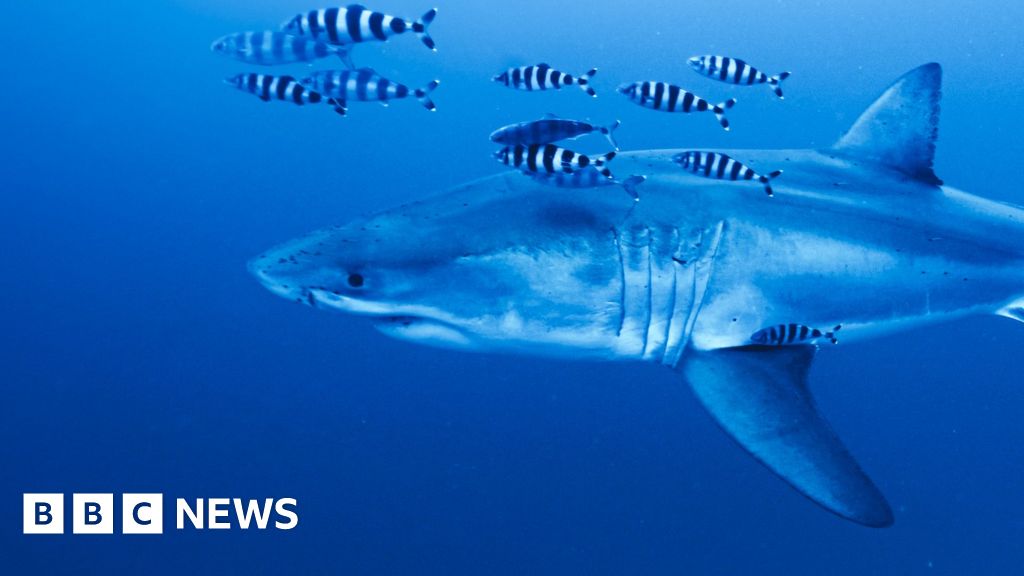
Table of Contents
A Trembling Encounter in the Deep
In the vast stretch of open water between Tunisia and Sicily, a routine dive to recover marine debris turned into a once-in-a-decade biological event. Derk Remmers, a volunteer diver with the non-profit organization Healthy Seas, found himself face-to-face with an adult male Great White shark—a species that has become a ghost in the Mediterranean Sea.
The encounter was not a choreographed wildlife shoot but a byproduct of environmental cleanup. Remmers and his team were submerged to tackle the pervasive issue of “ghost nets”—discarded or lost fishing gear that continues to trap and kill marine life indiscriminately. For Remmers, the scale of the predator was overwhelming. “The shark was pretty close to us,” he recalled, noting that the adrenaline of the moment was visible in the footage. “In fact, my fingers were trembling when I was trying to get the camera operating.”
The Ecology of Absence
While the footage has sparked excitement, it serves as a stark reminder of how depleted the Mediterranean’s apex predator population has become. Great Whites were once common in these waters, but decades of overfishing and habitat degradation have pushed the species toward local extinction. This sighting is an anomaly, representing a fragile remnant of a lost ecosystem.
Marine biologists emphasize that the sighting, while “special,” does not necessarily signal a population recovery. The shark was spotted many miles offshore, far from the crowded coastlines, suggesting that any remaining individuals are likely avoiding human activity and the heavy industrial fishing traffic that characterizes the region. The presence of a healthy adult male suggests that these waters may still hold enough prey to support a top-tier predator, provided the environment remains hospitable.
The Invisible Threat: Ghost Gear
The context of this sighting is perhaps more critical than the shark itself. The Healthy Seas team was operating specifically to remove abandoned nylon nets. These “ghost nets” are a catastrophic failure of maritime waste management; made of durable synthetic polymers, they do not biodegrade, instead drifting through currents and creating death traps for everything from sea turtles to the very sharks that are now so rare.
The synergy between the shark sighting and the cleanup effort highlights a critical intersection of conservation and technology. Removing these nets requires precision diving and coordinated logistics, but the long-term solution lies in the creation of expansive marine protected areas (MPAs). Conservationists are now using this footage to lobby Mediterranean governments, arguing that if an apex predator like the Great White can still be found in these waters, the region is worth the legislative effort to protect it from industrial runoff and illegal fishing.
A Call for Systematic Protection
For the NGO Healthy Seas, the shark encounter is a powerful narrative tool. It transforms a technical cleanup operation into a story of survival. The goal is to move beyond sporadic volunteer efforts and toward a systemic approach to ocean health. By designating more of the Mediterranean as a protected zone, scientists believe they can create “safe corridors” for migrating species, allowing the Great White and other endangered elasmobranchs to return to their ancestral hunting grounds without the threat of entanglement in synthetic waste.