Thomson aggressively undercuts the budget market with Google 5.0 QLED TV range in India
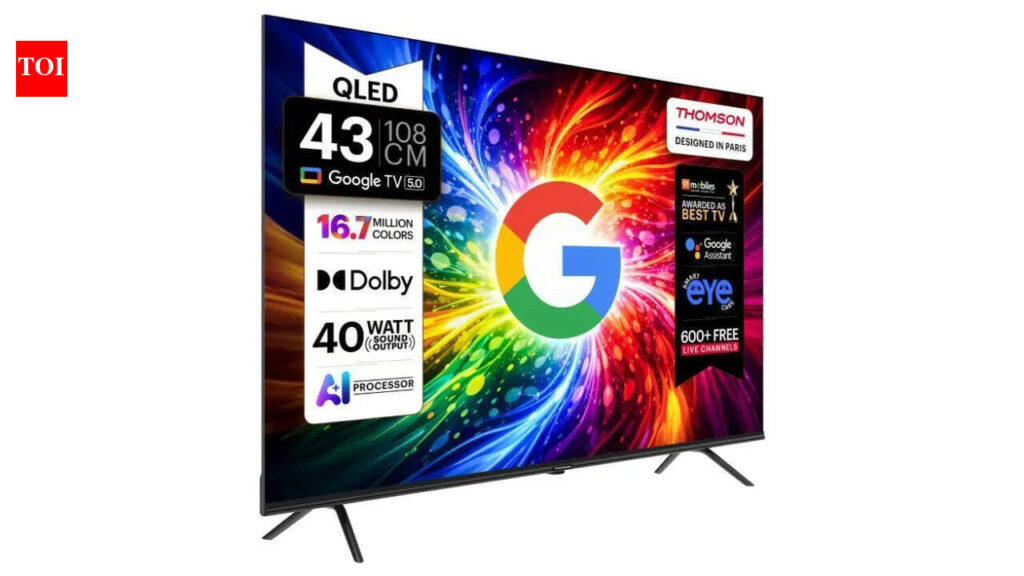
Table of Contents
A strategic play for the entry-level segment
Thomson is making a calculated move to democratize high-end display technology in the Indian market. The company has officially unveiled its Google 5.0 QLED TV range, a series of budget-friendly sets that bring Quantum Dot technology to a price bracket traditionally reserved for basic LED panels. With a starting price of Rs 10,999, Thomson isn’t just competing with other budget brands; it’s attempting to shift the baseline for what consumers expect from a sub-15k television.
The new lineup arrives as an expansion of the existing Phoenix Smart TV portfolio. By integrating QLED (Quantum Dot LED) technology, Thomson is addressing one of the primary complaints of budget displays: washed-out colors and poor contrast. While these aren’t meant to compete with high-end OLEDs from LG or Sony, the jump to QLED at this price point provides a significant uplift in color volume and brightness, making them a compelling option for small rooms and secondary bedrooms.
The Google TV 5.0 ecosystem
Beyond the hardware, the defining feature of this range is the integration of Google TV 5.0. Moving away from the more fragmented Android TV skins seen in many budget models, the 5.0 OS focuses on content-first discovery. The interface aggregates shows and movies from across various streaming services—including Netflix, Disney+ Hotstar, and Prime Video—into a single unified home screen, reducing the friction of app-hopping.
The inclusion of the latest Google ecosystem also means native integration with Google Assistant and Chromecast. For the average user in the Indian market, this means a significantly more stable voice-search experience and a seamless way to cast content from smartphones to the big screen, a feature that often feels clunky in non-Google budget OS implementations.
Size options and market availability
Thomson has launched the series in three distinct sizes to cover the most common domestic use cases: 32-inch, 40-inch, and 43-inch. The choice of a 40-inch model is particularly notable, as it fills a gap between the standard 32-inch small screen and the mainstream 43-inch living room set, offering a middle-ground option for those with constrained wall space but a desire for a more immersive experience.
The launch is timed to coincide with Flipkart’s Sasa Lele Sale, where Thomson is offering deep discounts and exclusive launch bundles to drive early adoption. By leveraging Flipkart’s logistics and reach, Thomson is positioning itself to capture a large share of the Tier-2 and Tier-3 city markets where value-for-money is the primary driver of purchasing decisions.
The challenge of the ultra-budget QLED
While the price point is disruptive, it raises questions about the long-term sustainability of the hardware. QLED panels typically require more precise backlight control to avoid the ‘blooming’ effect around bright objects on dark backgrounds. It remains to be seen how Thomson has balanced the cost of the Quantum Dot layer with the quality of the backlight arrays in these specific models.
Furthermore, the performance of Google TV 5.0 is heavily dependent on the SoC (System on Chip) and RAM allocated to the device. If Thomson has skimped on the internal processing power to hit the Rs 10,999 price point, users might experience the lag and stuttering often associated with low-end smart TVs. However, if the hardware can maintain a fluid experience, this range could force competitors like Xiaomi and Realme to further slash prices or upgrade their entry-level panels to QLED to stay relevant.


