Samsung Aggressively Targets Mid-Range Indian Market With New AI-Powered Mini LED Lineup
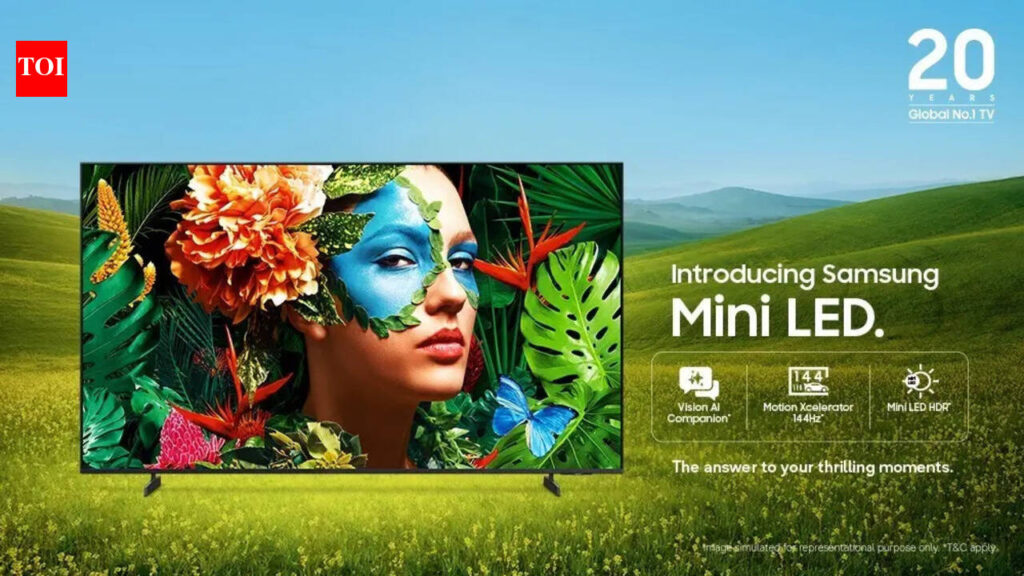
Table of Contents
Breaking the Premium Barrier
Samsung is making a calculated bid to dominate the mid-range display segment in India, launching a new series of AI-powered Mini LED televisions with a surprisingly aggressive entry price of Rs 42,990. While Mini LED technology has traditionally been reserved for flagship ‘Neo QLED’ models costing upwards of six figures, this latest push signals a shift in strategy to bring high-contrast, high-brightness panels to a broader consumer base.
The move comes as Samsung faces intensifying pressure from Chinese rivals like Xiaomi and TCL, who have aggressively undercut premium brands on price while offering similar panel specifications. By lowering the entry point for Mini LED, Samsung is attempting to squeeze the competition between standard 4K LED sets and the ultra-premium OLED market.
AI as the Core Value Proposition
The centerpiece of this new lineup isn’t just the hardware, but the integration of Samsung’s latest AI processing suite. Unlike previous iterations that focused primarily on basic noise reduction, these sets utilize an AI-driven upscaling engine designed to bring low-resolution content—common in Indian cable and satellite broadcasts—closer to a native 4K experience.
The AI processor manages the Mini LED backlighting with far more precision than traditional edge-lit or direct-lit LEDs. By utilizing thousands of tiny LEDs grouped into sophisticated zones, the TVs can dim specific areas of the screen to achieve deep blacks while maintaining searing highlights in other areas. Samsung claims this results in significantly reduced ‘blooming’—the hazy glow often seen around bright objects against a dark background—which has been a persistent critique of budget-friendly Mini LED implementations.
Integration with the Smart Home Ecosystem
Beyond the picture quality, these models are deeply integrated into the Tizen OS ecosystem. Samsung is leaning heavily into its ‘SmartThings’ integration, positioning the TV as a central hub for home automation. This allows users to monitor connected appliances or receive notifications directly on the screen while watching content, a feature Samsung hopes will lock users into its hardware ecosystem.
Market Dynamics and Competitive Pressure
The pricing strategy is the most disruptive element of this launch. Starting at Rs 42,990, Samsung is effectively rebranding the ‘value’ segment. For years, the Indian market has seen a sharp divide: budget LEDs for the masses and high-end QLEDs for the affluent. This new range occupies the ‘bridge’—offering a glimpse of premium performance without the flagship price tag.
Industry analysts suggest this is a defensive maneuver against the growing popularity of ‘premium-budget’ brands. By leveraging its massive supply chain and brand equity in India, Samsung can afford to tighten margins on these sets to capture market share from users who are upgrading from their first 4K TV.
Availability will roll out across Samsung’s online store, major e-commerce platforms like Amazon and Flipkart, and physical retail outlets across the country. While the base model starts at the mentioned price, larger screen sizes and higher-spec variants are expected to scale up, though they will remain significantly more affordable than the top-tier Neo QLED series.


