Thermal Cognitive Decline: How Rising Temperatures Are ‘Muddling’ Animal Intelligence
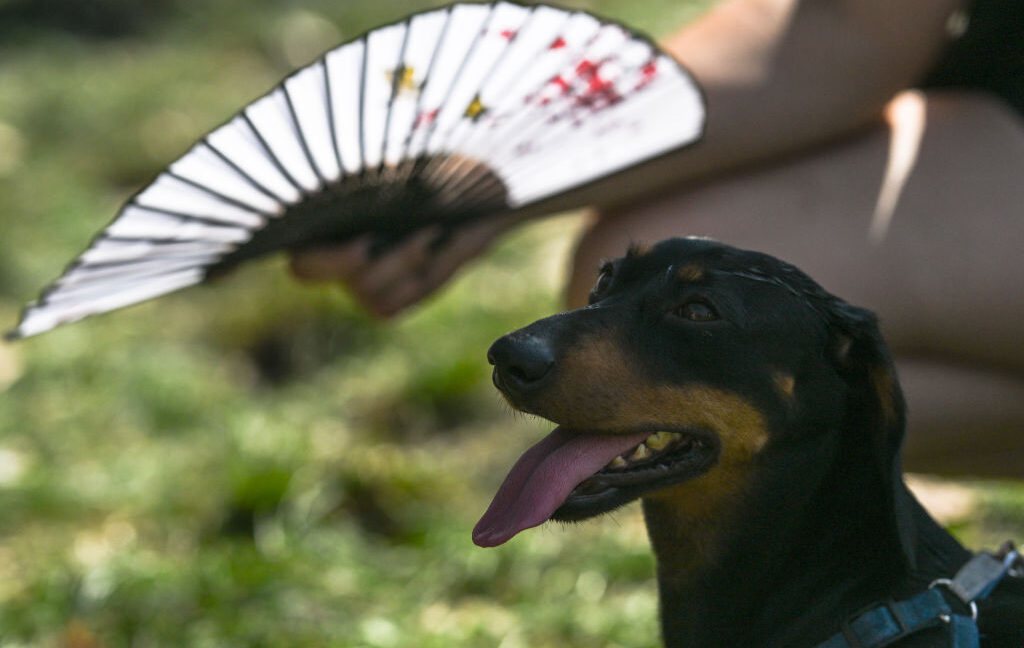
Table of Contents
The Plastic Barrier Paradox
On an oppressive afternoon in South Africa, a group of southern pied babblers faces a deceptively simple challenge: a handful of mealworms separated from them by a transparent plastic barrier. On a mild day, these medium-sized black-and-white birds quickly deduce that the solution is to simply fly around the obstacle. But as the mercury climbs, the birds enter a state of cognitive deadlock, stubbornly pecking at the impassable plastic for minutes on end.
This behavior is not a fluke of individual intelligence, but a symptom of a broader biological phenomenon. According to Amanda Ridley, a behavioral ecologist at the University of Western Australia, extreme heat effectively ‘muddles’ the minds of animals, impairing their ability to learn, solve problems, and regulate social behavior.
The Neuroscience of Heat Stress
While the physical toll of heat—panting, lethargy, and dehydration—is well-documented, the cognitive erosion is more insidious. In many species, the brain is the first organ to suffer when thermoregulation fails. To combat this, some animals have evolved specialized cooling mechanisms. Emily Baird, a neuroscientist at Stockholm University, notes that bees, for instance, splash water on their faces mid-flight to achieve ‘convective cooling’ specifically for their brains.
When these mechanisms are overwhelmed, the result is a measurable drop in mental acuity. In studies involving zebra finches, evolutionary biologist Elizabeth Derryberry of the University of Tennessee, Knoxville, observed birds attempting to extract mealworms from transparent tubes. In high temperatures, the finches abandoned strategic thinking and simply hammered their beaks against the glass—a behavior Derryberry describes as the avian equivalent of banging one’s head against a brick wall.
Aggression and the ‘Heat-Haze’ Effect
The impairment isn’t limited to problem-solving; it extends to emotional regulation. Across the animal kingdom, heat appears to trigger a spike in territoriality and violence. In the Italian Apennine Mountains, researchers spent 1,600 hours observing chamois—goat-like mammals—and found that aggression surged as temperatures rose from 54°F to 64°F. As protein-rich vegetation became scarcer due to heat, the animals became hyper-territorial, engaging in chasing and fighting.
This trend is mirrored in aquatic environments. The golden julie, a small tropical fish, typically shows mild hostility toward its own reflection in a mirror. However, when water temperatures increase from 78°F to 84°F, the fish becomes significantly more aggressive, slapping its tail and biting the glass in a frantic attempt to drive away the perceived intruder.
From Domestic Pets to Human Parallels
The data suggests these cognitive shifts aren’t isolated to the wild. A 2023 analysis of nearly 70,000 dog-bite reports across eight U.S. cities, including Chicago and Baltimore, revealed a 10% increase in biting incidents on 90°F days compared to 60°F days. While researchers cannot definitively prove whether the dogs are more irritable or if humans are more provocative in the heat, Clas Linnman, a neuroscientist at the University of Miami, suggests it is likely a symbiotic stress response where both species become more irate.
This mirrors long-standing observations in human sociology. From the 19th-century observations of Belgian astronomer Adolphe Quetelet regarding crime spikes in France to modern data linking heat to lower test scores in non-air-conditioned classrooms, the correlation between thermal stress and cognitive failure is consistent across species.
Ecosystemic Implications
The danger lies in the fact that cognitive flexibility is the primary tool for survival in a changing environment. If pollinators lose the ability to remember which flowers provide the best nectar, or if predatory birds cannot calculate the energy cost of a hunt during a heat wave, the ripple effects could destabilize entire food webs. As climate change increases the frequency of extreme heat events, the ‘stupid hot’ threshold may be reached more often, leaving species unable to behaviorally adapt to the world around them.