Therabody’s New $400 CryoTherm Palm Bets on Hand Temperature to Fight Workout Fatigue
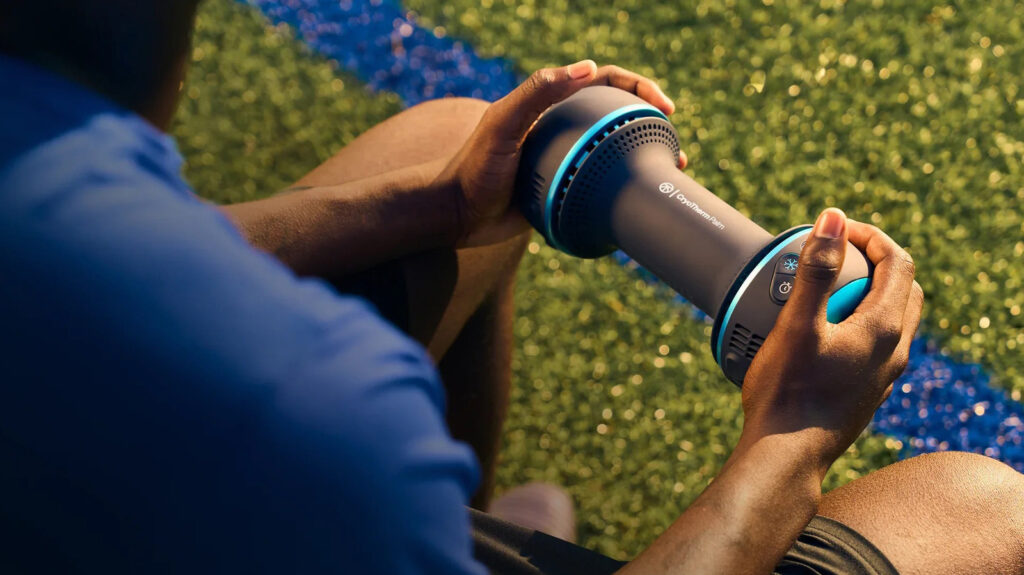
Table of Contents
The Science of the Chill
Therabody has built its brand empire on the percussive therapy boom, turning the massage gun from a niche physical therapy tool into a household staple. Now, the company is pivoting toward a different physiological lever: thermal regulation. The newly unveiled CryoTherm Palm is a specialized recovery device designed specifically for the hands, retailing at a steep $399.99.
The premise is centered on a specific physiological challenge—peripheral fatigue. According to Therabody, the CryoTherm Palm is designed to be used during intra-workout breaks, cooling the palms to delay the onset of fatigue and maintain grip strength. While the claim that a handheld chiller can significantly extend a workout sounds like a pitch from a high-end fitness infomercial, Therabody is pointing to data from the University of Southern California (USC). In real-world testing with soccer players, the company claims participants performed 58 percent more repetitions in their final set when utilizing the CryoTherm Palm compared to those who didn’t.
How the Hardware Functions
Unlike the company’s more famous Theragun line, the CryoTherm Palm doesn’t vibrate or pummel muscle tissue. Instead, it is a dual-surface thermal plate system. Users place their palms on each end of the device for intervals ranging from one to three minutes during training intervals.
The device offers three distinct modes of operation:
- Cold Therapy: Rapidly lowering the temperature of the palms to reduce perceived exertion and inflammation.
- Heat Therapy: Using warmth to increase blood flow and loosen joint stiffness.
- Contrast Therapy: A simultaneous application where one palm is cooled and the other is heated, a technique often used in professional athletics to stimulate circulatory response.
To manage these transitions, the device includes three temperature levels for both heat and cold settings. Therabody has also integrated a built-in stopwatch to ensure users adhere to the precise timing required for thermal therapy, which is critical to avoid skin irritation or cold burns. Power-wise, the device offers a total battery life of 120 minutes, though actual runtime will likely vary depending on the intensity of the heat or cold settings used.
A Pivot Toward Niche Wellness
The launch of the CryoTherm Palm represents a broader strategic shift for Therabody. The company is moving away from general-purpose recovery and toward highly specialized, body-part-specific hardware. This is evident in their recent expansion into skincare and facial aesthetics, including the TheraFace Mask Glo, which utilizes LED light therapy to target wrinkles.
However, this strategy moves Therabody into a more contentious market segment: the “luxury wellness” space. While a massage gun has a clear, tactile utility that most users can feel immediately, thermal recovery for the palms is a much harder sell for the average gym-goer. The $400 price point puts the device in a category where the value proposition relies heavily on the user’s belief in the marginal gains promised by the USC data.
Whether the CryoTherm Palm becomes a staple in professional locker rooms or remains a niche curiosity will likely depend on whether the 58 percent performance boost is reproducible outside of a controlled university setting. For now, it stands as an expensive bet on the idea that the key to a better workout isn’t just in the muscles, but in the temperature of the skin.