The Vatican’s New Moral Blueprint: Pope Leo XIV’s AI Encyclical Aims to Prevent ‘Industrial Revolution’ Mistakes
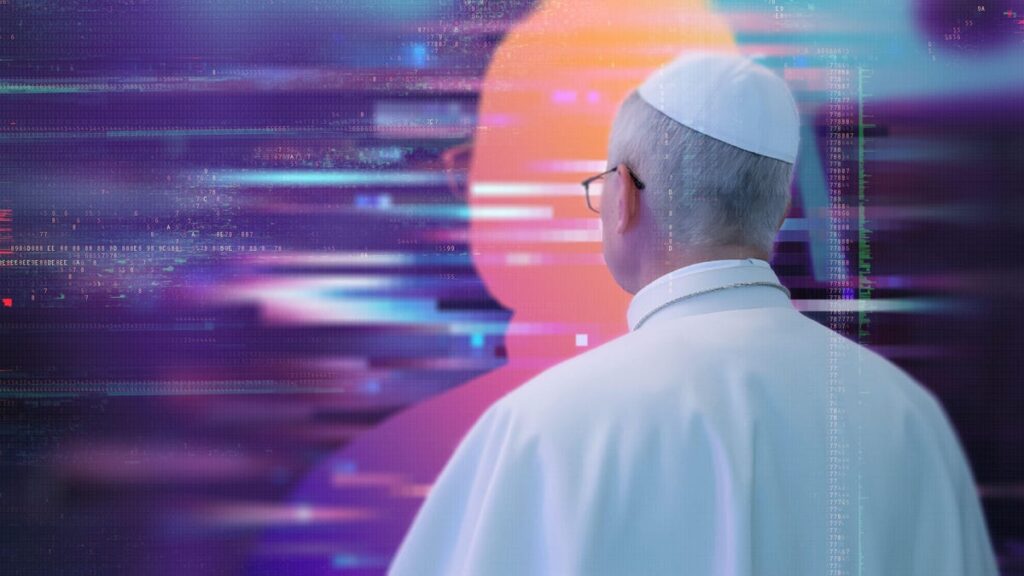
Table of Contents
A Deliberate Historical Echo
In a move that signals a direct confrontation between ancient moral tradition and cutting-edge computation, Pope Leo XIV has released Magnifica Humanitas, his first encyclical focused on artificial intelligence and the preservation of human dignity. The timing of the publication was no accident. Signed on May 15 and released to the public on May 25, the document arrives exactly 135 years after the publication of Rerum Novarum, the landmark text that attempted to provide a moral framework for the Industrial Revolution.
The parallel is stark. While Rerum Novarum arrived after decades of urban decay, child labor, and systemic worker exploitation, Magnifica Humanitas is designed to be preemptive. The Vatican is effectively arguing that the global community cannot afford to wait for the “damage to be done” before deciding how AI should treat the most vulnerable members of society.
The Speed of the New Revolution
The urgency behind the Pope’s directive is echoed by the very architects of the technology. Industry leaders have shifted from cautious optimism to warnings about a scale of change that dwarfs previous technological shifts. Demis Hassabis, founder of Google DeepMind, has characterized the current AI trajectory as being ten times the scale and ten times the speed of the Industrial Revolution. Meanwhile, Sam Altman of OpenAI has suggested that the societal shifts triggered by AGI (Artificial General Intelligence) may necessitate a new social contract comparable in scope to the New Deal.
For the Vatican, these aren’t just technical projections—they are existential risks. The encyclical posits that if the “operating system” of human life is rewritten by algorithms optimized for efficiency or profit rather than dignity, the resulting societal hollowing will be irreversible.
Bridging the Gap: The Faith-AI Covenant
One of the most significant outcomes of this movement is the emergence of the Faith-AI Covenant project. Co-chaired by Baroness Joanna Shields—CEO of Precognition and former UK Minister of Internet Safety—the initiative seeks to end the isolation between the two groups most capable of shaping the future: the engineers building the models and the moral institutions that hold the trust of billions.
Recent roundtables in New York have brought representatives from Anthropic and OpenAI into direct dialogue with senior religious leaders. The goal is not to impose external regulation or obstruct innovation, but to embed human-centric values into the architecture of AI while the systems are still malleable. Faith leaders bring a perspective that the tech sector often lacks: a focus on justice over productivity.
The Stakeholders of Dignity
The influence of such a move extends beyond the walls of the Vatican. With a global constituency of nearly 1.5 billion Catholics and a broader appeal to interfaith cooperation, the Pope is leveraging a massive social bloc to demand that human dignity remains non-negotiable in the development of LLMs and autonomous systems.
The central tension remains whether the speed of corporate deployment can be slowed enough to integrate these moral safeguards. While the tech industry focuses on “alignment”—the technical challenge of making AI follow human instructions—the Vatican is arguing for a deeper, philosophical alignment with the concept of the common good.
As the AI industry moves toward increasingly autonomous agents, the arrival of Magnifica Humanitas serves as a reminder that the most critical components of the next digital era may not be the chips or the data, but the ethical guardrails that prevent progress from becoming a tool of displacement.