The Silent Bottleneck: Why Agentic AI is Triggering a Massive CPU Demand Surge
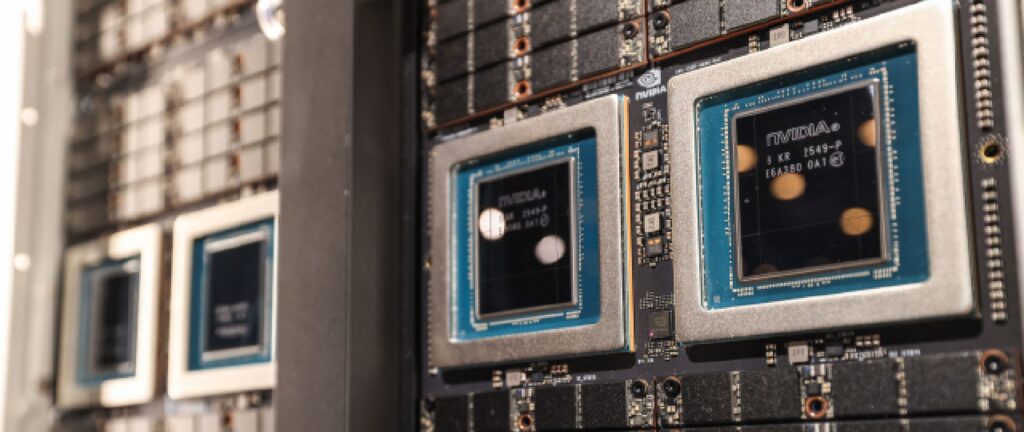
Table of Contents
Beyond the GPU Gold Rush
For the better part of the generative AI era, the narrative has been dominated by a single piece of silicon: the GPU. From Nvidia’s meteoric rise to the desperate scramble for H100s, the industry viewed the Graphics Processing Unit as the sole engine of the AI revolution. The Central Processing Unit (CPU), meanwhile, was relegated to the role of the anonymous workhorse—the necessary but unremarkable component that handles the operating system and basic scheduling while the GPU does the heavy lifting.
That dynamic is shifting. As the industry moves from simple chatbots to “agentic AI”—systems capable of autonomous multi-step reasoning and tool execution—the CPU is no longer just a supporting actor. It has become a critical bottleneck.
The Architectural Shift to Agentic AI
The transition from passive LLMs to active AI agents changes the fundamental compute requirements of a data center. Early generative AI deployments were heavily skewed toward GPU inference; a typical configuration might have paired four to eight GPUs with a single CPU. This worked for chatbots, where a slight delay in response was an acceptable trade-off for the massive parallel processing required to generate text.
Agentic AI, however, operates differently. These systems don’t just predict the next token; they coordinate API calls, manage memory across multiple tasks, and interact with external databases in real-time. According to Jason Beckett, CTO for EMEA at Hitachi Vantara, these always-on reasoning systems demand high-core-count CPUs running at sustained loads. Unlike the bursty orchestration of early chatbots, agents require a robust CPU backbone to maintain the “agentic stack” without collapsing under latency.
The impact on performance is stark. Data from TrendForce indicates that CPUs can account for nearly 91% of the total latency in some AI response chains. For an agent attempting to execute a complex workflow, this delay is a deal-breaker, leading hyperscalers to aggressively bolster their CPU counts to ensure deterministic, predictable performance at rack scale.
Market Realities and Hardware Redesign
The financial ripple effects are already appearing in corporate forecasts. AMD, a primary competitor in the server CPU space, recently saw its market growth projections double. While the company previously anticipated an 18% annual growth rate, revised expectations now place that figure at 35%, projecting a $120 billion market by the end of the decade.
This isn’t just a trend in spreadsheets; it’s manifesting in the physical layout of the data center. Historically, AI racks were designed as dense GPU clusters with the CPU treated as a peripheral. Now, engineers are deploying configurations with significantly higher core counts and more memory channels per node. As Hommer Zhao, founder of OurPCB, notes, a GPU is essentially a “fast, dumb engine” that cannot independently communicate with the internet or pull data from a hard drive. The CPU is the intelligence that manages that data movement.
The Thermal Challenge
This shift also introduces new engineering hurdles. High-core-count CPUs optimized for cloud workloads generate significant heat when running at sustained loads. Consequently, we are seeing a convergence in thermal design. In many next-gen environments, CPUs are being integrated into the same liquid-cooling envelopes as GPUs, rather than relying on separate air-cooling systems. This integration is essential for the “east-west” data movement—the high-speed traffic between chips—that defines modern AI clusters.
As hyperscalers realize that the GPU is only as fast as the CPU orchestrating it, the industry is entering a new phase of infrastructure build-out. The gold rush hasn’t ended; it has simply expanded to include the silicon that keeps the engines running.


