The USS Liberty Legacy: Signal Intelligence, State Secrets, and the Cost of Strategic Silence
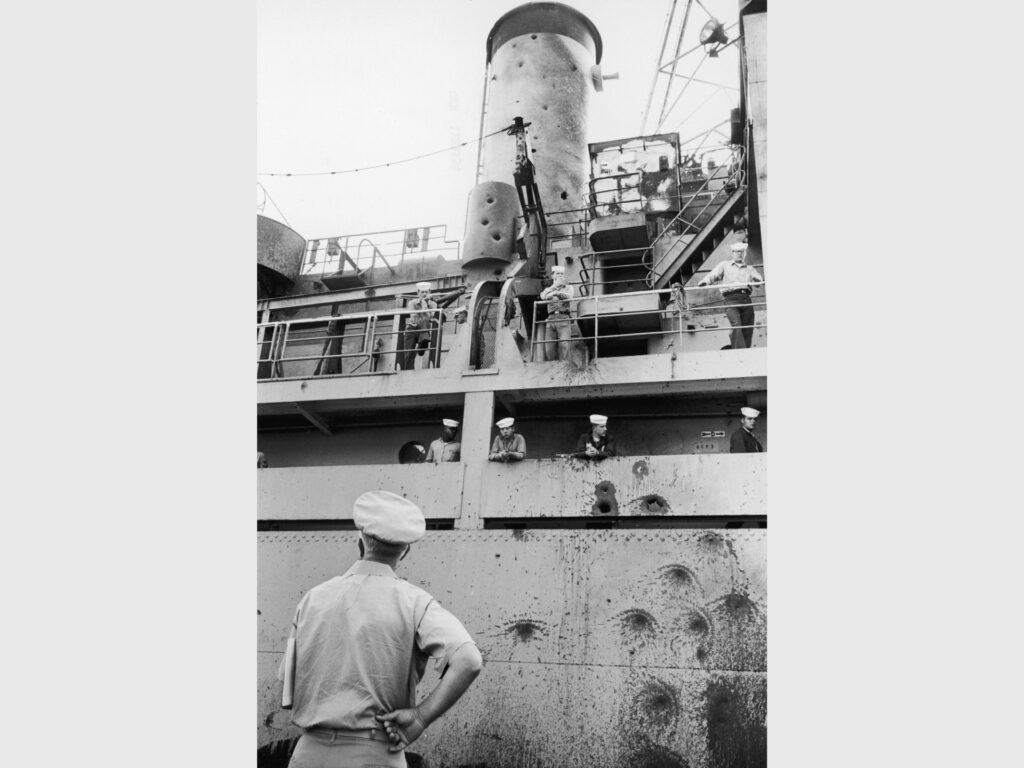
Table of Contents
A Technical Research Vessel in the Crosshairs
On June 8, 1967, the USS Liberty—a sophisticated technical research ship—was operating in the Mediterranean Sea off the coast of Egypt’s Sinai Peninsula. While officially designated as a research vessel, the Liberty was effectively a floating signal intelligence (SIGINT) hub, designed to intercept electronic communications and monitor regional military movements during the height of the Six-Day War.
The attack that followed was surgical and devastating. Israeli aircraft first strafed the deck with armor-piercing bullets and anti-personnel weapons before torpedo boats delivered a crushing blow to the ship’s starboard side. The strike killed 34 sailors and wounded 171 others. The scale of the assault suggests more than a cursory mistake; it was a concerted effort to neutralize a high-value intelligence asset.
For decades, the official narrative from the Israeli government has remained steadfast: it was a case of mistaken identity. Israeli officials claimed exhausted pilots misidentified the vessel as an Egyptian warship. However, this explanation has long been contested by survivors and intelligence analysts who point to the ship’s visibility, its flying US flag, and the fact that the crew had exchanged waves with Israeli aircraft earlier that morning.
The SIGINT Paradox and Strategic Erasure
At the heart of the USS Liberty controversy is the nature of the ship’s mission. In the world of electronic warfare, a vessel capable of capturing real-time communications is a threat to any combatant attempting to mask their movements. Richard Brooks, the ship’s chief engineer, argued in subsequent years that the attack was not accidental but a deliberate attempt to prevent the US from intercepting specific war plans or to manufacture a ‘false flag’ incident that would draw the United States into the conflict on Israel’s behalf.
Despite the severity of the incident, a naval board of inquiry conducted while the ship was in dry-dock in Malta concluded with remarkable speed. The US Congress never formed a formal committee to investigate the tragedy, and a significant portion of the operational records remain classified to this day. This lack of transparency has fueled decades of resentment among survivors, including Ernie Gallo, president of the USS Liberty Survivors Group, who contends that the US government accepted a flawed narrative to preserve a burgeoning strategic alliance.
From 1967 to Modern Cyber-Espionage
The ghosts of the USS Liberty are reappearing in contemporary discourse. Recently, US Representative Thomas Massie announced plans to deliver a speech on the House floor to memorialize the crew, signaling a renewed political interest in the incident. But the friction between the two allies extends beyond historical grievances into the realm of modern intelligence and cybersecurity.
In a revealing shift in security posture, the Pentagon’s Defense Intelligence Agency (DIA) recently elevated the counterintelligence threat posed by Israel to its highest level, designating it as ‘critical.’ This escalation is not an isolated event but part of a broader pattern of intelligence friction. Reports have surfaced regarding the installation of sophisticated spyware on the mobile devices of US defense personnel operating within Israel—a direct breach of trust in an era of pervasive digital surveillance.
This tension is further complicated by Israel’s aggressive stance toward US policy regarding Iran. With the administration of Donald Trump attempting to navigate a deal with Tehran, Israeli intelligence agencies have reportedly intensified efforts to intercept internal US policy discussions to ensure their strategic objectives remain uncompromised.
The Institutional Memory of Betrayal
Historically, the relationship has been marred by high-profile espionage cases, most notably that of Jonathan Pollard. A civilian intelligence analyst for the US Navy, Pollard spent 30 years in prison after pleading guilty to passing massive amounts of classified data to Israel in the 1980s.
When viewed together, the USS Liberty attack and the current DIA warnings suggest a recurring theme: the precarious balance between being a close military ally and a target of intelligence collection. For the survivors of the Liberty, the incident was not just a military error, but a demonstration of how signal intelligence and state secrets can be used to obscure the truth for the sake of geopolitical expediency.