The ‘Tiger’s’ Algorithm: How AI-Driven Spectacle Propelled Abelardo de la Espriella to a Colombian Victory
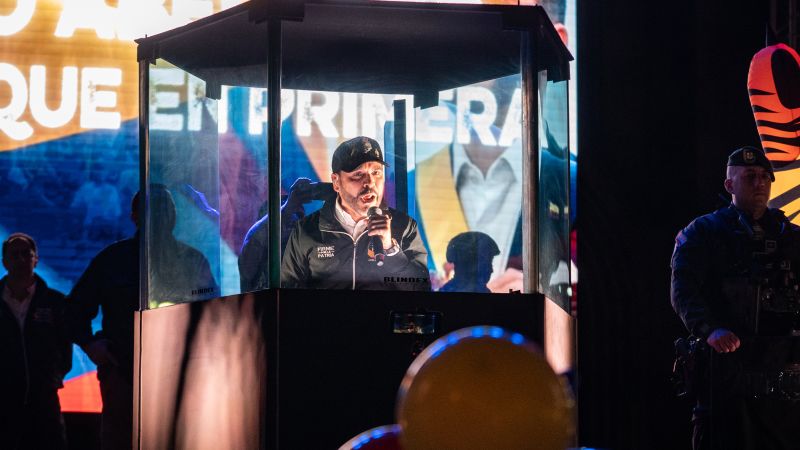
Table of Contents
A Victory Measured in Milliseconds and Margins
The preliminary results from Colombia’s National Civil Registry paint a picture of a nation cleaved exactly in half. With 99.91% of the votes tallied, Abelardo de la Espriella, the leader of the ‘Defenders of the Homeland’ movement, holds a precarious lead with 49.65% against Iván Cepeda’s 48.71%. In a contest decided by fewer than 250,000 ballots, the narrow margin has triggered immediate legal challenges from the Cepeda camp, with thousands of poll watchers questioning the validity of 33,000 polling stations.
But while the legal battle over paper ballots unfolds, the real story of de la Espriella’s ascent isn’t found in the counting houses—it’s found in the feed. De la Espriella, a dual Colombian-US citizen and former criminal defense lawyer, has successfully imported a blueprint for 21st-century governance that blends high-net-worth branding, ‘iron fist’ rhetoric, and a sophisticated, AI-powered digital apparatus.
The Architecture of Digital Spectacle
Unlike traditional Colombian politicians who rely on party machinery and regional caudillos, de la Espriella bypassed the establishment entirely, qualifying for the ballot via citizen signatures. His campaign functioned less like a political organization and more like a digital media house. By leveraging AI-generated content to saturate social media, de la Espriella created a curated, hyper-real persona—the ‘Tiger’—that resonated with a frustrated electorate weary of the leftist policies of President Gustavo Petro.
This wasn’t merely the use of chatbots for constituent outreach. De la Espriella’s strategy involved a seamless integration of lifestyle branding—including his own rum brand and original music—with algorithmically optimized messaging. This ‘spectacle’ approach allowed him to dominate the attention economy, turning political discourse into a series of viral moments. By the time the runoff occurred, his digital presence had effectively replaced the need for traditional party infrastructure.
The Bukele Blueprint and the Trump Endorsement
The ideological engine driving this digital machine is a brand of conservative nationalism that mirrors the rise of Nayib Bukele in El Salvador. De la Espriella’s promises of ‘mega-prisons’ and governance via emergency decrees are designed for short-form video consumption—direct, aggressive, and visually striking. This alignment was further cemented by the public endorsement of US President Donald Trump, a relationship that has already yielded congratulatory calls and the public backing of Secretary of State Marco Rubio.
The Trump-de la Espriella axis signals a potential tectonic shift in regional geopolitics. For years, the Petro administration has maintained a strained relationship with Washington. A de la Espriella presidency would likely see a rapid pivot toward deeper security cooperation, expanded oil exploration, and an aggressive stance on illegal immigration, effectively aligning Colombia with the ‘America First’ framework of the current US administration.
The Risk of the Algorithmic Mandate
As the country awaits the final, legally binding count, the victory of a candidate who has never held elected office raises critical questions about the intersection of AI and democracy. De la Espriella’s campaign proves that in an era of algorithmic curation, a candidate’s ability to generate ‘engagement’ can outweigh traditional political experience or party affiliation.
The ‘Defenders of the Homeland’ movement has successfully weaponized the culture war, using AI to amplify opposition to ‘gender ideology’ and abortion while casting himself as the sole protector of the traditional family. By blending these social triggers with a free-market economic agenda, de la Espriella has built a coalition that is as much about digital identity as it is about policy.
For now, the result remains preliminary. President Gustavo Petro has remained cautious, stating on X that the official tally is the only determinant of the presidency. However, whether the final count shifts the lead or confirms it, the methodology of de la Espriella’s campaign has already rewritten the playbook for political survival in the digital age.