US and Iran Establish ‘De-Confliction Cell’ and Hormuz Communication Line After High-Stakes Swiss Talks
Table of Contents
A Fragile Bridge in Switzerland
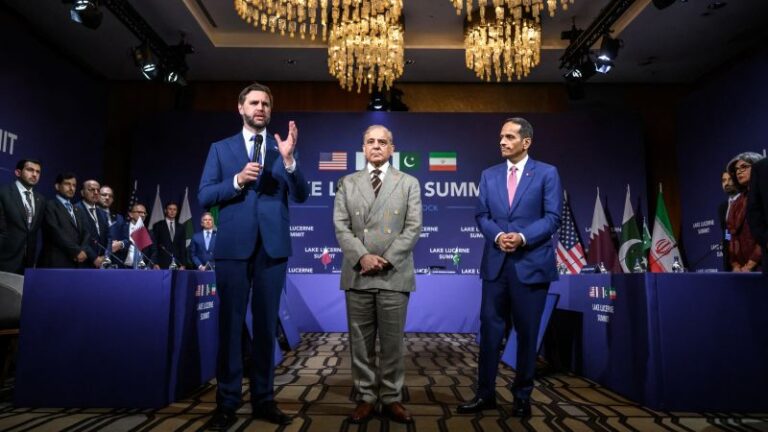
Diplomatic efforts to stave off a broader regional escalation have yielded a set of concrete, albeit fragile, agreements between the United States and Iran. Mediators from Qatar and Pakistan, who have been facilitating the recently concluded sessions in Switzerland, described the talks as “positive and constructive,” signaling a cautious optimism that has been largely absent from the bilateral relationship in recent years.
The most immediate outcome of these discussions is the establishment of a High Level Committee designed to oversee ongoing mediation. This body aims to move beyond erratic communication and create a structured framework for dialogue, reducing the likelihood of accidental military escalation in a region where the margin for error is razor-thin.
Securing the Strait of Hormuz
Perhaps the most critical technical win from the Swiss talks is the agreement to create a dedicated “line of communication” specifically for the Strait of Hormuz. As one of the world’s most vital oil transit chokepoints, any miscalculation in the Strait can trigger global economic shocks and immediate military responses.
The move follows a period of extreme volatility. The talks had nearly collapsed after President Donald Trump publicly threatened the Iranian delegation, suggesting in an interview with Fox News that the U.S. could resume bombing campaigns or move to “take over” the Strait of Hormuz if a deal remained elusive. The subsequent pivot toward a formal communication line suggests a pragmatic realization that direct, rapid-response channels are necessary to prevent a tactical skirmish from evolving into a strategic war.
The Lebanon De-Confliction Cell
While the maritime security agreements are a priority, the mediators are also attempting to tackle the bleeding edge of the conflict in Lebanon. According to officials from Qatar and Pakistan, the U.S. and Iran have agreed to the creation of a “de-confliction cell.”
This cell is intended to function as a coordination hub to ensure the cessation of military operations in Lebanon. The challenge remains the deep-seated friction between Israel and Iran-backed Hezbollah. Tehran has remained steadfast in its position that any lasting deal is contingent upon the immediate cessation of deadly Israeli strikes. By creating a de-confliction mechanism, the mediators are attempting to decouple the immediate humanitarian and tactical needs of the Lebanese ceasefire from the more complex, long-term geopolitical demands of the broader regional agreement.
Technical Continuity and the Road Ahead
Despite the breakthrough in high-level rhetoric, the heavy lifting is only beginning. Technical talks are scheduled to resume in Switzerland this week, where diplomats and military attaches will hash out the operational details of the de-confliction cell and the Hormuz communication protocols. These technical sessions will determine whether the “encouraging progress” cited by mediators translates into a functional security architecture or remains a diplomatic gesture.
The success of these measures depends heavily on the stability of the political will in both Washington and Tehran. With the specter of renewed threats and the volatility of the Lebanon border, the new High Level Committee faces the daunting task of maintaining momentum while the parties involved continue to operate from positions of deep mutual distrust.