The ‘Sober Rave’: How India’s Gen Z is Rebranding Devotional Music as ‘Bhajan Clubbing’
Combining high-end concert production with centuries-old Hindu hymns, 'Bhajan clubbing' is emerging as a sober alternative for India's youth.
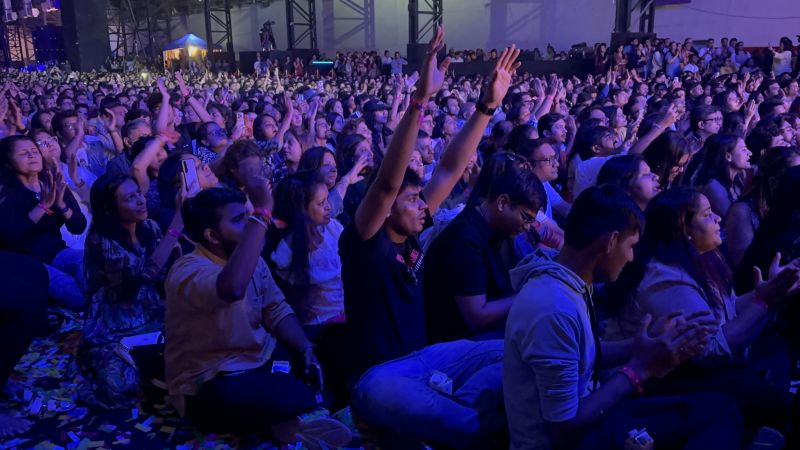
A New Kind of Nightlife in Mumbai
In a massive venue in Mumbai, the scene looks like any other high-production concert. QR codes are scanned at the door, wristbands are snapped into place, and a crowd of thousands—mostly office workers and teenagers—fills the space. But as the lights dim and the music begins, the expected thumping bass of EDM is replaced by something fundamentally different: centuries-old Hindu devotional songs, or bhajans.
This is “Bhajan clubbing,” a burgeoning cultural phenomenon where Gen Z Indians are blending the theatricality of modern rave culture with the spiritual depth of traditional prayer. The experience is designed to evoke ecstasy, but without the chemical assistance. Alcohol and drugs are strictly banned, reflecting a global “sober curious” trend that has seen the rise of coffee raves in Europe and the U.S. In Mumbai, the intoxicant of choice is collective spiritual energy—and occasionally, buttermilk.
The Production of Piety
While the hymns themselves are ancient, the delivery is cutting-edge. These are not the quiet, understated gatherings found in local temples. Instead, organizers utilize smoke machines, giant LED screens, and pyrotechnics to create an immersive environment. For many attendees, this high-tech staging is the hook that makes traditional religion accessible again.
“The theatrics speak to us,” says 26-year-old Dhwani Paradia. “The smoke, the fire effects, the beat of the music—those are things our generation relates to.” Her sister, Fiyoni, notes that the visual language mirrors the electronic music festivals they grew up with, effectively bridging the gap between ancient faith and modern aesthetics.
Driving this movement is the performer duo Backstage Siblings, who have successfully coded traditional bhajans into a language that resonates with a digitally native generation. By decoupling the “clubbing” experience from intoxication, they argue that the joy of the event comes from the activity itself, rather than the substance used to achieve it.
The Business and Politics of Devotion
The scale of this movement has caught the attention of the corporate world. Saregama, one of India’s oldest and most established music labels, has provided backing for these events, recognizing the commercial viability of a “spiritual experience” product. This fits into a larger economic trend; India’s religious and spiritual economy was estimated at approximately $58 billion in 2025, with steady growth projected over the next decade.
However, the trend does not exist in a vacuum. Critics argue that turning spirituality into a ticketed, high-production spectacle risks commodifying faith. Furthermore, the rise of Bhajan clubbing coincides with a broader political shift toward Hindu symbolism in Indian public life. This cultural pivot has received high-level validation, with Prime Minister Narendra Modi describing the adoption of bhajans by Gen Z as “heartening,” praising the preservation of the songs’ purity within a modern lifestyle.
Escapism in a High-Pressure Economy
Beyond the aesthetics and the politics, there is a psychological driver. India possesses one of the world’s youngest populations, but that youth is facing an era of intense academic and professional competition. With rising anxiety and frustrations over government recruitment irregularities, many young adults are searching for a sense of belonging that the corporate grind doesn’t provide.
Nikunj Gupta, who organizes these events through Sanatana Journey, observes that the audience is overwhelmingly composed of college students and early-career professionals. For a few hours, the collective chanting and dancing offer a visceral release from the pressures of urban life, transforming a religious rite into a form of communal mental health support.
Related News
Related Articles

Rivian’s Existential Gamble: Can a Roofless Factory and a New Model Save the EV Upstart?
A tornado strike at Rivian's Normal, Illinois plant highlights the precarious timing of the R2 launch as the company fights for survival in a cooling EV market.

The Scarlet Screen: AO3 Users Deploy Code-Sensing Skins to Purge AI Fanfiction
A new community-led effort on Archive of Our Own (AO3) uses custom skins to detect Anthropic's Claude AI, sparking a debate over authenticity and surveillance in fanworks.

AfD Convention in Erfurt Sparks Chaos as Far-Right Party Eyes State Power Amidst Historical Tensions
Protests and police clashes erupt in Erfurt as the Alternative for Germany (AfD) holds its leadership convention, coinciding with Nazi-era anniversaries.
Comments (0)