Rivian’s Existential Gamble: Can a Roofless Factory and a New Model Save the EV Upstart?
A tornado strike at Rivian's Normal, Illinois plant highlights the precarious timing of the R2 launch as the company fights for survival in a cooling EV market.
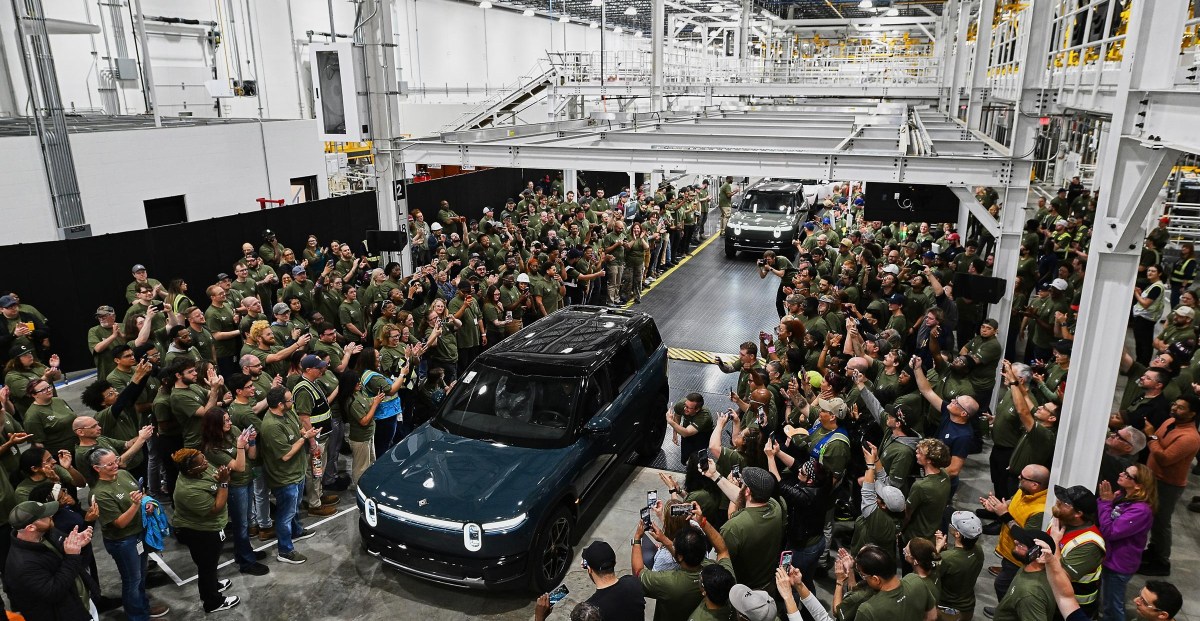
The Day the Roof Came Off
On April 17, a high-intensity supercell storm tore through west-central Illinois, leaving a trail of destruction that culminated in a direct hit on Rivian’s primary manufacturing hub on the outskirts of Normal. The tornado acted like a can opener, peeling back the plant’s roof and collapsing structural walls, triggering a cascade of failures that left the facility’s assembly pits flooded by activated sprinkler systems.
For Bobby Dean Parker, Rivian’s VP of Manufacturing, the call was a sudden descent into chaos. For CEO RJ Scaringe, the reality arrived via a grainy video sent from the scene: a massive hole in the ceiling and floodlights reflecting off water-slicked concrete floors. While the physical damage was severe, the timing was catastrophic. The storm struck the exact section of the factory designated for the upcoming R2 midsize SUV, just days before production was slated to begin.
The R2: A Make-or-Break Pivot
The physical wreckage at the Normal plant is a metaphor for the broader precariousness of Rivian’s current trajectory. While the company has successfully carved out a niche with its luxury R1T pickup and R1S SUV, these vehicles cater to a high-end demographic that is finite. To achieve the scale necessary for long-term survival, Rivian is betting everything on the R2.
The R2 is designed to be the company’s volume play—a more affordable, compact alternative intended to compete directly with the dominance of the Tesla Model Y, which has historically set the benchmark for global EV sales. Unlike the R1 series, which established Rivian’s brand identity as the “adventure vehicle” for the electrified age, the R2 must transition the company from a boutique manufacturer to a mass-market competitor.
Escaping the ‘Compliance’ Shadow
To understand why the R2 is so critical, one must look at the evolution of the American EV. For decades, the US market was littered with “compliance cars”—uninspired, egg-shaped sedans like the early Nissan Leaf and Chevy Volt, built primarily to satisfy California’s emissions mandates rather than to excite consumers. Tesla disrupted this by treating the car as a piece of high-end consumer electronics, starting with luxury models to fund the eventual descent into the mass market with the Model 3 and Model Y.
Rivian followed a similar blueprint, leveraging an early $700 million investment from Amazon and a massive order for 100,000 electric delivery vans to build its foundation. However, the market Rivian is entering now is far more hostile than the one Tesla faced a decade ago. Interest rates have climbed, and the early-adopter enthusiasm for EVs has been replaced by a more skeptical mainstream audience concerned about charging infrastructure and depreciation.
Beyond the Storm
The hole in the roof at the Normal plant can be patched, and the floodwaters can be pumped out. In the world of industrial manufacturing, these are solvable engineering problems. The true danger for Rivian is not the weather, but the crushing pressure of the “production hell” that nearly sank Tesla during the Model 3 ramp-up.
Rivian is now fighting a two-front war: racing to repair a damaged facility while simultaneously attempting to execute a flawlessly timed launch of the R2. If the company misses its production targets or fails to hit the necessary price point, it risks becoming another cautionary tale of the EV startup era—a company that built a great product but couldn’t build a sustainable business.
Related News
Related Articles

The OMB’s Quiet Pivot: How a Rule Change Could Politicize $1 Trillion in Federal Research
A proposed 412-page OMB revision aims to align federal grants with presidential priorities, potentially ending the era of independent peer-reviewed science in the US.
Beatbot Pivots to ‘All-Zone’ Automation With New AquaSense X and Solar-Powered iSkim
Beatbot expands its robotic pool cleaner lineup with the flagship AquaSense X and solar-integrated iSkim, targeting the high-end automation market.
Google Pivots Hardware Strategy with ‘Googlebook’: A New AI-First Laptop Category Built for Gemini
Google unveils the Googlebook, a new breed of laptops designed from the ground up for Gemini AI, signaling a major shift away from traditional ChromeOS architecture.
Comments (0)