The Physics of Stability: Why the ‘Perfect’ Camera Tripod Remains an Engineering Myth
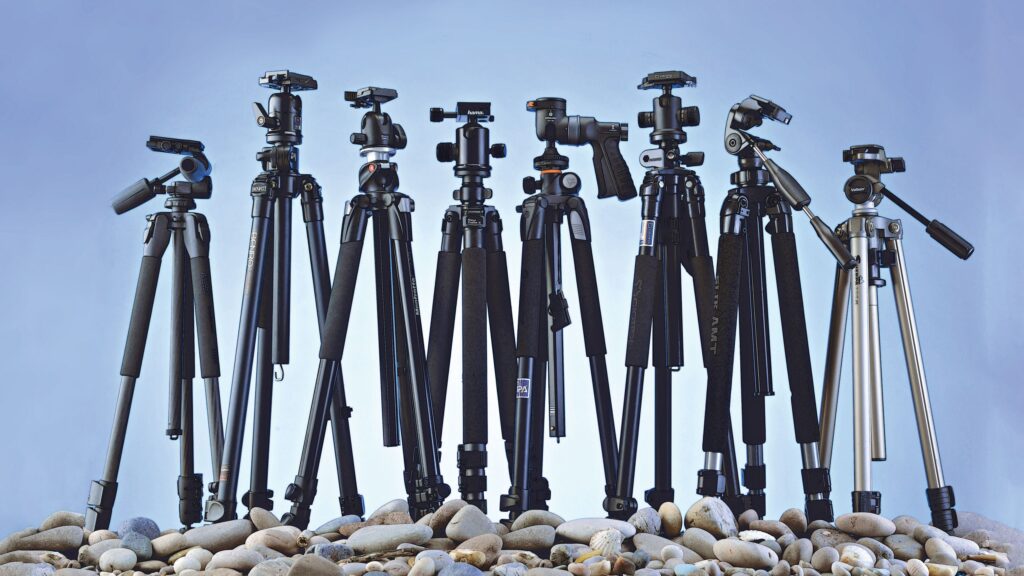
Table of Contents
The Eternal Tug-of-War Between Weight and Rigidity
In an era where mirrorless cameras feature five-axis in-body image stabilization (IBIS) and lenses can counteract shake with surgical precision, the humble tripod remains an indispensable tool. Whether it is a long-exposure architectural shot or a low-light interior where cranking the ISO would destroy the image’s dynamic range, mechanical stability is the only absolute solution. Yet, despite centuries of iteration—from the heavy timber stands of the 19th century to today’s aerospace-grade composites—the “perfect” tripod remains an impossibility. The culprit isn’t a lack of innovation, but the immutable laws of physics.
The core of the problem is a fundamental engineering conflict: the inverse relationship between portability and stability. For a tripod to be truly stable, it requires mass and a low center of gravity to resist wind shear and vibrational resonance. However, the primary requirement for the modern photographer—especially those moving between stills and video—is mobility. When you optimize for weight, you inevitably sacrifice the rigidity needed to support a heavy full-frame body paired with a 70-200mm telephoto lens.
Material Science: Aluminum vs. Carbon Fiber
The industry’s primary attempt to cheat these physics has been the shift toward carbon fiber. By offering a higher strength-to-weight ratio than aluminum, carbon fiber allows for a tripod that doesn’t feel like a piece of industrial scaffolding during a five-mile hike. But even this is a compromise. While carbon fiber is lighter and better at dampening high-frequency vibrations, it is significantly more expensive and can actually feel “springier” under extreme loads compared to the dead-weight rigidity of a high-end aluminum alloy.
For many professionals, the solution is not the lightest gear, but the “maximum tolerable weight.” This is the heaviest piece of equipment a photographer is realistically willing to carry without leaving it in the car. A rugged, aluminum workhorse—such as the legacy Velbon CX series—often proves more reliable over decades of use than a lightweight travel tripod that flexes every time the wind picks up.
The Head Game: Precision vs. Speed
Stability isn’t just about the legs; it is about the interface between the camera and the support. This is where the divide between still photography and cinematography becomes a chasm. A ball head offers unmatched speed, allowing a photographer to lock an angle in seconds. However, it is nearly useless for precise architectural compositions or smooth cinematic pans.
Conversely, three-way heads and geared heads provide the granular control required for macro or product photography, but they are slow and cumbersome. Fluid heads, designed for video, introduce a level of dampened movement that is essential for cinema but often lacks the absolute “lock-down” feel required for long-exposure stills. Choosing a head is less about finding the “best” one and more about deciding which specific type of frustration you are willing to tolerate for a given project.
The Monopod Alternative
When the trade-off between a tripod’s stability and its bulk becomes too steep, the monopod emerges as a strategic middle ground. In confined environments—crowded press pits, narrow urban corridors, or sporting events—a tripod is often a liability. A monopod provides the essential vertical support to eliminate shake while maintaining a small footprint and high mobility. While it cannot facilitate a true long exposure, it solves the “height vs. weight” equation in ways a tripod cannot.
Ultimately, the search for the perfect support system is a lesson in managing trade-offs. Whether opting for lever locks for speed or twist locks for packing density, every choice is a concession to the environment. In the end, the only truly “perfect” tripod is the one that is actually with you when the light hits the landscape just right.