Sony Lytia L910: How LOFIC Technology is Solving the Smartphone HDR Problem
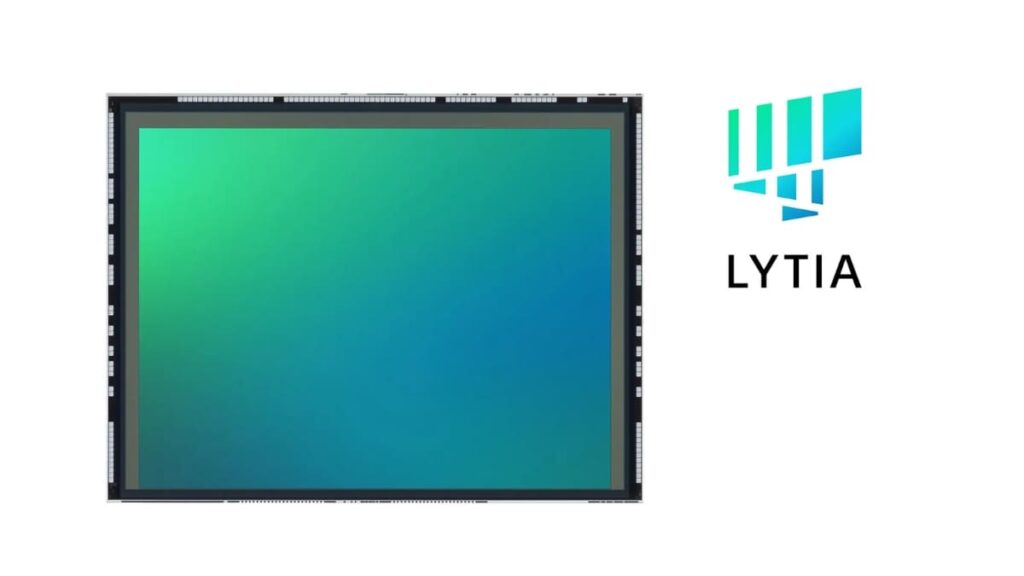
Table of Contents
The War Against Highlight Clipping
For years, smartphone photographers have fought a losing battle against the sun. You take a stunning photo of a friend standing in front of a sunset, only to find the sky is a washed-out white void or the subject’s face is shrouded in unnatural shadow. This is the dynamic range problem—the inability of a sensor to capture the widest possible range of light and dark in a single frame.
Sony Semiconductor Solutions is attempting to shift this paradigm with the announcement of the Sony Lytia L910 (LYT-L910). While the spec sheet—50 megapixels, 1/1.28-inch size—looks familiar, the real story lies in a structural architectural shift called LOFIC (Lateral Overflow Integration Capacitor). By fundamentally changing how a pixel handles excess light, Sony is claiming a dynamic range of up to 100dB, a figure that pushes mobile imaging closer to the capabilities of professional cinema cameras.
- Key Takeaways
- LOFIC Integration: The L910 uses Lateral Overflow Integration Capacitors to capture overflow charge, preventing highlight clipping.
- Dynamic Range Jump: Combined with TCG-HDR, the sensor targets a 100dB dynamic range in a single exposure.
- Hardware Specs: A 1/1.28-inch stacked CMOS sensor with 50MP resolution and 1.22 µm pixel size.
- Video Capability: Optimized for 4K 60fps recording with a specific focus on HDR consistency.
Deconstructing LOFIC: What Actually Changes?
To understand why the Lytia L910 is a departure from previous sensors, we have to look at the physics of a pixel. A standard CMOS pixel is essentially a bucket (the photodiode) that collects photons. When the bucket fills up, it’s called “saturation.” Any light hitting the sensor after that point is lost, resulting in the “blown-out” white areas we see in overexposed photos.
LOFIC (Lateral Overflow Integration Capacitor) acts as a secondary, overflow bucket. When the primary photodiode reaches its capacity, the excess electrons don’t simply vanish; they flow laterally into an adjacent capacitor. This allows the sensor to keep recording light levels far beyond the normal saturation point of a standard pixel.
The Role of Triple Conversion Gain HDR (TCG-HDR)
LOFIC doesn’t work in isolation. Sony has paired it with Triple Conversion Gain HDR. In traditional HDR, a phone takes multiple photos at different exposures and stitches them together (which causes the “ghosting” effect on moving objects). TCG-HDR allows the sensor to handle three different gain levels within a single exposure.
By combining the overflow capacity of LOFIC with TCG-HDR, the Lytia L910 can capture extreme highlights and deep shadows simultaneously. This is how Sony achieves the 100dB threshold—a measurement of the ratio between the strongest and weakest signals the sensor can reliably distinguish.
Technical Specifications and Architecture
Under the hood, the Lytia L910 follows the “stacked” CMOS design, which separates the pixel array from the logic circuits to maximize light collection area. The sensor utilizes a Quad Bayer color filter arrangement. In this setup, four adjacent pixels share the same color filter (red, green, or blue). This allows the sensor to switch between two modes: high-resolution (50MP) and high-sensitivity (12.5MP through pixel binning).
| Specification | Detail |
|---|---|
| Sensor Size | 1/1.28-inch |
| Effective Pixels | 50 Megapixels |
| Pixel Size | 1.22 µm |
| Technology | LOFIC + TCG-HDR |
| Dynamic Range | Up to 100dB |
| Max Video | 4K 60fps |
What This Means for the End User
For the average user, the Lytia L910 isn’t about the 50MP number—it’s about reliability. When you point your camera at a bright window or a neon sign at night, the phone will no longer need to “guess” how to balance the light using aggressive software processing. Instead, the hardware is capturing the actual data.
Practical Impact on Photography
The most immediate improvement will be seen in high-contrast scenarios. Imagine a backlit portrait; normally, the software brightens the face, which can introduce noise and a “flat” look. With LOFIC, the sensor captures the natural luminosity of the background and the detail of the subject in one go, leading to more organic-looking images that resemble how the human eye perceives light.
The Video Breakthrough
Video has always been the Achilles’ heel of HDR. Because video is a series of frames, “stitching” HDR frames in real-time is computationally expensive and often leads to flickering. Since the L910 can achieve high dynamic range in a single exposure, 4K 60fps video will look significantly more stable, with highlights that roll off naturally rather than snapping to white abruptly.
Industry Context: Sony vs. The Competition
Sony’s Lytia brand is a strategic pivot to regain dominance in the mobile imaging space, where Samsung’s ISOCELL sensors have historically pushed the boundaries of sensor size. While Samsung has focused on massive 200MP sensors to gain detail, Sony is doubling down on signal quality and light management.
The L910 represents a shift from “more pixels” to “smarter pixels.” By implementing LOFIC, Sony is addressing the fundamental limitation of silicon: the saturation point. If this technology scales, we could see a future where smartphones no longer need complex HDR algorithms because the hardware simply doesn’t clip the highlights.
Frequently Asked Questions
What is the difference between Lytia and previous Sony sensors?
The Lytia brand marks a new era of Sony sensors focused on the “human eye” experience. The primary difference in the L910 is the move toward structural innovations like LOFIC, moving away from simply increasing resolution toward improving how the sensor handles light overflow.
Does a 100dB dynamic range mean better low-light photos?
While dynamic range primarily helps with high-contrast scenes (bright and dark together), the LOFIC structure and TCG-HDR do improve the signal-to-noise ratio. This results in cleaner shadows and less noise in night photography, although the sensor’s physical size (1/1.28″) remains the primary driver for low-light performance.
Will this sensor be in all new smartphones?
No. The Lytia L910 is a high-end component likely reserved for flagship “Ultra” or “Pro” models. It requires specific ISP (Image Signal Processor) support to handle the LOFIC data stream, meaning it will likely debut in premium devices from partners like Xiaomi, Oppo, or Sony’s own Xperia line.
Is Quad Bayer better than a standard Bayer filter?
Quad Bayer allows for flexibility. In bright light, it provides high-resolution 50MP images. In low light, it bins four pixels into one large “super-pixel,” which gathers more light and reduces noise. It is the industry standard for balancing resolution and sensitivity.
How does LOFIC affect battery life?
Sony claims the L910 maintains low power consumption. Because the dynamic range is achieved at the hardware level (via the capacitor) rather than through heavy software processing (stitching 10 different frames), it can actually be more efficient for the phone’s processor during HDR capture.
The Technical Reality Check
It is important to note that while Sony provides the hardware, the final image quality depends on the smartphone manufacturer’s tuning. A sensor with 100dB potential can still produce poor images if the software’s noise reduction is too aggressive or the color science is off. However, by providing a cleaner, more detailed raw signal, the L910 gives engineers a much better canvas to work with.
The transition to LOFIC is a signal that the “megapixel race” is slowing down. We have reached a point of diminishing returns with 200MP sensors; the next frontier is light fidelity. Sony’s Lytia L910 is the first major step in that direction, promising a world where your phone captures the world as you see it, not as a processed approximation.