The Pentagon’s 300,000-Drone Gamble: A Pivot Toward Attritable Warfare
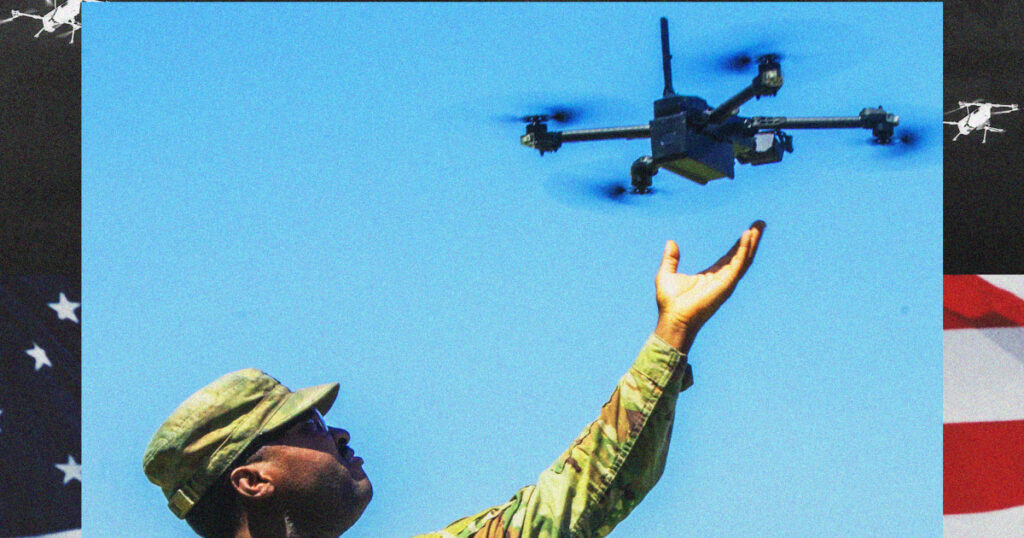
Table of Contents
The Shift Toward ‘Attritable’ Systems
The Department of Defense is moving away from the era of the billion-dollar platform. In a sweeping strategic pivot, the Pentagon has launched a competition series to identify and procure roughly 300,000 drones, signaling a fundamental shift in how the U.S. military intends to fight future conflicts. The goal isn’t just quantity, but the adoption of what officials call ‘attritable’ systems—hardware that is cheap enough to be lost in combat without causing a strategic or financial crisis.
This massive procurement push is a direct response to the lessons learned from the conflict in Ukraine, where low-cost First Person View (FPV) drones and commercial off-the-shelf quadcopters have effectively neutralized expensive armored vehicles and disrupted traditional trench warfare. For decades, the U.S. military focused on ‘exquisite’ capabilities—highly advanced, multi-role aircraft like the F-35 that are too expensive to risk in high-threat environments. The new directive flips this logic on its head.
Breaking the Procurement Bottleneck
Historically, Pentagon acquisitions are notoriously slow, often taking a decade to move from a prototype to a fielded product. To avoid this, the current competition series is designed to bypass traditional bureaucratic hurdles. By inviting a wide array of startups and established defense contractors to compete in rapid-fire iterations, the DoD is attempting to mirror the agility of the private tech sector.
This approach is closely aligned with the Replicator initiative, which aims to field thousands of autonomous systems across multiple domains—air, sea, and land—within a compressed timeframe. The objective is to create a “mosaic” of capabilities where no single drone is indispensable, but the collective swarm provides an overwhelming tactical advantage.
The Technical Hurdle: Autonomy at Scale
While buying 300,000 airframes is a logistics challenge, the real battle is in the software. Operating drones at this scale makes traditional one-to-one pilot control impossible. The Pentagon is prioritizing systems that can operate with high levels of autonomy, utilizing edge AI to identify targets and coordinate movements without constant human intervention.
This shift raises significant cybersecurity and ethical questions. The reliance on autonomous targeting requires a robust framework to prevent ‘friendly fire’ and ensure adherence to international laws of armed conflict. Furthermore, the vulnerability of drone control links to electronic warfare (EW) means these systems must be capable of operating in “GPS-denied” environments, relying on inertial navigation or visual odometry rather than satellite signals.
Industry Implications and the Startup Surge
This procurement spree is opening the door for a new generation of defense tech startups. While giants like Northrop Grumman and Lockheed Martin will undoubtedly bid, the Pentagon is increasingly looking toward firms that specialize in rapid prototyping and additive manufacturing. The ability to print a drone chassis in a forward operating base and swap in a new sensor suite on the fly is now more valuable than a gold-plated specification sheet.
The move also highlights a growing tension between the traditional military-industrial complex and the “Silicon Valley” approach to defense. By emphasizing cost-per-unit and scalability over raw performance, the DoD is effectively forcing legacy contractors to innovate faster or lose significant market share to leaner, software-first competitors.