The Orbital Ceiling: Why Space Traffic Management is Racing Against a ‘Source-Sink’ Crisis
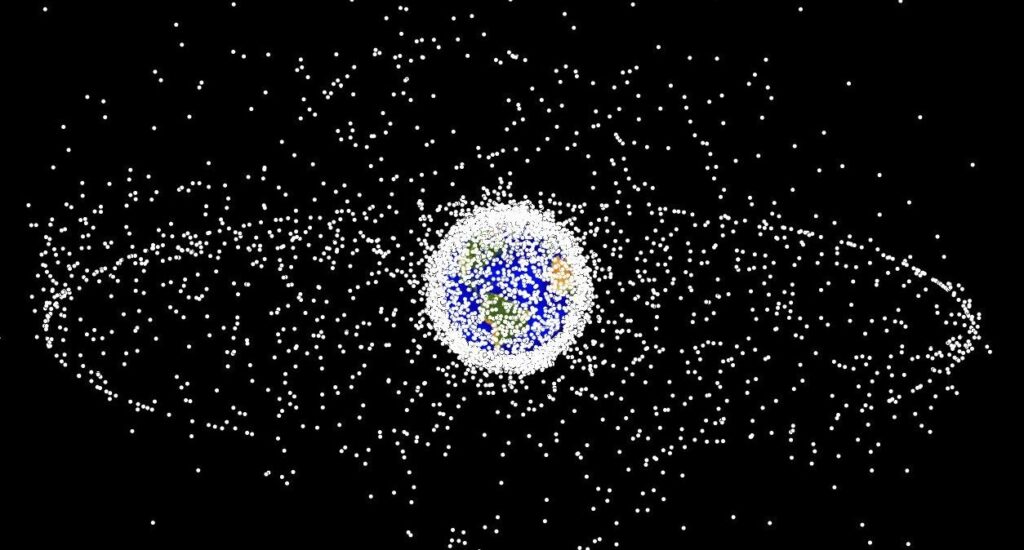
Table of Contents
The Finite Resource of Low Earth Orbit
For decades, the vacuum of space was treated as an infinite frontier. But as the surge of commercial satellite constellations and robotic missions accelerates, the industry is facing a sobering physical reality: Low Earth Orbit (LEO) is a finite environmental resource. With satellites screaming at velocities exceeding seven kilometers per second, the margin for error has vanished. A piece of debris the size of a marble carries enough kinetic energy to neutralize a multi-billion dollar asset, turning a functioning satellite into a cloud of thousands of new projectiles.
The central challenge now facing agencies like NASA and the European Space Agency (ESA), alongside private operators, is the establishment of an “equilibrium state” for Space Traffic Management (STM). This isn’t just a policy goal; it is a rigorous engineering requirement. In the context of STM, equilibrium is the tipping point where the rate of spacecraft launches and debris generation is balanced by the rate of controlled deorbits and active removal. If the “source” of orbital objects continues to outpace the “sink,” the environment enters a state of progressive instability.
The Sun-Synchronous Bottleneck
Not all orbits are created equal. The most critical pressure point is currently found in Sun-synchronous orbits (SSO). These specific paths are highly prized by Earth observation and reconnaissance satellites because they provide consistent lighting conditions for imaging—essential for everything from climate monitoring to intelligence gathering.
Because SSOs are so attractive, they have become the orbital equivalent of a congested metropolitan highway. Most of this activity is concentrated between 500 and 900 kilometers. The danger here is atmospheric; at these altitudes, the thin veil of Earth’s atmosphere provides almost zero drag. While a satellite at 300km might naturally decay and burn up within a few years, a dead satellite in SSO can remain a lethal hazard for centuries. This concentration of legacy debris, combined with the arrival of massive new constellations, has turned the SSO region into a high-risk zone for conjunction events.
The Impact of Heavy Infrastructure
The risk profile is shifting from small satellites to massive orbital infrastructure. The industry is now discussing the deployment of orbiting data centers—essentially floating server farms that require enormous solar arrays and thermal radiators to manage heat. These structures significantly increase the “collision cross-section” of an object, meaning they are much more likely to be hit by existing debris or obstruct the path of other spacecraft.
When you add inhabited space stations to the mix, the stakes shift from financial loss to human casualty. The safety of crews on the ISS or future commercial stations is entirely dependent on the ability of STM systems to predict and avoid collisions in real-time, a task that becomes exponentially harder as the number of trackable objects grows.
Modeling the Orbital Carrying Capacity
To prevent a runaway cascade—often referred to as the Kessler Syndrome—engineers are treating orbital shells like ecological systems. Just as a fishery can only support a certain number of boats before the fish population collapses, an orbital shell has a finite “carrying capacity.” Once the density of objects exceeds a specific threshold, the probability of collisions rises to a point where the environment becomes unusable, regardless of how many new satellites are launched.
Achieving a sustainable equilibrium requires a move toward a dynamic, sector-based management system, similar to how Air Traffic Control (ATC) manages flight corridors. This would involve:
- Real-time density monitoring: Tracking not just known satellites, but statistically estimating the population of untrackable millimeter-scale fragments.
- Mandatory post-mission disposal: Enforcing strict timelines for satellites to deorbit themselves after their operational life.
- Active Debris Remediation (ADR): Deploying “space tow trucks” to actively remove large, dead satellites from high-value orbits.
Currently, it is estimated that over 100 million fragments of debris are orbiting Earth. While only a fraction are large enough to be tracked by ground-based radar, the cumulative risk is mounting. The transition from passive monitoring to active management is no longer a luxury; it is the only way to ensure that the door to space remains open for the next century of exploration.