The Orbital Carrying Capacity: Why Space Traffic Management is Racing Toward a Breaking Point
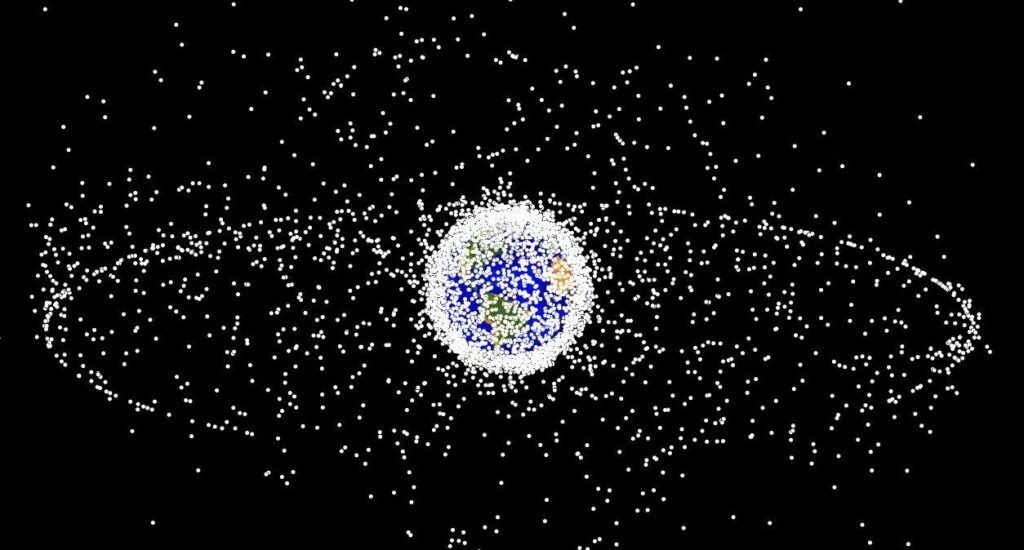
Table of Contents
The Finite Resource of Low Earth Orbit
For decades, the vacuum of space was treated as an infinite expanse. But as the aerospace industry shifts from a handful of government-led missions to a gold rush of private mega-constellations and planned orbital data centers, the reality is setting in: Low Earth Orbit (LEO) is a finite environmental resource. The current trajectory of satellite deployments is pushing the orbital environment toward a critical threshold where the risk of catastrophic collision is no longer a statistical outlier, but an inevitability.
At the heart of the current debate among aerospace engineers and policymakers is the concept of an “equilibrium state.” In terrestrial terms, we think of traffic in layers—highways, air corridors, and shipping lanes. In orbit, however, satellites travel at velocities exceeding seven kilometers per second. At these speeds, a fragment of paint or a millimeter-scale piece of debris carries enough kinetic energy to disable a multi-million dollar satellite or endanger the crews of inhabited space stations.
The Source-Sink Dynamic
To manage this, researchers are now modeling the orbital environment as a “source-sink” system. The “sources” are intuitive: every new SpaceX or Amazon Kuiper launch, every accidental fragmentation event, and the lingering debris from Cold War-era anti-satellite tests. The “sinks” are the mechanisms that remove mass from orbit, such as controlled atmospheric re-entry, natural orbital decay, and the emerging field of active debris removal (ADR).
True orbital equilibrium is achieved only when the rate of removal matches or exceeds the rate of addition. Currently, the math doesn’t add up. With over 100 million fragments of debris believed to be orbiting Earth—most of them too small to be tracked by ground-based radar—the “source” side of the ledger is growing exponentially while the “sink” side remains largely theoretical or prohibitively expensive.
The Sun-Synchronous Bottleneck
Nowhere is this instability more evident than in Sun-synchronous orbits (SSO). These orbits are the prime real estate of LEO; they allow satellites to pass over the Earth at a consistent local solar time, providing the uniform lighting necessary for high-resolution reconnaissance and environmental monitoring.
Because these orbits—typically ranging between 500 and 900 kilometers—are so desirable, they have become dangerously congested. Unlike very low orbits, where atmospheric drag naturally scrubs defunct satellites from the sky, SSOs are high enough that debris can persist for centuries. This creates a compounding risk: a single collision in an SSO shell can trigger a cascade of new debris, which in turn increases the probability of further collisions—a phenomenon known as the Kessler syndrome.
Scaling Infrastructure in a Crowded Sky
The risk profile is shifting further with the proposal of orbiting data centers. While these facilities promise lower latency and decoupled energy needs, their physical footprint is massive. Large solar arrays and thermal radiators increase the “cross-sectional area” of these assets, making them larger targets for debris and more difficult to maneuver during conjunction events.
If the industry continues to treat orbital shells as open-access commons without a capacity limit, the result will be a degraded environment where the cost of collision avoidance outweighs the economic utility of the satellites themselves.
Toward a Dynamic Air Traffic Control for Space
Moving toward a sustainable equilibrium requires a shift from passive observation to active management. This likely means treating orbital shells similarly to air traffic control sectors, where a dynamically calculated “carrying capacity” determines how many objects can safely occupy a specific altitude and inclination.
Engineering this equilibrium will require a synthesis of real-time orbital density monitoring, mandatory post-mission disposal (PMD) requirements, and autonomous collision avoidance systems that can communicate across different operator platforms. Until the industry can reliably turn the “sink”—the removal of old hardware—into a scalable business or regulatory requirement, the equilibrium of LEO remains precarious.