The Maneuverability Gap: Why Propulsion is the Silent Linchpin of the ‘Golden Dome’ Space Shield
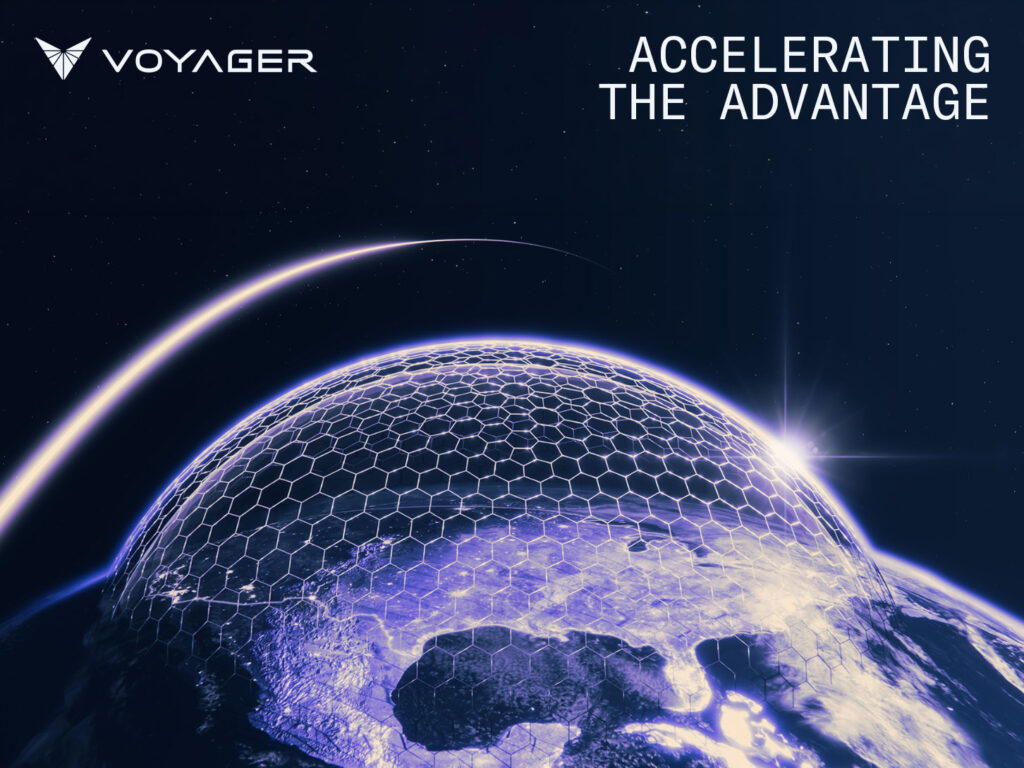
Table of Contents
Beyond the Intercept: The Logistics of Orbital Warfare
For decades, the conversation surrounding missile defense has been dominated by the ‘kill chain’: detection, tracking, and the eventual kinetic impact. However, a new architectural shift known as Golden Dome is forcing a pivot in how the U.S. defense establishment views the physics of space. The focus is moving away from the moment of impact and toward the grueling logistics of orbital positioning.
Golden Dome envisions a massive, distributed constellation of thousands of satellites, each equipped with sensors and interceptors. This would mark a significant escalation in U.S. space capabilities, effectively placing weapons in orbit managed by space-borne data centers and a cross-domain, AI-enabled command network. But there is a fundamental physical reality that AI cannot solve: if a satellite cannot maneuver rapidly in a contested environment, it is merely a target.
This requirement for ‘persistent maneuverability’ is what is currently driving a surge in commercial propulsion innovation. In the vacuum of space, the ability to reposition a platform or adjust an interceptor’s trajectory by a fraction of a degree can be the difference between a successful mission and a multi-million dollar piece of space debris.
The Shift Toward Commercial Agility
The Department of Defense is increasingly looking toward the commercial sector to bridge the gap between conceptual blueprints and operational reality. The traditional defense procurement cycle—often slow and rigid—is ill-suited for the rapid iteration required for a project as ambitious as Golden Dome.
“There’s a clear signal from the government that they want to tap into commercial innovation for Golden Dome,” says Matt Magaña, president of Space, Defense and National Security at Voyager. According to Magaña, the initiative represents a strategic thrust designed to force a more focused push into the specific capabilities required to execute the mission, rather than relying on legacy systems that weren’t built for high-tempo orbital combat.
The operational environment for Golden Dome is uniquely hostile. Satellites must be capable of rapid repositioning to avoid threats and maintain continuity under pressure. Meanwhile, the interceptors themselves require stability and precision during engagements where the window for success is measured in milliseconds.
Solid vs. Electric: The Propulsion Dichotomy
To meet these demands, the industry is pursuing a dual-track propulsion strategy. On one hand, there is the need for high-efficiency electric propulsion, which allows satellites to maintain their orbits and perform long-term station-keeping with minimal fuel. On the other, the ‘kinetic’ side of the house requires controllable solid propulsion—systems that can provide the raw, immediate thrust necessary for an interceptor to lunge toward a target.
Voyager is positioning its technology at the intersection of these two needs. By integrating controllable solid propulsion with high-efficiency electric systems, the goal is to create a ‘defense stack’ where orbital agility is baked into the hardware. This isn’t just about speed; it’s about the precision of the maneuver. An interceptor that cannot maintain its orientation during a high-G burn is useless, regardless of how advanced its AI targeting is.
The Industrialization of Orbit
While the technical hurdles are significant, the primary bottleneck for Golden Dome may actually be industrial. Moving from a handful of prototype satellites to a constellation of thousands requires a level of production scale that the current aerospace industrial base has rarely encountered.
The challenge is moving from ’boutique’ satellite manufacturing to an operational tempo that resembles an assembly line. As Magaña notes, Golden Dome only becomes a viable deterrent if industry can deliver at that scale. This requires a convergence of propulsion, energetics, and electronics—basically a complete overhaul of how space hardware is manufactured and deployed.
Ultimately, the success of Golden Dome won’t be measured by the sophistication of its software or the sensitivity of its sensors. Those are the ‘brains’ of the operation, but propulsion is the ‘muscle.’ Without systems engineered for endurance and responsiveness, the most advanced AI network in the galaxy remains a stationary target in a very crowded sky.