The Musk Conglomerate: Why a SpaceX-Tesla Merger is Becoming a Logical Endpoint
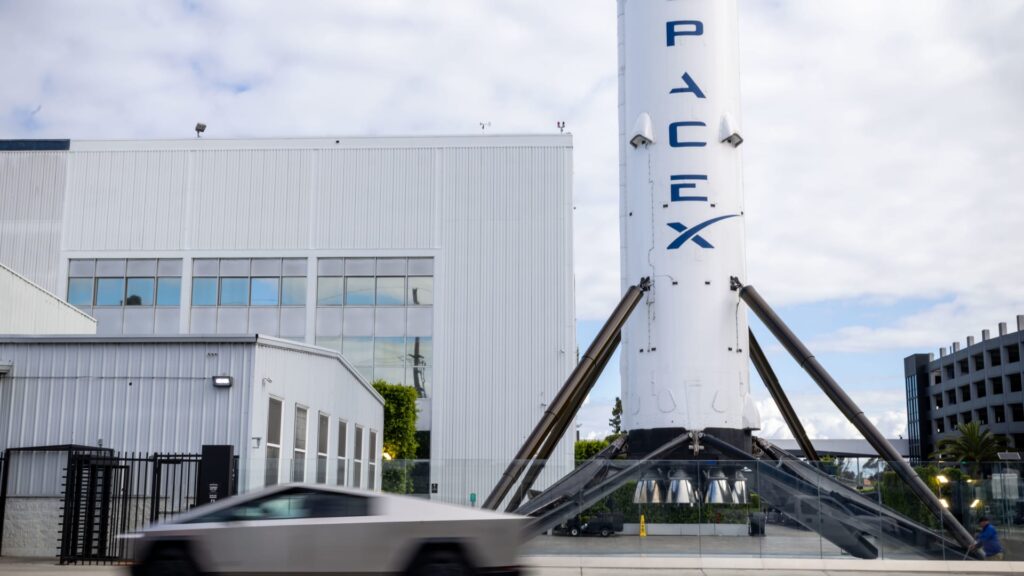
Table of Contents
The Convergence of Orbit and Earth
Elon Musk is on the verge of a rare feat in financial history: steering two separate companies toward the trillion-dollar mark simultaneously. With SpaceX expected to debut on the Nasdaq in roughly two weeks, the rocket company enters the public eye with a staggering private market valuation of $1.25 trillion—a figure bolstered by its recent merger with xAI. Meanwhile, Tesla continues to hover around a $1.6 trillion market cap. While the two businesses appear disparate on the surface, internal chatter and shared resource pipelines suggest that Musk may be designing a path toward a singular, unified entity.
Sources familiar with the matter, speaking on condition of anonymity, indicate that Musk has discussed the potential of folding the companies together. This isn’t merely executive daydreaming; a current Tesla employee told CNBC that such a transaction is a frequent topic of internal conversation among the workforce. The catalyst for this convergence isn’t rockets or cars, but the insatiable demand for artificial intelligence and the massive compute infrastructure required to sustain it.
The AI Infrastructure Bridge
At first glance, a rocket launch and an electric vehicle share little commonality. However, both are now essentially robotics and AI companies. SpaceX’s capital expenditures tell the story: over 75% of its $10.1 billion spend in Q1 was dedicated to AI. Tesla is mirroring this aggression, with projections that its capex will triple this year to over $25 billion.
The technical overlap is significant. As Tomasz Tunguz, a venture capitalist at Theory Ventures and former engineer, notes, the design constraints are remarkably similar. Tesla faces the challenge of running high-powered AI within the strict power and thermal limits of a moving vehicle. SpaceX faces a mirrored challenge in orbit, where radiation and heat rejection are existential threats to compute stability. By merging, the two entities could theoretically consolidate their R&D in edge computing and autonomous systems.
A History of Shared DNA
The architectural blueprint for a merger already exists in the way these companies operate. They have long functioned as a loosely coupled conglomerate rather than independent firms. The boardrooms are a revolving door of the same power players: Musk himself, venture capitalist Ira Ehrenpreis, and former directors like Antonio Gracias and Steve Jurvetson have all bridged the gap between the two companies.
The operational entanglement is even deeper. Charles Kuehmann, a former Apple engineer, serves as VP of materials engineering for both Tesla and SpaceX, illustrating a level of talent sharing rarely seen between separate public-facing entities. This synergy extends to the balance sheet. Tesla recently invested $2 billion into xAI—shares that shifted to SpaceX following the xAI merger. In a striking example of circular economics, SpaceX disclosed in its prospectus that it purchased $697 million in Tesla Megapack battery systems to power the xAI ‘Colossus’ data centers in Memphis, Tennessee. Even the corporate fleet is integrated, with SpaceX spending $131 million on Cybertrucks in 2025.
The Governance Hurdle
While a merger would likely bypass antitrust scrutiny—as the companies operate in entirely different markets—the friction would come from the shareholders. A stock swap of this magnitude would raise grueling questions about valuation, the parent entity’s identity, and the dilution of shares.
However, the SpaceX side of the equation is straightforward. With 85% voting power and a prospectus that explicitly labels it a ‘controlled company,’ Musk faces virtually no resistance from his rocket board. The move would also align perfectly with Musk’s aggressive compensation milestones, including a target $7.5 trillion market cap for SpaceX and Mars colonization goals.
For Musk, the merger isn’t just about efficiency; it’s about creating a vertically integrated intelligence empire where the data from Tesla’s fleet and the connectivity of Starlink feed into the compute power of xAI, all supported by the aerospace engineering of SpaceX.


