The Modular Ancestor: How the IBM 604 Bridge the Gap Between Punch Cards and the Digital Age
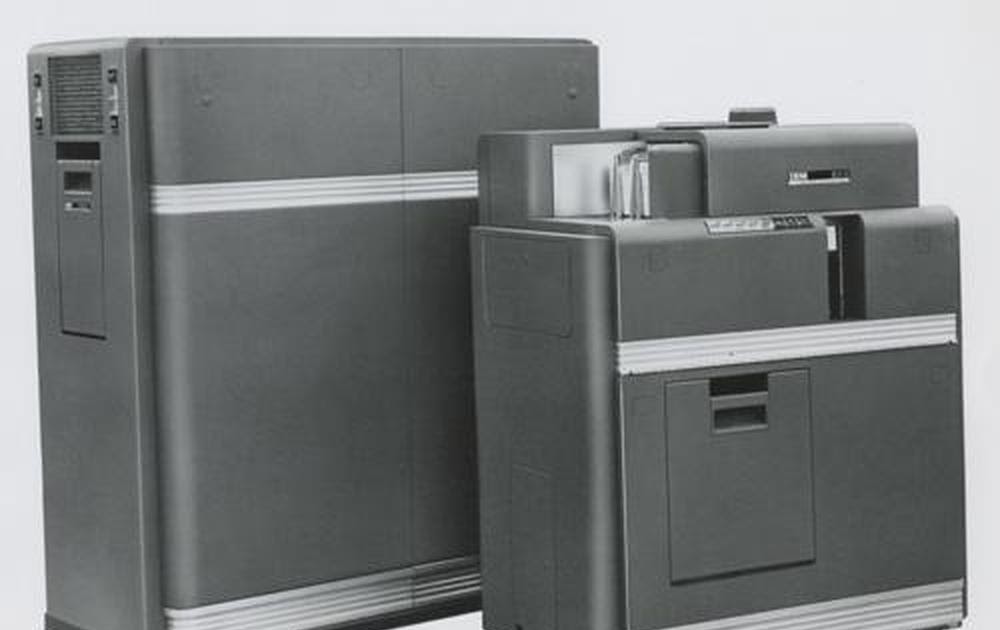
Table of Contents
The Missing Link in Computing History
In 1948, the world of data processing was caught in a violent transition. On one side were the electromechanical relics of the punch-card era—massive machines reliant on clicking relays and physical counting wheels. On the other were the gargantuan, experimental electronic brains like ENIAC and Colossus, which promised unprecedented speed but required room-sized footprints and immense power.
Into this divide stepped the IBM 604 Electronic Calculating Punch. To a modern observer, the 604 might look like a step backward; it wasn’t a general-purpose computer in the way we define them today, but rather a programmable calculator designed for a fixed set of operations. However, for the businesses and universities of the late 1940s, it was a revelation of accessibility. Renting for roughly $550 a month and occupying the space of a double refrigerator, it brought vacuum-tube speed to the corporate office, capable of executing 60 operations per second—including complex multiplication and division.
The Innovation of the Pluggable Module
While the 604’s speed was impressive, its most enduring contribution to computer science wasn’t the math—it was the physical architecture. Before the 604, vacuum tube equipment was typically built on massive metal chassis with components soldered underneath, making repairs a nightmare of guesswork and manual desoldering.
IBM solved this by introducing the pluggable module. This design combined a vacuum tube and its associated circuitry—resistors and capacitors—onto insulating wafers, all housed within a single unit with a removable handle. These modules plugged directly into backplane wiring via a nine-pin socket.
This shift toward modularity was a watershed moment for hardware manufacturing. By standardizing these modules, IBM could mass-produce components on an assembly line rather than hand-building every machine. For the end user, it transformed maintenance: a technician could simply swap a suspect module for a spare to isolate a failure, a precursor to the hot-swappable components used in modern enterprise servers.
Engineering the Switch: Triodes and Thyratrons
At the heart of the 604’s logic were approximately 1,250 vacuum tubes. Most of these were triodes, which functioned as the ancestors of the modern transistor. By applying a small negative voltage to a grid, the triode could control the flow of electrons from a heated cathode to a positive plate, effectively acting as an electronic switch or amplifier.
However, the 604 also relied on a more specialized component: the thyratron tube. Unlike a standard triode, a thyratron contains a small amount of xenon gas. When a trigger signal ionizes this gas, it creates a plasma that can carry significantly higher currents than a standard vacuum tube.
The operational quirk of the thyratron is its “latching” behavior. Once the gas is ionized and current begins to flow, the grid loses its ability to stop the flow. The tube remains “on” regardless of the input signal until the power supply is physically cut, allowing the gas to deionize in microseconds. This makes the thyratron a primitive but effective form of electronic memory—a switch that remembers its state until told to reset.
Legacy of the 604
The success of the IBM 604—with over 5,600 units produced—provided IBM with the critical engineering experience necessary to pivot into the high-end vacuum-tube market of the 1950s. The modular philosophy pioneered in the 604 scaled up into the 700-series computers, where larger eight-tube modules continued to drive the industry toward the reliability and scalability we now take for granted in silicon-based architecture.