The Mental Game: Sabalenka’s French Open Collapse Highlights the Fragility of Momentum
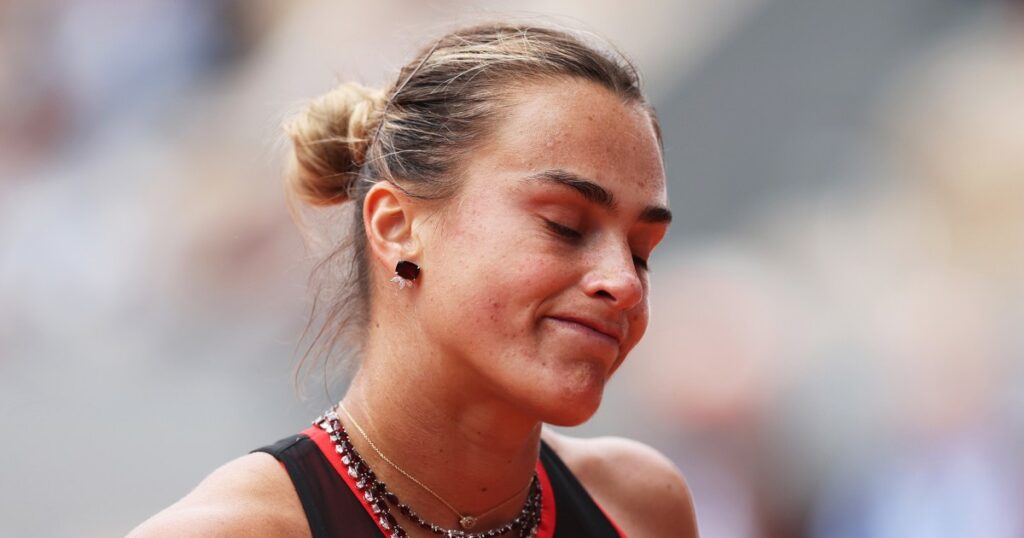
Table of Contents
A Masterclass in Momentum Shift
In professional tennis, the distance between a trophy and a devastating exit is often measured not in skill, but in the psychological stability of the player. This was the stark reality for world No. 1 Aryna Sabalenka on Wednesday at the French Open, where a commanding lead vanished in a whirlwind of frustration and tactical precision from Diana Shnaider.
Sabalenka, a four-time major winner known for her explosive power, entered the quarterfinals as the heavy favorite. For the first hour, it appeared she would cruise through to the semifinals. Holding a set and two breaks, Sabalenka reached a critical juncture in the second set, serving for the match at 5-4 with a 30-15 lead. She was two points away from victory, a position where the physical work is done and only the closing ritual remains.
Then, the collapse began. In a sequence that will likely be analyzed by Sabalenka’s coaching staff for weeks, the Belarusian lost 12 of the final 13 games. Shnaider, making her first-ever Grand Slam quarterfinal appearance, didn’t just capitalize on Sabalenka’s errors; she actively dismantled the world No. 1’s rhythm, turning a predictable victory into a 3-6, 7-5, 6-0 rout.
The Psychology of the ‘Scream’
The match was as much a study in behavioral psychology as it was in athletics. Sabalenka’s struggle with emotional regulation has been a recurring theme in her high-stakes matches. The images of her standing still and screaming after falling 0-30 down in the sixth game of the deciding set were reminiscent of her 2023 final loss to Coco Gauff. In that match, the internal friction—manifesting as shouting and glares toward her player box—seemed to create a feedback loop that eroded her technical execution.
While Sabalenka possesses some of the most lethal groundstrokes in the women’s game, the French Open’s clay surface demands a level of patience and mental fortitude that often clashes with her aggressive nature. As Shnaider tightened the screws, Sabalenka’s frustration became visible. A missed volley in the fourth game of the decider saw her crouch, resting her head on her racket—a posture of defeat long before the final point was played.
Shnaider’s Tactical Discipline
Conversely, Diana Shnaider provided a blueprint for how to dismantle a top-seeded player through composure. Shnaider’s approach was a calculated exercise in incremental gains. By focusing on a point-by-point basis, she avoided the intimidation factor associated with facing the world No. 1.
“I am speechless. Super happy,” Shnaider said following the match. “I feel like I was trying to focus point by point. Not thinking about the score. She is the world No. 1, so I just trying to do my best. I just had to fight for every point.”
This discipline allowed Shnaider to weather the initial storm of Sabalenka’s power and wait for the inevitable dip in the favorite’s concentration. Once the momentum shifted in the second set, Shnaider played with a freedom that Sabalenka, burdened by the expectation of victory, could no longer access.
Wider Implications for the Draw
The tournament continues to be a breeding ground for upsets. Earlier on Wednesday, Maja Chwalinska further disrupted the hierarchy by defeating No. 22 seed Anna Kalinskaya with a 7-6 (3), 6-3 victory. The volatility of the women’s draw this year suggests a narrowing gap between the top seeds and the emerging talent, where mental resilience has become the primary differentiator.
For Sabalenka, the loss is a bitter pill, but it reinforces a known pattern: her ceiling is the highest in the game, but her floor is often compromised by emotional volatility. As the tour moves forward, the question remains whether the Belarusian can bridge the gap between raw power and psychological endurance.