The Long Game of Medical Skepticism: How Modern Anti-Vax Rhetoric is a Century-Old Echo
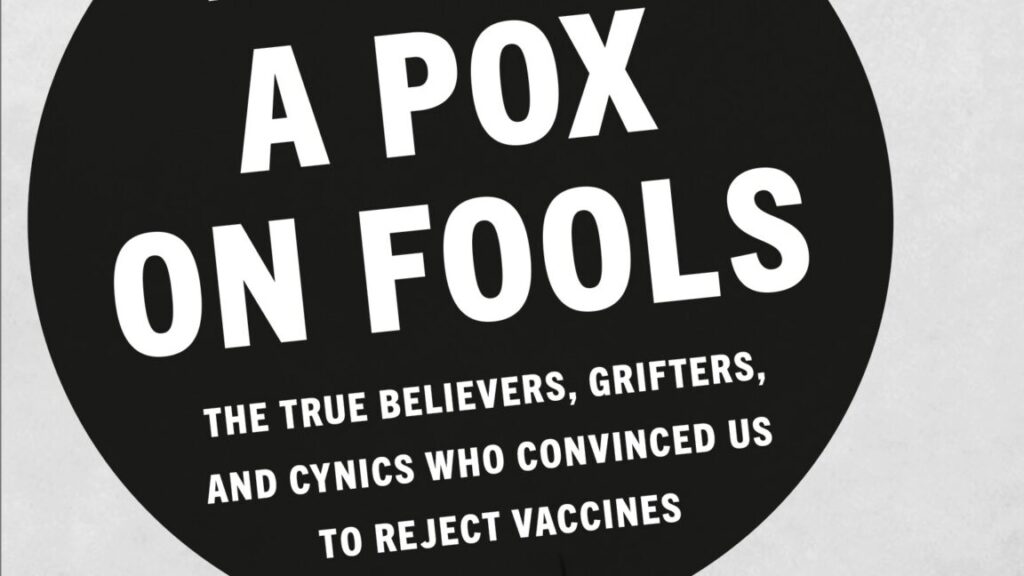
Table of Contents
A Familiar Pattern of Resistance
Stanley Plotkin, the 93-year-old pioneer of vaccine development, recently remarked that he is beginning to regret his longevity—not because of age, but because of the direction in which public health discourse is heading. To those tracking the surge of medical misinformation across social media, the current climate feels like a modern anomaly. However, a deeper look at the history of immunology suggests we are simply seeing the latest iteration of a very old conflict.
In his analysis of medical skepticism, historian Thomas Levenson categorizes the opposition into three distinct archetypes: the true believers, the grifters, and the cynics. While the tools of delivery have shifted from town squares to TikTok algorithms, the core arguments remain remarkably static. The current digital flood of anti-vaccine rhetoric isn’t a new phenomenon; it is a legacy system of distrust.
From Divine Will to ‘Natural’ Living
The friction began almost immediately after the first successful inoculations. In 1721, during smallpox outbreaks in London and Boston, figures like Lady Mary Wortley Montagu and Cotton Mather championed the practice of inoculation—a crude but effective method of introducing smallpox pus into a healthy person’s arm to induce a mild case and subsequent immunity.
The backlash was instantaneous and visceral. At the time, the opposition was framed in theological terms. Critics argued that interfering with a disease was an act of blasphemy, a direct challenge to the divine ordination of life and death. The prevailing belief was that contracting a disease was a punishment for sin, and attempting to thwart that process was a defiance of God’s will.
By the mid-19th century, the language shifted from the theological to the romantic. The Transcendentalists replaced ‘God’ with ‘Nature.’ The argument evolved: vaccines were now seen as an affront to the natural world. The belief that ‘clean living’—pure air, pure water, and virtuous habits—was a sufficient substitute for medical intervention took hold. While improvements in sanitation undeniably lowered mortality rates, this narrative ignored the fundamental biological reality of pathogens. It replaced the complex science of microbiology with a seductive, simplified version of health that persists in today’s ‘wellness’ influencer culture.
The Paradox of Success
A significant driver of modern skepticism is what can be described as the ‘paradox of success.’ Vaccines have been so effective that the horrors they prevent—the child-sized coffins and the ravages of polio—have faded from living memory. This creates a cognitive gap where the immediate, tangible side effects of a vaccine (a sore arm or a mild fever) seem more threatening than the theoretical risk of a disease that no longer appears in daily life.
Modern figures like Robert F. Kennedy Jr. often lean into this gap, arguing that vaccines are not only unnecessary but actively harmful. While the medical community acknowledges that no medical intervention is entirely risk-free—noting that certain vaccines are contraindicated for the immunocompromised or infants—the leap from ‘managed risk’ to ‘universal danger’ is where the grifter’s narrative takes hold. By framing the lack of disease as a natural occurrence rather than a medical achievement, skeptics erase the very data that proves the technology’s efficacy.
The Liberty Conflict: Jacobson v. Massachusetts
Beyond the biological arguments lies a deeper, more philosophical tension: the clash between individual autonomy and collective safety. This is not an argument about science, but about governance. The core of this conflict was codified in the 1905 Supreme Court case Jacobson v. Massachusetts.
During a smallpox epidemic in 1901, Henning Jacobson refused a mandatory vaccination, claiming that a compulsory law was hostile to his inherent right to care for his own body. The Court, however, ruled that individual liberties are not absolute. Associate Justice John Marshall Harlan noted that a community has the right to protect itself against an epidemic that threatens the safety of all. This ruling established the legal precedent that the social contract requires some curtailment of individual freedom for the preservation of the public whole—a tension that remains the central flashpoint of every modern vaccine mandate debate.