The Logistics of Survival: Specialized Divers Navigate ‘Impossible’ Passages to Reach Trapped Villagers in Laos
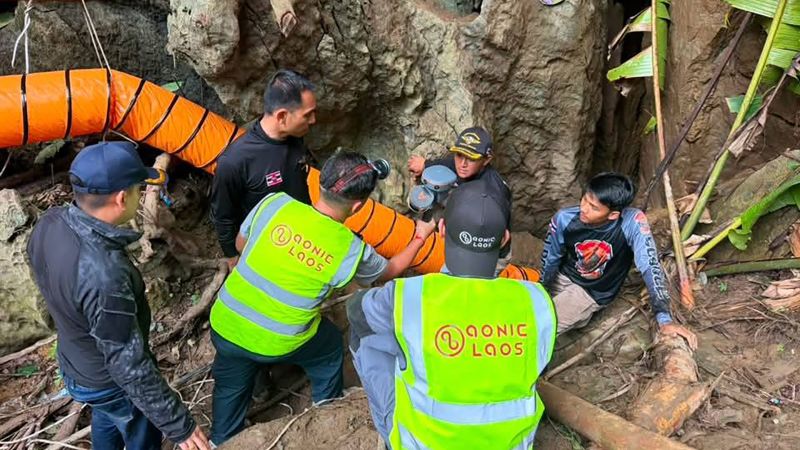
Table of Contents
A Race Against Atmospheric Hazards
In the remote Xaisomboun province of Laos, a high-stakes rescue operation has shifted from a search-and-recovery mission to a complex extraction problem. Specialist cave divers have located five of seven villagers who became trapped deep within a flooded cave system after entering the caverns last Wednesday in search of gold. While the discovery of survivors has brought a wave of relief to the rescue teams, the technical reality of getting them out remains perilous.
The survivors are currently perched on a rocky ledge approximately 200 meters inside the cave system. However, the distance is deceptive. To reach this point, rescuers must navigate a labyrinth of chambers, sharp bends, and partially submerged tunnels. The environment is not merely a physical obstacle but a chemical one; teams have reported encountering pockets of toxic hydrogen sulfide gas, a colorless, foul-smelling gas that can be lethal in high concentrations, necessitating precise monitoring and ventilation strategies.
The Engineering of the Extraction
The physical constraints of the cave are creating a logistical nightmare for the Rescue Volunteer for People group and their international partners. GoPro footage and diver reports indicate that some passages have narrowed to roughly 23 inches, forcing some divers to strip off essential gear just to squeeze through. This level of constriction makes the deployment of standard medical or transport equipment nearly impossible.
To manage the survivors’ health, rescuers have already begun delivering soft foods and conducting basic medical screenings. According to Thai rescue diver Kengkad Bongkawong, the survivors are physically strong enough to assist in their own movement, but only if the access points can be widened or cleared of debris. The operation has already faced setbacks, including difficulties deploying high-capacity pumps intended to supply fresh air to the deeper chambers, highlighting the fragility of the life-support chain in subterranean environments.
Drawing on the Tham Luang Blueprint
The current operation bears a striking resemblance to the 2018 rescue of a youth soccer team in Thailand’s Tham Luang cave. This historical parallel is not just coincidental; several veterans of that mission are currently on the ground in Laos. Their expertise in “sump diving”—navigating sections where the cave ceiling meets the water level—is critical here.
Finnish diver Mikko Paasi, a key member of the current operation, cautioned that the initial discovery is only a “brief relief.” The transition from finding survivors to successfully extracting them involves a series of calculated risks: determining whether to sedate the victims to prevent panic during tight squeezes or attempting to guide them through the water manually. The complexity is magnified by the unpredictable weather in the region, where further rainfall could trigger additional flash flooding, potentially cutting off the rescuers themselves.
As of Thursday, the search continues for the remaining two missing villagers. The mission now hinges on the ability of the technical teams to stabilize the air quality and create a viable corridor for extraction without compromising the structural integrity of the narrow passages.