The JAWBONE Act: Can Bipartisan Legislation Stop Federal ‘Jawboning’ of Tech and AI Platforms?
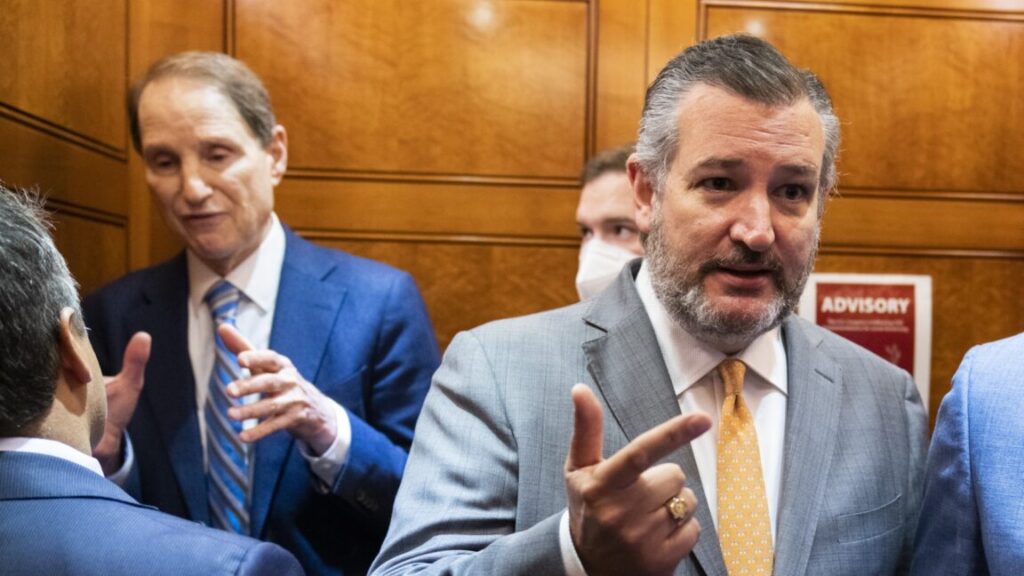
Table of Contents
The Legal Battle Against ‘Shadow Censorship’
In a rare display of bipartisan alignment, U.S. Senators Ted Cruz (R-Texas) and Ron Wyden (D-Ore.) have introduced the Justice Against Weaponized Bureaucratic Overreach to Networked Expression Act, more commonly referred to as the JAWBONE Act. The proposed legislation seeks to dismantle a controversial government practice known as “jawboning”—the act of federal agencies using informal pressure, threats, or coercion to force private technology companies and broadcasters to remove content that the government finds objectionable but which remains protected under the First Amendment.
For years, the intersection of government authority and private content moderation has remained a legal gray area. While the First Amendment prohibits the government from censoring speech, it does not generally prohibit private companies from doing so. However, when the line blurs—meaning a company removes content not because of its own terms of service, but because a federal agency suggested there would be “consequences” otherwise—it creates a loophole for state-sponsored censorship. The JAWBONE Act aims to close that loophole by creating direct legal accountability for the government officials involved.
- Defining Jawboning: The act targets government pressure on private entities to censor speech that is legally protected.
- Private Right of Action: Victims of censorship could sue individual federal employees for compensatory damages.
- Expanded Scope: The law applies not only to social media but also to traditional broadcasters and emerging AI services.
- Transparency Portal: Agencies would be required to log communications with tech firms to prevent “secret” coercion.
Understanding ‘Jawboning’ and the Legal Vacuum
To understand why the JAWBONE Act is necessary, one must first understand the technical definition of jawboning. In a political and legal context, jawboning is the use of government influence to persuade a private party to take a specific action. While persuasion is legal, coercion is not. The critical problem is that proving coercion in court is historically difficult.
Under current legal precedents, a plaintiff typically has to prove that the government’s pressure was so overwhelming that the private company had no reasonable alternative but to comply. This “all-or-nothing” standard means that subtle threats—such as hints about regulatory audits, antitrust investigations, or the withholding of government contracts—often fail to meet the legal threshold for state action.
The JAWBONE Act shifts this paradigm. Rather than requiring proof that the coercion succeeded in removing the content, the bill allows for lawsuits based on the attempt to coerce. This means a federal official could be held liable even if the tech company ignored the request and kept the post online.
Who is Targeted? From the FCC to AI Developers
The scope of the JAWBONE Act is intentionally broad, reflecting the evolution of how Americans consume information. The legislation identifies three primary “chokepoints” that the government frequently targets:
1. Social Media and Online Platforms
The most visible examples involve platforms like X (formerly Twitter), Meta, and Google. Senator Cruz specifically cited the Cybersecurity and Infrastructure Security Agency (CISA) during the Biden administration, alleging the agency pressured platforms to “cancel” users who questioned vaccine mandates or election integrity. By targeting the platforms, the government achieves censorship without having to pass a law or win a court case.
2. Artificial Intelligence (AI) Services
As Large Language Models (LLMs) become the primary gateway for information, the bill includes “speech-enabling artificial intelligence systems.” This is a forward-looking provision. If a government agency pressures an AI company to bake specific political biases into its training data or to refuse to answer certain legal questions, it could now be classified as unlawful jawboning.
3. Traditional Broadcasters
The bill does not forget the legacy media. It defines broadcasters to include both FCC-licensed stations and national networks. Senator Wyden highlighted the Trump administration’s attempts to pressure cable companies over late-night comedy shows as a prime example of this behavior. The inclusion of the FCC is particularly poignant, given recent tensions between FCC Chairman Brendan Carr and various news networks.
The Mechanism of Accountability: Damages and Transparency
The JAWBONE Act does more than just forbid the behavior; it creates a financial and administrative deterrent.
Compensatory Damages
Historically, victims of government censorship could only seek an injunction—a court order telling the government to stop doing the thing. While useful, injunctions don’t punish past behavior or provide a remedy for the harm done to the speaker’s reputation or business. The JAWBONE Act authorizes compensatory damages. This allows individuals whose speech was stifled to recover financial losses. Notably, it excludes punitive damages, likely a compromise to ensure the bill remains palatable to a broader range of legislators.
The Transparency Portal
One of the most innovative—and potentially contentious—parts of the bill is the requirement for a public communication portal. Federal agencies would be mandated to submit summaries of their communications with tech, AI, and broadcast companies. This would effectively end the era of “off-the-record” requests from government officials to trust and safety teams at Big Tech companies.
Without such a portal, plaintiffs are often “blind” to the fact that they were censored. They see their post disappear or their account suspended and assume it was a company policy violation. The portal provides the evidence needed to prove that the removal was actually a result of federal pressure.
What This Means for the Tech Ecosystem
For the average user, this means a potential reduction in “shadow banning” that is driven by political whims rather than community guidelines. For tech companies, it provides a legal shield. A CEO can now point to the JAWBONE Act and tell a federal agent, “I cannot comply with this request because doing so exposes me and you to a private lawsuit.” It shifts the power dynamic from the regulator to the provider of the service.
Expert Analysis: The First Amendment Tension
The JAWBONE Act is supported by an eclectic mix of organizations, from the American Civil Liberties Union (ACLU) to Americans for Tax Reform and the Foundation for Individual Rights and Expression (FIRE). This cross-spectrum support suggests that the issue of “indirect censorship” is one of the few remaining areas of consensus in a polarized Washington.
However, critics and some legal scholars argue that the bill could hinder legitimate government communication. For example, if the FBI warns a social media company about an imminent terrorist threat or a foreign disinformation campaign, could that be interpreted as “coercing” the company to remove content? The bill attempts to mitigate this by providing exceptions for lawful investigations, enforcement of state or federal laws, and actions taken under a warrant.
The definition of “coerce” in the bill is wide: “to take a harmful, hostile, or unfavorable action, to imply the possibility of taking such action, or to threaten such action.” This breadth is a double-edged sword. While it captures subtle threats, it may also capture aggressive but legal policy debates between regulators and corporations.
Comparing the Legal Landscape: Before and After the JAWBONE Act
| Feature | Current Legal Standard | Under JAWBONE Act |
|---|---|---|
| Proof Required | Must prove coercion succeeded and caused removal. | Can sue based on the attempt to coerce. |
| Remedies | Primarily injunctions (Stop doing it). | Compensatory financial damages. |
| Evidence | Plaintiffs must find “smoking gun” emails/memos. | Mandatory public portal for agency communications. |
| Scope | Mostly targeted at social media. | Includes AI, Broadcast TV, and Online Services. |
FAQ: Common Questions About the JAWBONE Act
Does this mean the government can no longer tell Twitter or Facebook to remove harmful content?
Not necessarily. The government can still communicate its concerns. However, it cannot use coercion—meaning it cannot threaten the company with regulatory retaliation or other “unfavorable actions” to force a removal that would otherwise be protected by the First Amendment.
Will this stop AI chatbots from being “politically correct”?
The act doesn’t govern how a company chooses to train its AI. If a company decides to implement a specific bias based on its own values, that is a private corporate decision. The JAWBONE Act only steps in if a federal agency pressures that company to implement those biases.
Can an official be sued after they leave government service?
Yes. By allowing for financial damages, the bill ensures that officials are held accountable for their actions during their tenure, preventing them from escaping liability simply by resigning or completing their term.
Is this a violation of the government’s right to communicate?
The bill includes specific exceptions for law enforcement and warrants. The goal is not to stop communication, but to stop the abuse of power where the government uses private companies as proxies for censorship.
How does this differ from Section 230?
Section 230 generally protects platforms from being sued for the content users post or for their decisions to moderate content. The JAWBONE Act is not about suing the platform; it is about suing the government official who pressured the platform.
Final Considerations on Digital Expression
The JAWBONE Act represents a significant shift in how the U.S. government views the relationship between the state and the digital public square. By treating the “attempt” to coerce as a legal violation and introducing financial penalties, the bill seeks to create a culture of caution within federal agencies.
As AI continues to integrate into every facet of our information diet, the risk of centralized, state-driven influence grows. Whether this bill passes or not, it highlights the critical need for a transparent framework where the lines between government suggestion and government mandate are clearly drawn and legally enforceable.