The ‘Immortal’ Sea Cucumber: Researchers Discover Tissues That Live Indefinitely Outside the Body
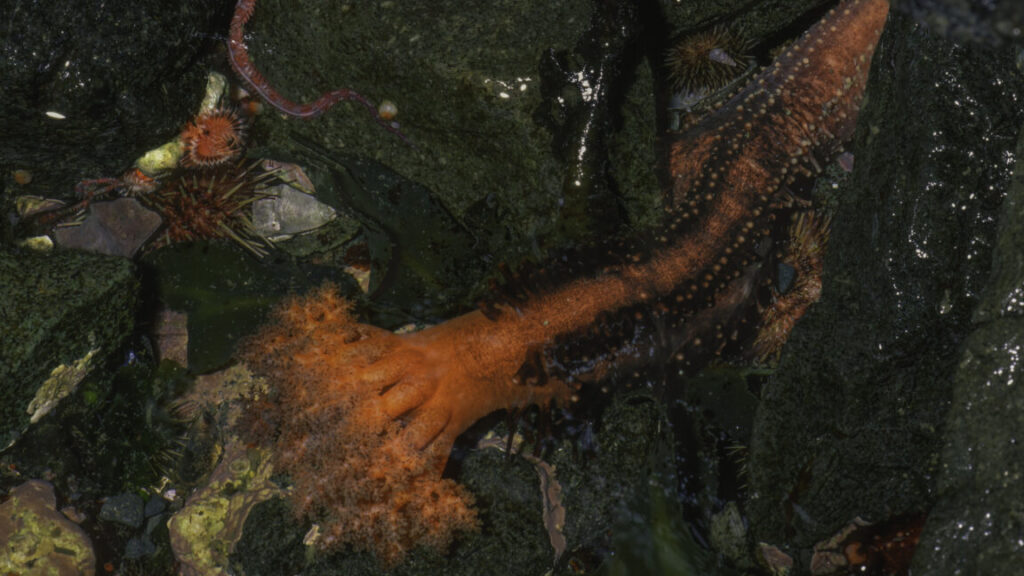
Table of Contents
A Biological Anomaly in the Atlantic
In the world of regenerative biology, the benchmark for success is usually a sterile laboratory environment, nutrient-rich growth mediums, and a delicate balance of growth factors. Without these, separated complex tissues—organs, limbs, or appendages—rapidly decay. However, a discovery coming out of Memorial University of Newfoundland has challenged the fundamental rules of cellular survival.
Researchers have identified that severed appendages from Psolus fabricii, a species of sea cucumber native to the cold waters of the Atlantic and Arctic oceans, do not merely survive after being detached from their host—they thrive indefinitely in ordinary, non-sterile seawater.
“This is naturally occurring tissue immortality,” says Sara Jobson, a researcher at Memorial University and lead author of the study. “Having tissues that survive that easily is unheard of. We’ve never seen anything like this.”
The Evolution of Resilience
The P. fabricii is built for a brutal existence. These creatures anchor themselves to rocks using a ring of tube feet (the sole) and extend branching tentacles to filter-feed on suspended particles. In the high-energy, abrasive environments they inhabit, injury and loss of these appendages are frequent. While sea cucumbers cannot regenerate their entire body from a fragment—a feat reserved for flatworms or certain starfish—they have evolved an extraordinary capacity for localized regeneration.
The discovery of what the team calls LiPfe (Living immortal P. fabricii explants) was not the result of a targeted search for immortality, but rather a fortuitous observation. A collaborator in Jobson’s lab noticed that amputated tissue continued to heal and survive in a tank without any specialized intervention, sparking a long-term experiment to understand the mechanism of this survival.
Architectural Reorganization
When a tube foot is severed, the initial state is chaotic; the wound margin is a fragmented mess of connective and epidermal tissue. However, within 48 hours, the tissue begins shedding damaged layers. Coelomocytes—the sea cucumber’s primary immune cells—flood the area to defend the wound and kickstart regeneration. By the sixth day, the tissue curls inward, sealing the wound and restoring the organ to a functional, albeit detached, state.
The most striking aspect of LiPfe is not just its survival, but its ability to completely redesign its own anatomy to suit its new, independent existence. The process occurs in several distinct phases:
- Contraction and Expansion: In the first week, the tissue diameter shrinks by roughly 23%. Over the following 120 days, it stabilizes and eventually grows, exceeding its original size by 12% after a full year.
- Tissue Replacement: The explants systematically dismantle useless parts. Muscle tissue, which initially comprised 17% of the mass, is broken down by coelomocytes and entirely removed within 180 days.
- Structural Pivot: Connective tissue expands to fill the void, eventually accounting for 74% of the explant. Collagen fibrils bundle into strong striations that mimic the function of the lost muscle.
By the end of a year, the tube foot has transformed from a fleshy appendage into a translucent, alien-like orb with a dense red cellular core.
Sustenance Without a System
The most perplexing question for Jobson’s team was metabolic: how does a piece of tissue without a digestive system or mouth maintain cellular energy? Using isotopically labeled amino acids and ammonium, the researchers discovered that LiPfe effectively turns its entire surface into a feeding organ. The tissue directly absorbs dissolved nutrients from the surrounding seawater to fuel its repair and maintenance.
The resilience of these explants is profound. Some survived for years at the bottom of holding tanks, even when buried under 10 millimeters of mud. The only significant threat identified was proximity to the decaying tissues of other species, which appeared to introduce toxins that compromised the explants’ stability.
While the immediate focus has been on documenting the phenomenon, the existence of LiPfe opens new doors for biotechnology and material science, suggesting that the boundary between a living organism and a living material is more porous than previously believed.