The High-Stakes Filter: TechCrunch Disrupt’s Startup Battlefield 200 Enters Final Application Window
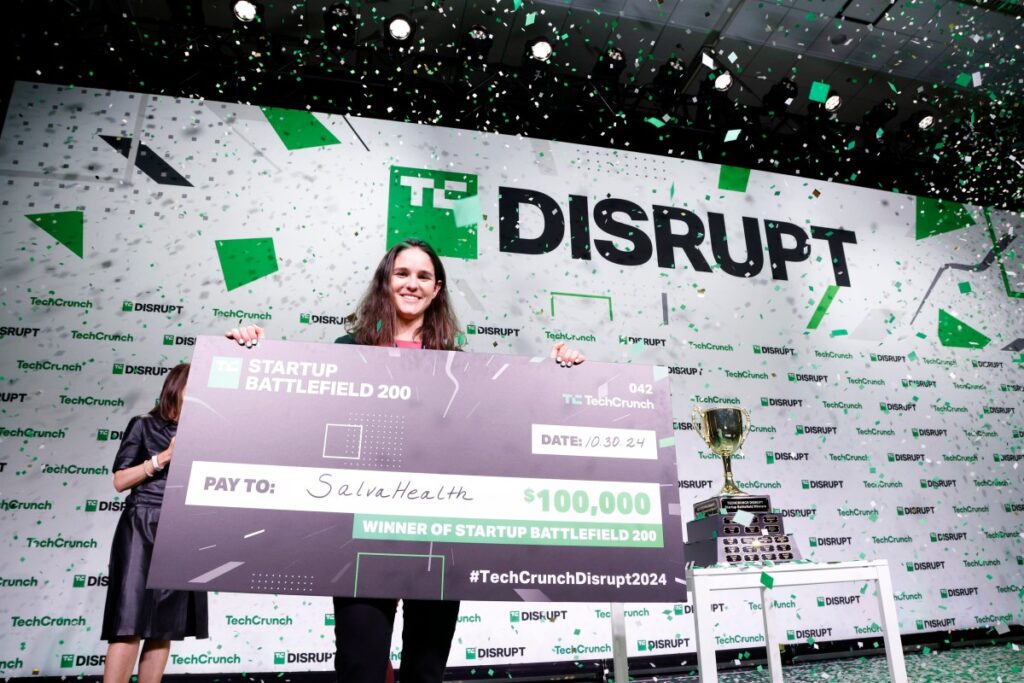
Table of Contents
The Final Countdown for the Disrupt Stage
For early-stage founders, the distance between obscurity and industry relevance often comes down to a single high-visibility moment. For those eyeing the spotlight at TechCrunch Disrupt 2026, that moment is rapidly approaching. The application window for Startup Battlefield 200 officially closes on June 8 at 11:59 p.m. PT, marking the final opportunity for companies to enter one of the most scrutinized pitching competitions in the technology sector.
The competition, which will culminate this October at San Francisco’s Moscone West, has evolved from a simple demo day into a significant vetting mechanism for the venture capital community. While the $100,000 equity-free prize is the headline attraction, the true value for participants lies in the concentrated proximity to the global startup ecosystem. In an era where the fundraising landscape has shifted toward a ‘flight to quality,’ the visibility provided by the Disrupt stage serves as a critical signal to investors.
A Track Record of Category-Definers
The pedigree of Startup Battlefield is well-documented, having served as an early launchpad for companies that eventually defined their respective niches. Market staples such as Dropbox, Discord, Trello, and Fitbit all navigated the Battlefield gantlet before achieving global scale. The cumulative impact of its alumni is staggering, with former participants raising over $32 billion in capital and executing more than 250 exits.
These exits have not been small-scale acquisitions; alumni have been absorbed into the portfolios of tech giants including Microsoft, Google, Salesforce, Uber, and Amazon. This trajectory suggests that the TechCrunch team is looking for more than just a polished slide deck—they are hunting for structural innovation and scalable business models.
Who Qualifies for the 2026 Cohort?
The criteria for this year’s selection process are specific. TechCrunch is prioritizing early-stage ventures that have moved beyond the ideation phase and possess a working Minimum Viable Product (MVP). The goal is to identify ‘category-defining’ companies—those that aren’t merely improving an existing service but are fundamentally altering how an industry operates.
While the competition is primarily targeted at bootstrapped, pre-seed, and seed-stage startups, there is a strategic carve-out for Series A companies operating in capital-intensive sectors. This nuance reflects the current reality of deep tech, biotech, and hardware development, where the capital requirements for a functional MVP are significantly higher than those for a SaaS application.
The Strategic Value of the Pitch
In a tight capital market, the traditional ‘cold outreach’ to VCs is increasingly ineffective. The Startup Battlefield 200 format effectively reverses the funnel, placing founders in a position where they are being discovered by influential media and investors simultaneously. For a founder, the benefit is twofold: the immediate pressure of the pitch forces a rigorous refinement of the company’s value proposition, and the resulting press coverage can create a competitive bidding environment for future funding rounds.
As the June 8 deadline looms, the surge in applications reflects a broader trend of founders seeking alternative paths to visibility outside of the traditional accelerator model. With thousands of companies already in the mix, the selection process will be a rigorous distillation of the current tech landscape, likely highlighting the next wave of AI integration, sustainable infrastructure, and decentralized software.