The High Cost of Détente: Gulf Allies Wary as Trump Negotiates New Iran Pact
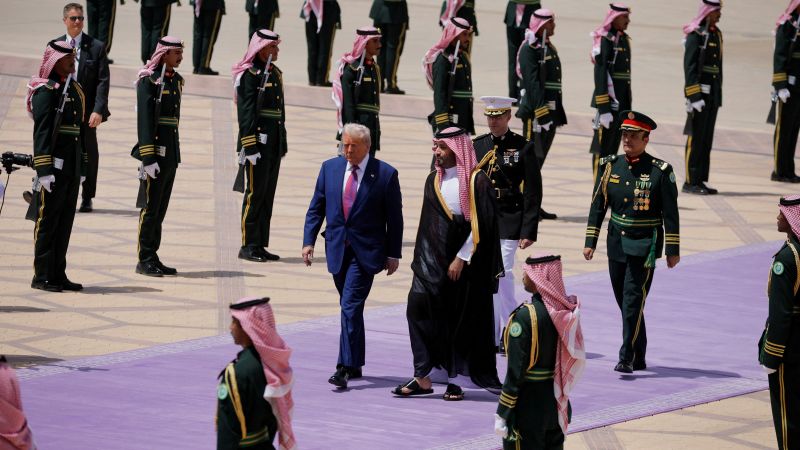
Table of Contents
A Transactional Security Shield
For decades, the strategic partnership between the United States and the Arab monarchies of the Persian Gulf was viewed as a cornerstone of regional stability. However, under the second Trump administration, that relationship has shifted from a traditional security alliance toward a transactional arrangement. This evolution is now reaching a critical friction point as Washington moves toward a formal agreement with Iran, leaving allies in Riyadh, Abu Dhabi, and Kuwait questioning if they are being traded for a short-term ceasefire.
The tension is not new. As early as 2018, President Donald Trump signaled a departure from traditional diplomacy, bluntly suggesting that Gulf nations must pay for the military protection they receive. While the region initially welcomed Trump’s decision to exit the 2015 Iran nuclear deal, the reality of the current geopolitical landscape has created a deeper sense of vulnerability. The recent conflict between the US, Israel, and Iran—which saw ferocious retaliatory strikes across the Gulf—has exposed the limits of American protection and the efficiency of Iranian targeting strategies.
Rubio’s Diplomatic Damage Control
Secretary of State Marco Rubio arrived in the region this week with a difficult mandate: convince skeptical Gulf leaders that Washington’s security commitments remain intact despite a pivot toward détente with Tehran. His itinerary, covering the United Arab Emirates, Bahrain, and Kuwait, specifically targets the nations that bore the brunt of Iranian aggression during the recent war.
Speaking in Kuwait on Wednesday, Rubio asserted that the US would not “undermine” its allies in negotiations with Iran. He maintained that there were no significant doubts regarding US security assurances, promising that Gulf partners would be engaged in every decision made during the negotiation process. However, the disconnect between Rubio’s diplomatic rhetoric and the President’s pragmatic approach is evident. While Rubio stresses alignment on Iran’s missile program, President Trump recently suggested that it is “only fair” for Iran to possess missiles if Saudi Arabia does—a stance that contradicts the long-standing security requirements of the Gulf states.
The Strategic Risks of the New Pact
The emerging US-Iran agreement contains several provisions that Gulf diplomats view as alarming. Most notably, the pact would grant Tehran a formal role in overseeing commercial traffic through the Strait of Hormuz, shared with Oman. This is a critical vulnerability; the majority of the Gulf’s maritime trade and energy exports would effectively be subject to Iranian oversight.
Beyond maritime logistics, the deal largely ignores two primary concerns: Iran’s sophisticated missile program and its sprawling network of proxy militant groups. To the Gulf states, these threats are far more immediate than the nuclear proliferation concerns that dominated previous administrations. Hasan Alhasan, a senior fellow at the International Institute for Strategic Studies (IISS), describes the current moment as a “disastrous turning point,” suggesting that US disengagement and the flow of financial resources to Iran may only serve to embolden Tehran.
The $300 Billion Question
Adding a layer of economic tension is the proposed $300 billion reconstruction fund for Iran. While the Trump administration has pushed for Gulf funding to support this initiative, the appetite for such a move is nonexistent in the region. Saudi Arabia has claimed to have “no details” on the proposal, and Qatar has expressed interest without offering formal commitments. Secretary Rubio attempted to downplay this during his Tuesday briefing, stating that requests for monetary help are “far down the road.”
Despite these anxieties, the Gulf states find themselves in a strategic bind. They lack a viable alternative to the US as a primary security partner, even as they perceive American influence to be waning. For now, the UAE and others are “doubling down” on economic ties to the US, hoping that financial interdependence will ensure that Washington does not fully retreat from the region. For the Gulf monarchies, the current calculus is grim: a bad deal with Iran is preferable to an active war, but it is a peace that feels precarious and profoundly unstable.