The Handheld Gaming Price Floor Has Collapsed
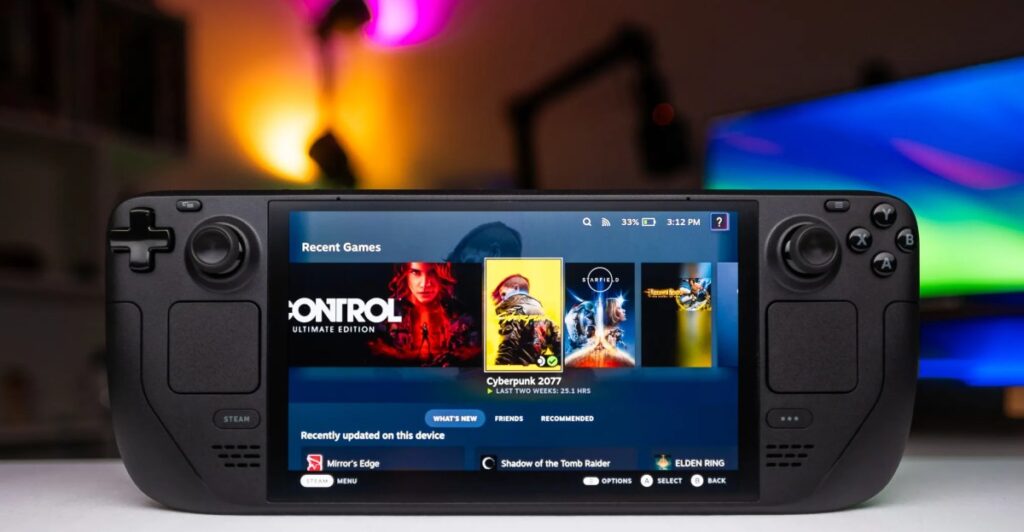
Table of Contents
The Death of the $399 Entry Point
For a brief window between 2022 and 2024, the gaming industry experienced a genuine disruption in accessibility. When Valve launched the Steam Deck at $399, it wasn’t just a new piece of hardware; it was a statement that high-fidelity PC gaming could be decoupled from the desk and the steep entry cost of a dedicated rig. For the first time, a handheld device could realistically run AAA titles like Elden Ring without requiring a second mortgage.
That window has effectively slammed shut. Today, the entry price for a Steam Deck has climbed to $789—nearly double its launch cost. This isn’t an isolated incident of corporate greed, but rather a symptom of a broader, more systemic shift in the hardware economy. From the volatility of RAM pricing to the geopolitical pressure of tariffs and rising energy costs, the ‘affordable’ handheld is becoming a relic of the early 2020s.
A Market Shifting Toward Luxury
The trend extends beyond Valve. Nintendo, historically the bastion of affordable portable gaming, is feeling the squeeze. While the original Switch launched at $299, the anticipated trajectory for the successor—the Switch 2—points toward a $499 starting price. This puts a Nintendo handheld in the same pricing bracket as a disc-less PlayStation 5, fundamentally changing the value proposition of the platform.
We are seeing a transition where console and handheld gaming are evolving into niche, luxury goods. This shift is reflected in the wider PC ecosystem, where Nvidia’s pivot toward AI server dominance has left gaming hardware in a secondary position, often resulting in skyrocketing costs for consumer-grade GPUs and memory.
The ‘Ally’ Effect and the High-End Pivot
The ripple effect of these price hikes has altered the competitive landscape. When Microsoft and Asus entered the fray with the Ally X, they didn’t aim for the $400 disruptor slot; they targeted the $1,000 premium tier. At a certain price point, the Steam Deck’s value proposition evaporates. When the gap between a Valve device and a high-powered Microsoft/Asus machine shrinks to a couple of hundred dollars, the consumer is naturally pushed toward the more powerful hardware, regardless of the software ecosystem.
This trend is even more pronounced in the enthusiast sector. The Lenovo Legion Go S, now hovering near $1,580, and the Legion Go 2 pushing $2,000, suggest that manufacturers are no longer trying to capture the ‘curious’ gamer. Instead, they are catering to the ‘whale’—the power user willing to spend a laptop’s worth of money on a device that fits in a backpack.
The Ecosystem Fallout
Price is not the only barrier rising. The joy of the Steam Deck era was the realization that a handheld could be a bridge to a massive library of PC games. However, that bridge is being dismantled. Reports indicate that Sony is becoming increasingly protective of its first-party titles, potentially limiting the flow of its biggest single-player hits to PC platforms.
When the hardware costs $1,000 and the software becomes more restrictive, the ‘impulse buy’ nature of handheld gaming disappears. In 2022, $400 was a calculated risk. In 2026, $800 to $1,200 is a primary purchase decision—often a choice between a handheld and another major piece of tech.
The ‘golden age’ of handhelds wasn’t defined by the specs of the chips, but by the accessibility of the experience. As the price floor continues to rise, the industry is moving away from the democratization of gaming and back toward a model of exclusive, high-cost hardware.