Early Galaxy Fold failures raise red flags over Samsung’s $2,000 bet on foldables
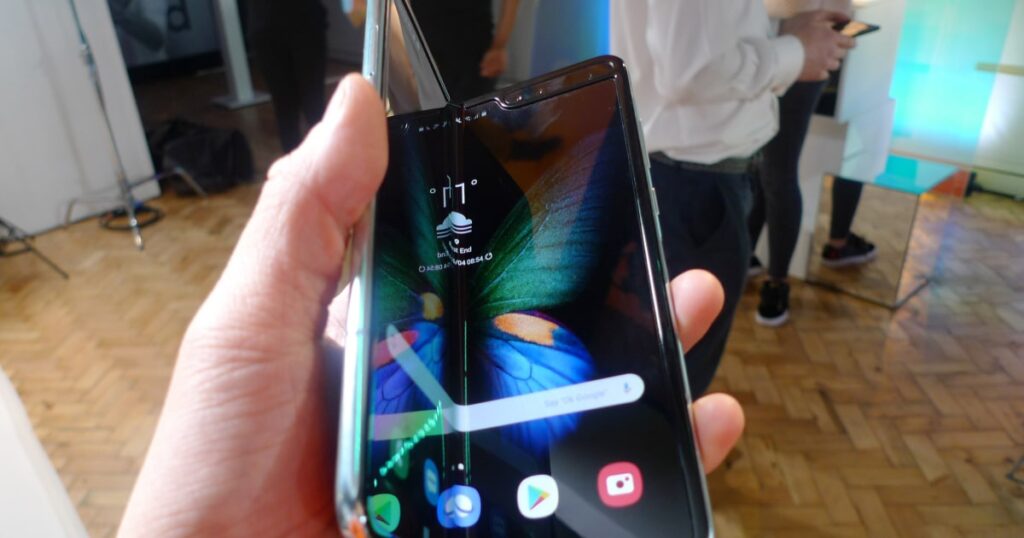
Table of Contents
A precarious launch for a premium price
Samsung is attempting to redefine the smartphone form factor with the Galaxy Fold, but early reports from the tech press suggest the device may be as fragile as it is ambitious. A growing number of journalists who received pre-launch review units have reported catastrophic screen failures, with some devices becoming completely unusable within just 48 hours of light operation.
The issues primarily manifest as intermittent flickering and dead zones on the internal foldable display. In some cases, the screen has transitioned from minor glitches to total blackouts. For a device carrying a $1,980 price tag, the lack of stability is particularly jarring, positioning the Fold not just as a luxury item, but as a risky piece of beta hardware for the general consumer.
The ‘Protective Layer’ controversy
Initial reactions from Samsung suggested that a portion of these failures may be the result of user error. The Galaxy Fold ships with a thin, factory-applied protective film on the inner screen. Samsung has since clarified that this layer is integral to the display’s structural integrity and must not be removed. A few early testers admitted to peeling this layer off, believing it to be a standard shipping protector.
However, this explanation doesn’t cover all the casualties. Reporters from The Verge and CNBC have documented screen failures on units where the protective film remained completely intact. A video demonstration by CNBC’s Todd Haselton highlighted a device where the left side of the internal display flickered incessantly while the right side ceased to respond to touch inputs entirely, rendering the phone a very expensive paperweight after only two days of use.
Engineering promises vs. real-world results
Samsung has leaned heavily on its lab testing to justify the Fold’s reliability, claiming the hinge and screen can withstand 200,000 folds—roughly 100 openings and closings per day for five years. While these numbers look impressive in a controlled environment, the current failures suggest a gap between theoretical endurance and real-world stressors.
The device’s architecture is a complex hybrid: a standard smartphone when closed, and a small tablet when opened, with a visible crease bisecting the display. The transition between these two states puts immense physical stress on the OLED panel and the underlying circuitry. If the failure rate among reviewers—who typically treat devices with more care than the average consumer—is any indication, the consumer rollout on April 26 could be fraught with returns.
A ghost from the Note 7 era
For Samsung, the timing of these reports is uncomfortable. The company is still haunted by the 2016 Galaxy Note 7 disaster, where systemic battery failures led to devices catching fire and a global recall that cost the company billions in revenue and significant brand equity.
While a flickering screen is far less dangerous than a combustion event, the pattern of releasing hardware that feels under-baked is a concerning echo. Samsung has officially acknowledged the reports and stated it will “thoroughly inspect these units in person to determine the cause of the matter.”
Until Samsung can provide a definitive technical explanation for the failures—and a guarantee that they aren’t systemic—the Galaxy Fold remains a high-stakes gamble for early adopters.


