The Ghost in the Mesh: How Gnutella Outlived the Era of the Wild West Internet
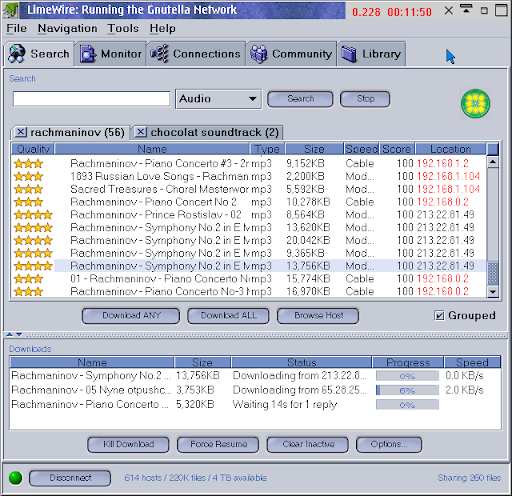
Table of Contents
The Protocol That Wouldn’t Die
In the current landscape of the internet, the concept of a ‘filesystem’ has become an abstraction for most. We interact with ‘the cloud,’ a term that masks a highly centralized reality of massive server farms owned by a handful of corporations. But there was a time when the internet felt less like a series of walled gardens and more like a sprawling, chaotic mesh. At the heart of that era was Gnutella.
Gnutella wasn’t a product in the traditional sense; it was a protocol. While millions of users in the early 2000s thought they were using LimeWire or BearShare, they were actually interacting with a decentralized peer-to-peer (P2P) system that operated without a central authority. It was a technology born from a corporate contradiction: an internal demo created at AOL that was leaked to the public after the company cancelled the project.
Because Gnutella was designed to be server-free, AOL found it impossible to ‘put the toothpaste back in the tube.’ Once the code was in the wild, the network belonged to the users. It didn’t rely on a central index—unlike Napster, which had a directory that the RIAA could eventually sue out of existence—making Gnutella fundamentally more resilient to legal and technical shutdowns.
A Search Engine for ‘Blobs’
Technically, Gnutella is more than just a tool for downloading MP3s; it is a peer-to-peer search engine for data blobs. The 0.6 draft specification describes resources as anything from cryptographic keys and meta-information to the files themselves. In a world before sophisticated recommendation algorithms, the Gnutella experience was defined by a certain kind of ‘digital foraging.’ Searching for a specific album often led users to discover unrelated bootlegs, strange software, or—quite frequently—malware.
This interoperability was a minor miracle of early networking. Independent developers could write their own clients from scratch, and despite the dominance of giants like LimeWire, a diverse ecosystem of software persisted. The protocol evolved organically, adding extensions and features that weren’t always written into the formal specs but were adopted by the community to improve efficiency.
The Architecture of a Bygone Era
To understand why Gnutella flourished, one has to remember the state of residential networking twenty years ago. Today, Network Address Translation (NAT) and strict ISP firewalls make it incredibly difficult to host a public-facing server from a home laptop. In the early 2000s, however, the barriers were lower. Users could expose inbound TCP ports with relative ease, allowing their machines to act as both a client and a server simultaneously.
Gnutella solved the problem of the ‘vanishing IP.’ Since residential IP addresses were often dynamic and changed frequently, the protocol used a ‘gossiping’ mechanism. Peers would share information about other peers, creating a living map of the network that didn’t require a central directory. Downloading a file via a Gnutella client was, in a very raw sense, similar to using curl or wget to pull data from a remote server—except that server was just another person’s computer in a different time zone.
The Long Tail of Decentralization
Some historians of the web argue that Gnutella failed, but that is a misreading of its trajectory. It didn’t fail; the world it was built for simply disappeared. The rise of high-speed broadband, the shift toward centralized streaming services like Spotify, and the tightening of network security made the raw P2P model cumbersome for the average user.
Yet, the protocol persists. It has settled into a permanent ‘long tail’ state—diminished in scale but still operational. Gnutella proved that a decentralized system could scale to millions of concurrent users without a corporate headquarters or a monetization strategy. Long before the current hype cycles surrounding decentralized finance and blockchain, Gnutella was a living proof-of-concept: a system where the value was derived entirely from the willingness of users to share their resources with strangers.


