Polyend is betting that AI can solve the ‘perfect pedal’ problem
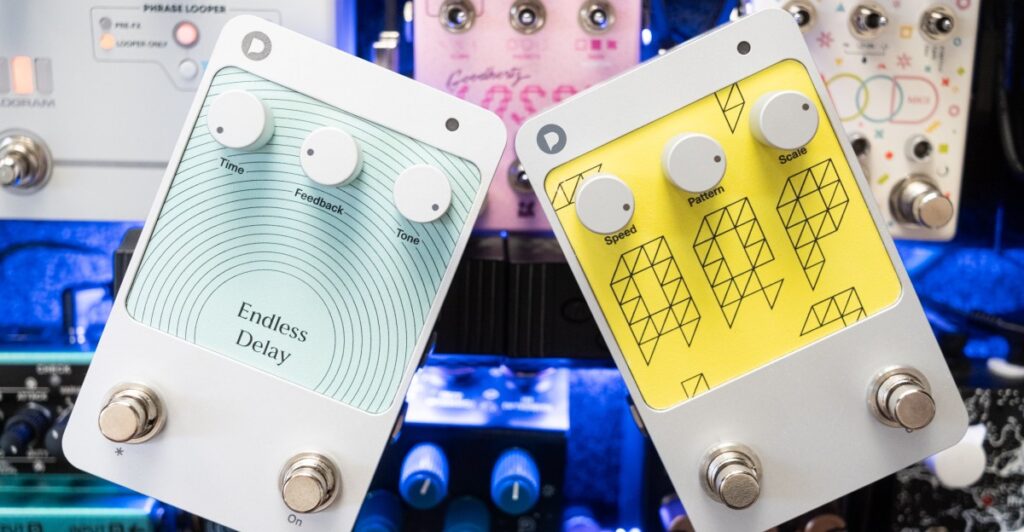
Table of Contents
A New Way to Build a Signal Chain
There is a specific kind of madness inherent to guitarists: the endless pursuit of a sound that doesn’t actually exist. We spend thousands of dollars on boutique pedals and vintage gear, hoping to find that one elusive combination of saturation and spatial decay. Polyend, a company known for its idiosyncratic approach to music hardware, thinks the solution isn’t more hardware, but a Large Language Model.
Enter the Endless, a $299 programmable guitar pedal that essentially acts as a vessel for code. While the hardware is a standard-looking ARM-powered box, the real magic—and the real controversy—happens in the cloud via a web frontend called Playground. Instead of twisting knobs to find a preset, you describe the sound you want in plain English, and Polyend’s AI agents write the C++ code to make it happen.
The Prompt-to-Pedal Pipeline
The workflow is remarkably similar to using a chatbot. You enter a prompt—say, “a lo-fi octave down effect with a bit of grit”—and Playground generates a few conceptual options. Once you select a direction, the AI agents coordinate to select algorithms, generate the code, and validate it to ensure it doesn’t produce a signal that could potentially damage your equipment.
For those who aren’t prompt engineers, Polyend provides a gallery of “Plates”—pre-made effects developed by the company and the community. There are currently around 60 options, ranging from the aural chaos of a granular pitch-shifting reverb called Tessera to the more grounded, atmospheric qualities of the Infinite Hall reverb. For the tactilely inclined, Polyend even sells physical faceplates for $20 to match the downloaded effects, giving the pedal a more traditional, analog feel.
The Token Economy of Tone
The most jarring aspect of the Endless isn’t the AI, but the monetization. Generating effects costs tokens. The pedal ships with 2,000 tokens, but once those are gone, you’ll need to spend $20 for another batch of 2,000. This creates a strange tension during the creative process. When you are iterating on a sound—trying to dial in the exact resonance of a bandpass filter or the specific wobble of a chorus—you aren’t just spending time; you’re spending money.
During testing, a simple fuzz might only cost 20 tokens. However, more complex requests, like a rhythmically synced glitch looper, can eat up 500 tokens in a single go. Because the AI isn’t perfect, the “iteration tax” is high. Getting the AI to understand the nuance of “balanced weirdness” often requires multiple attempts, and each generation can take upwards of ten minutes to compile.
Where the AI Hits a Wall
The technical limitations become apparent when you move away from generic descriptions. In one attempt to create “Resonant Taps”—a clean multi-tap digital delay with narrow, highly resonant bandpass filters—the AI struggled with stability. The first few versions lacked feedback control and frequently veered into unpleasant self-oscillation. It took six separate generations to move closer to a usable sound, a process that felt more like debugging software than making music.
Despite these hurdles, the Endless represents a bold shift in how we think about effect pedals. It moves the pedalboard from a static collection of hardware to a dynamic, evolving software environment. It may not replace the intuitive joy of turning a physical knob in real-time, but for the experimentalist, it offers a shortcut to sounds that would otherwise require a degree in computer science to program.


