The Ghost in the Machine: How Gnutella Outlived the Era of Peer-to-Peer Chaos
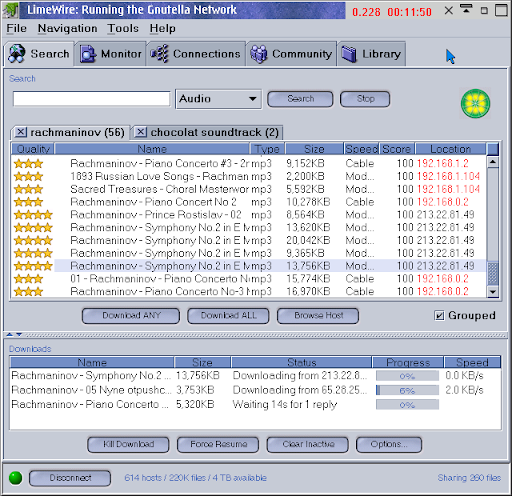
Table of Contents
The Architecture of an Unstoppable Leak
Long before the modern era of algorithmic recommendations and walled-garden subscriptions, the internet was a frontier of unpredictable discovery. At the heart of this era was Gnutella, a peer-to-peer (P2P) protocol that managed to achieve mainstream scale without the need for a central authority. Unlike the centralized directories of its contemporaries, Gnutella was designed to be serverless, making it an architectural anomaly that proved nearly impossible to dismantle.
The protocol’s origin story reads like a corporate cautionary tale. Originally developed as an internal project at AOL, Gnutella was intended as a demo of decentralized networking. However, after AOL canceled the project, the software leaked to the public. Because there was no central server to shut down—no ‘off switch’ for the network—the protocol flourished in the wild. It became the invisible engine driving popular clients like LimeWire, allowing millions of users to share MP3s and software without ever needing to understand the complexities of a distributed hash table or a gossip protocol.
For the average user in the early 2000s, Gnutella wasn’t a ‘technology’—it was simply the way you got music. There were no tokens, no cryptocurrency incentives, and no venture-backed platforms. It was a utility that solved a specific problem: how to find a file hosted on a stranger’s hard drive halfway across the world.
A Search Engine for Blobs
Technically, Gnutella was more than just a file transfer tool; it functioned as a decentralized search engine for data ‘blobs.’ According to the Gnutella 0.6 draft specification, these resources could be anything from cryptographic keys to meta-information on keyable resources. In practice, this meant the network was a massive, organic index of the world’s digital hoarding.
The brilliance of the system lay in its resilience. While the industry eventually moved toward more efficient protocols, Gnutella’s lack of a single point of failure ensured its survival. It fostered a diverse ecosystem of clients. Even as LimeWire dominated the market, independent developers continued to build their own clients from scratch, benefiting from an interoperability that was often more organic than documented. Much of the protocol’s evolution happened through unwritten conventions and add-on specs, creating a living, breathing network that adapted to user needs in real-time.
The Death of the Open Port
If Gnutella was so resilient, why did it vanish from the public consciousness? The answer isn’t that the protocol failed, but that the internet itself changed. In the early 2000s, residential networking was far more permissive. Users could often run a small HTTP server on their local machine and expose it via a public IP address with minimal friction.
As the decade progressed, the rise of Network Address Translation (NAT), stricter corporate firewalls, and more aggressive ISP policies made it significantly harder to expose inbound TCP ports. The ‘mesh’ of gossiping peers that Gnutella relied upon began to fray as the technical barriers to hosting a node became too high for the casual user. Simultaneously, the shift toward mobile devices and cloud-based storage meant that the very concept of a ‘filesystem’ became abstract to the average consumer.
Today, Gnutella exists in a state of permanent long-tail utility. It is no longer the cultural juggernaut it once was, but it continues to operate at a diminished capacity. It remains a poignant reminder of a time when the internet was a collection of interconnected peers rather than a series of destinations owned by a handful of corporations. In the transition to the modern web, we gained stability and speed, but we lost the particular, chaotic magic of foraging through a decentralized void for a song that might—or might not—be a virus.


