The Fujimori Cycle: Keiko’s Fourth Bid for Power Amidst Peru’s Institutional Collapse
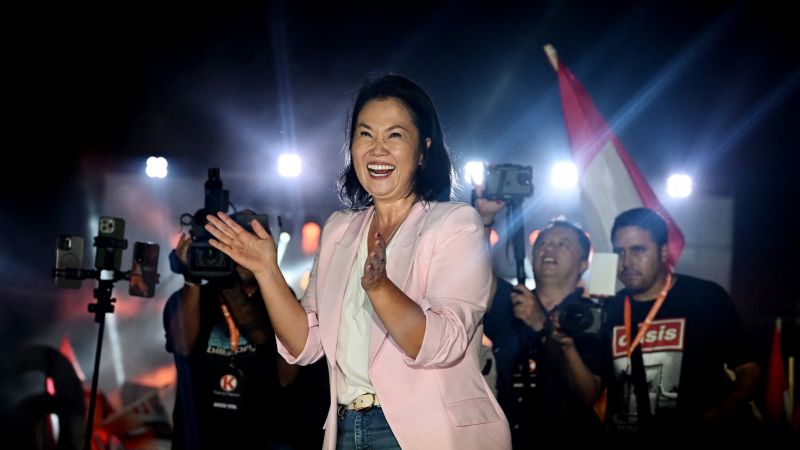
Table of Contents
A Political Dynasty in Perpetual Motion
Keiko Fujimori first stepped into the global spotlight not as a candidate, but as a surrogate. In 1994, at just 19 years old, she served as Peru’s first lady—a role she assumed after her mother, Susana Higuchi, separated from President Alberto Fujimori following public denunciations of government corruption. That early introduction to the corridors of power set the stage for a political career defined by resilience, controversy, and a recurring struggle for legitimacy.
Now, at 51, the leader of the Fuerza Popular party is embarking on her fourth attempt to secure the presidency. Facing off against leftist candidate Roberto Sánchez of the Juntos por el Perú party in a looming runoff, Fujimori enters the fray with a slight lead in recent polling. However, the numbers tell only part of the story in a country that has seen eight presidents in a single decade, reflecting a state of systemic institutional collapse.
The Pivot Toward ‘Order’
For years, Fujimori’s campaigns were framed as existential battles. In 2021, her runoff against former President Pedro Castillo was characterized by a rigid, confrontational rhetoric, positioning herself as the sole bulwark against communism. That strategy, according to Julio Carrión, a professor of political science at the University of Delaware, may have been a tactical error that alienated moderate voters by framing the election as a binary clash of ideologies rather than a plan for governance.
In this current cycle, the rhetoric has shifted. Fujimori is attempting to project a more reserved, calibrated persona. During recent debates, she leaned heavily into the concept of ‘order’ as a prerequisite for investment and security, explicitly acknowledging the confrontational nature of her previous bids. “I know that throughout my political life I have made mistakes,” she told voters, attempting to pivot from a combatant to a seasoned stateswoman.
The Shadow of the Patriarch
The central tension of Keiko’s candidacy remains the legacy of her father, Alberto Fujimori. To his supporters, Alberto was the man who saved Peru from economic ruin and crushed the Shining Path and MRTA insurgencies. To his detractors, he was an autocrat whose regime was defined by human rights abuses and systemic graft—a legacy that culminated in a 25-year prison sentence in 2009 for aggravated homicide and bodily injury.
This familial shadow has historically acted as a ceiling for Keiko’s support. The ‘anti-Fujimorismo’ vote has consistently coalesced around any candidate capable of presenting a democratic alternative. Yet, as Peru struggles with rising crime and a revolving door of leadership, some voters are beginning to weigh the perceived stability of the Fujimori era against the current chaos.
Legal Battles and Political Survival
Fujimori’s path to the presidency has been interrupted not just by electoral losses, but by the judiciary. She spent 13 months in prison during an investigation into allegations that the Brazilian construction firm Odebrecht illegally financed her campaigns. While she has vehemently denied these charges, the legal battle became a centerpiece of her narrative of ‘political persecution.’
A critical turning point occurred in January 2025, when a court declared the case against her null and void. This legal victory has allowed her to reclaim the narrative, framing her time in detention as a badge of resilience rather than a mark of criminality.
As the runoff approaches, Fujimori is betting that the Peruvian electorate is more exhausted by instability than they are repelled by her lineage. Whether this fourth attempt succeeds depends on her ability to convince a skeptical public that she can provide the ‘order’ she promises without reviving the authoritarianism of the 1990s.