Systemic Fabrication? Hundreds of Manipulated Antibody Images Found in Thermo Fisher Catalog
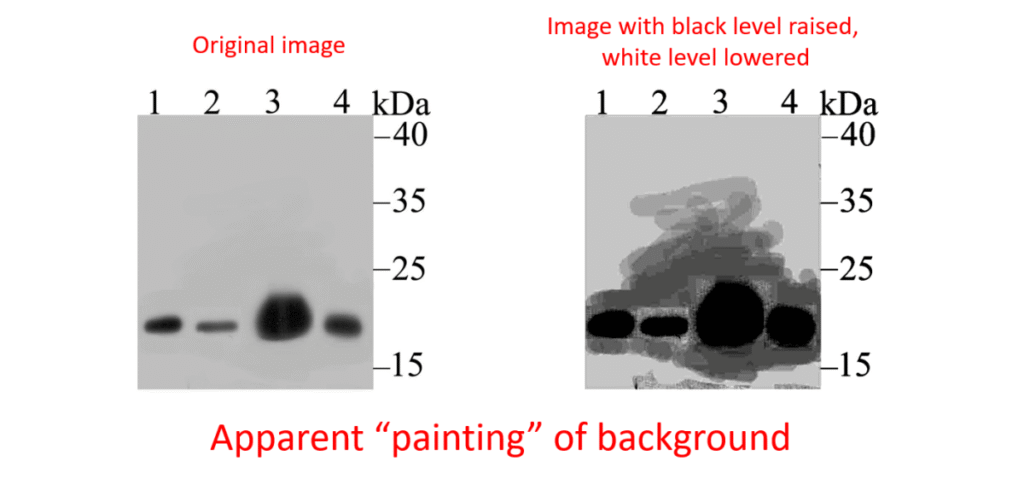
Table of Contents
A Pattern of Deception in the Lab
In the high-stakes world of biomedical research, the reliability of a single reagent can be the difference between a breakthrough and a wasted year of funding. Now, one of the world’s largest laboratory suppliers, Thermo Fisher Scientific, is facing allegations of systemic data manipulation across its online primary antibodies catalog.
Independent researchers, including Sholto David and Johan Duchêne, have documented more than 450 images bearing clear signs of fabrication within Thermo Fisher’s “Advanced Verification” data. These images—primarily Western blots used to prove that an antibody binds to its target protein—are designed to give scientists confidence in a product before they commit hundreds of dollars to a purchase. Instead, the data appears to have been carefully curated using digital editing tools.
The discovery began when David noticed a Western blot intended to demonstrate a cell line’s deficiency in the protein p53. Upon closer inspection, the image revealed a fatal flaw: several protein bands were identical, having been flipped and rotated to mimic distinct results. This was not an isolated incident. Subsequent audits by the research team uncovered dozens of antibodies featuring the exact same background noise patterns, suggesting that a single “template” image was used and edited to fit various products.
The Mechanics of the Manipulation
The evidence compiled in a public Zenodo repository suggests a sophisticated, if cynical, approach to product marketing. According to the researchers, the manipulation falls into three primary categories:
- Direct Cloning: Protein bands are copied and pasted, then rotated or mirrored to create the illusion of multiple successful tests.
- Digital “Painting”: Adjusting the contrast of the images reveals conspicuous brushstrokes, indicating that parts of the blot were painted over in software like Photoshop to remove unwanted artifacts or “clean up” the data.
- Template Backgrounds: In at least 50 documented cases, the background noise of the image is identical across different antibody products, with only the protein band shifted to match the specific product’s expected molecular weight.
This level of repetition suggests that these images were not the result of accidental clerical errors, but rather a deliberate attempt to project a level of consistency and specificity that the actual reagents may not possess.
Why it Matters for Global Science
While a manipulated image in a catalog doesn’t strictly prove that the physical antibody doesn’t work, it removes the only objective proof the buyer has before purchase. Antibodies are notoriously fickle; the YCharOS independent validation initiative estimated in 2024 that more than 50% of all antibodies fail in one or more applications. When a vendor provides fraudulent verification data, they are effectively blinding the researcher to these failures until after the product has been integrated into an experiment.
The financial cost is immediate—single vials of these solutions often cost between $400 and $500—but the systemic cost is higher. Non-specific antibodies are a primary driver of the “reproducibility crisis” in science, where published results cannot be replicated by other labs because the tools used in the original study were flawed.
Corporate Denial
Thermo Fisher has not been silent, though its response has been characterized by the researchers as “galling.” In a 15-point rebuttal issued on June 8, 2026, the company flatly denied any intentional fabrication. “Did Thermo Fisher manipulate or fabricate antibody data? No,” the company stated, claiming that scientific integrity remains a core value and that they stand by the underlying science of their products.
The company’s defense focuses on the process of preparing images for web publication, yet it fails to explain how the same background noise pattern could appear across dozens of unrelated antibody products. For the scientific community, the discrepancy between the visual evidence and the corporate denial creates a precarious situation for labs relying on these tools for critical healthcare and biotechnology research.