The Forgotten Futurism of the Steinwinter Supercargo: A Lesson in Failed Logistics
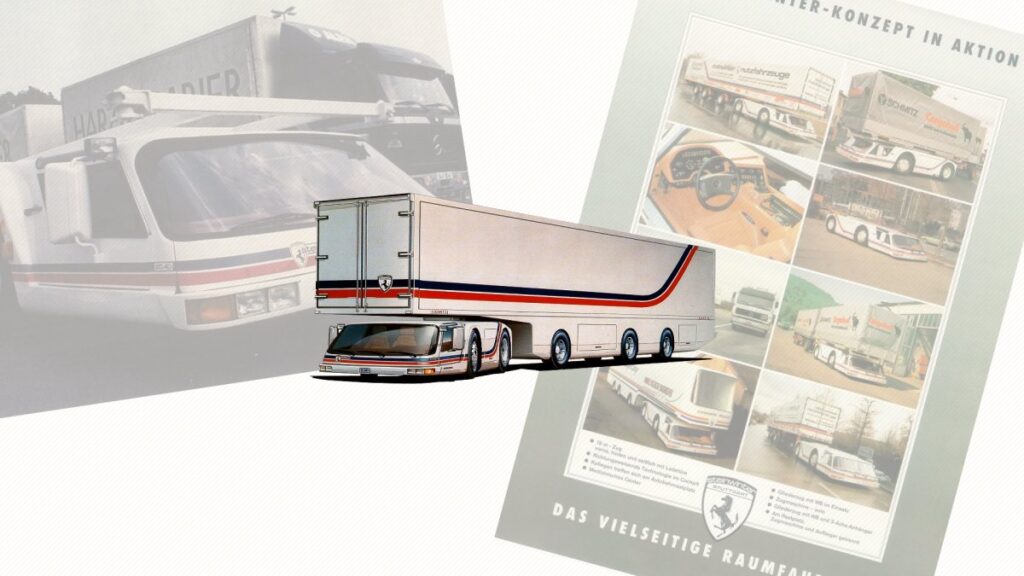
Table of Contents
A Radical Departure from the Cab-Over
In the current landscape of long-haul logistics, innovation is typically measured in kilowatt-hours and autonomous sensor suites. From the Tesla Semi’s aerodynamic wedge to the various hydrogen-cell prototypes from Volvo and Daimler, the goal remains the same: efficiency. However, decades before the current EV push, a German engineer attempted to disrupt the trucking industry not through powertrain changes, but through a fundamental reimagining of the vehicle’s physical architecture.
Enter the Steinwinter Supercargo. Debuting at the 1983 Frankfurt Motor Show, the Supercargo was the vision of Stuttgart-based auto engineer Manfred Steinwinter. To look at it now is to see a relic of ‘retro-futurism’—a vehicle that looked less like a tractor-trailer and more like a piece of industrial science fiction. While the American market remained wedded to the conventional ‘nose’ or ‘cab-over’ designs, Steinwinter proposed a low-profile, modular platform designed to kill the aerodynamic drag created by the massive gap between the truck cab and the trailer.
The Engineering Under the Skin
The Supercargo wasn’t just a stylistic exercise; it was backed by serious mechanical muscle. Under the low-slung chassis sat a Mercedes OM422 eight-cylinder diesel engine. This powerplant delivered 276 horsepower and a massive 753 foot-pounds of torque, routed through a 16-speed ZF transmission to a single rear axle.
The most striking technical detail was the ride height. The platform sat barely half an inch higher than a modern Lamborghini Huracán, a decision intended to lower the center of gravity and minimize the frontal area of the vehicle. This was paired with a modular philosophy that predates the modern ‘skateboard’ chassis used by companies like Rivian or Lucid. Steinwinter envisioned a system where the base truck could be repurposed on the fly: it could tow a standard trailer, carry a cargo container directly on its back, or even be swapped for a passenger tour bus configuration.
The Cockpit: Luxury in a Workhorse
Inside, the Supercargo defied the utilitarian nature of 1980s trucking. The cockpit featured a central driving position—a rarity in commercial vehicles—wrapped in bolstered Recaro leather seats. The steering wheel and wide center console mirrored the luxury ethos of the era’s high-end European sedans, such as the BMW E36, suggesting that Steinwinter viewed the driver’s experience as a critical component of operational efficiency.
Why the Supercargo Vanished
Despite the technical ambition, the Supercargo never transitioned from a show-piece to a production line. The failure was rooted in the brutal reality of commercial trucking: reliability and visibility. Reports from the era suggest that the ultra-low profile, while great for wind tunnels, created significant blind spots for the driver. Furthermore, the handling was reportedly inconsistent, and the vehicle lacked the projected million-mile longevity required by fleet operators.
The final blow was financial. When Mercedes-Benz declined to back the project, funding evaporated. The Supercargo became a ghost of the industry, eventually finding a second life not on the Autobahn, but in Hollywood. The vehicle appeared in a modified form in the TV series The Highwayman and later made a cameo in Power Rangers Time Force in 2002.
The Cycle of Failed Disruption
The story of the Supercargo is a recurring theme in transportation. It mirrors more recent attempts, such as Walmart’s proprietary WAVE truck, which attempted to optimize the logistics chain through custom hardware only to fade into obscurity. It serves as a reminder that in the world of freight, the ‘best’ design isn’t the one that looks the most futuristic, but the one that can withstand a decade of abuse on the interstate while maintaining a predictable maintenance schedule.
As Tesla and others attempt to shift the industry toward electric power, the Supercargo stands as a cautionary tale: aerodynamic efficiency and modularity are valuable, but they cannot override the fundamental requirements of visibility and durability in the heavy-duty sector.