The ‘Fairy Rings of Death’: A New Fungus is Doing the Dirty Work of British Conservation
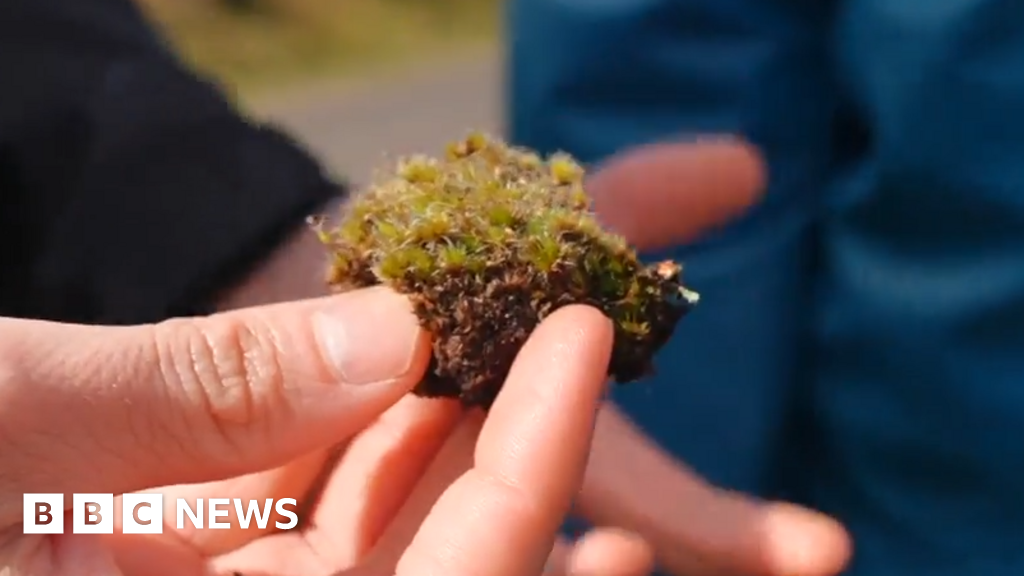
Table of Contents
A Biological Counter-Attack
In the damp highlands of south Wales and along the jagged cliffs of the Isle of Wight, a quiet biological war is being waged. For decades, the British landscape has been slowly overtaken by the heath-star moss, an aggressive non-native species that systematically chokes out indigenous flora. Now, scientists have discovered an unlikely ally: a previously unknown ‘killer fungus’ that is effectively dismantling the invader’s stronghold.
The discovery was not the result of a planned laboratory experiment, but rather a series of keen observations by Dr. George Greiff. While walking on the Isle of Wight four years ago, Greiff noticed something unusual—patches of the ubiquitous heath-star moss were decaying in strange, circular patterns. These ‘fairy rings of death’ signaled the presence of a pathogen that was doing what human conservationists have struggled to achieve: killing off a resilient invasive species at scale.
Tracing the Pathogen
The culprit has been identified as a potent fungus now termed ‘moss die-back.’ Through extensive DNA sequencing and collaboration with experts in France and the UK, Greiff and his team at the Amgueddfa Cymru museum in Cardiff have mapped the fungus’s behavior. Under a microscope, the fungus appears as a candy-floss-like growth that balloons around the moss stems, eventually penetrating the cell walls to kill the plant from the inside out.
The implications of this find are significant. The heath-star moss, believed to have arrived from the Southern Hemisphere in the 1940s, exploded across Britain by the 1990s. Its ability to grow almost anywhere—from sandy dunes to tarmac—has decimated native moss populations, which serve as the foundational architecture for critical habitats like temperate rainforests and carbon-sequestering peatlands.
The Risk of Collateral Damage
Whenever a highly aggressive pathogen enters an ecosystem, the immediate concern for ecologists is specificity. A fungus capable of wiping out an invasive species could, in theory, jump to native species and trigger a wider ecological collapse. This is particularly concerning given that the moss die-back fungus is a close relative of the ash die-back fungus, which has already devastated approximately 80 million ash trees across the UK.
However, Greiff’s preliminary analysis suggests a surprising level of precision. So far, the fungus appears to target the heath-star moss almost exclusively, with only limited impact on one other moss species. This specificity suggests that the fungus may actually be a native British species that evolved or adapted specifically to combat the invader—a rare instance of a local environment ‘fighting back’ without human intervention.
The Scale of Natural Control
For conservationists, the discovery represents a massive shift in resource management. Traditional methods of controlling invasive plants—such as manual removal or chemical application—are often prohibitively expensive and labor-intensive. In contrast, a biological control agent operates autonomously and scales naturally across the landscape.
In the Bannau Brycheiniog national park, the results are already visible. In the gaps left by the decaying moss, baby heather plants are beginning to take root. By clearing the carpet of invasive moss, the fungus is effectively reopening the soil for native biodiversity to return.
To further understand the timeline of this ecological shift, Dr. Nathan Smith, Head of Plant and Earth Science at Amgueddfa Cymru, is now analyzing herbarium samples dating back to the 1880s. By searching for traces of the fungus in historical records, the team hopes to determine exactly when the ‘counter-attack’ began and how it might spread to other depleted regions of the UK.