The Digital Divide in Justice: How Legal Tech and Systemic Failures Shape the Public Defense Crisis
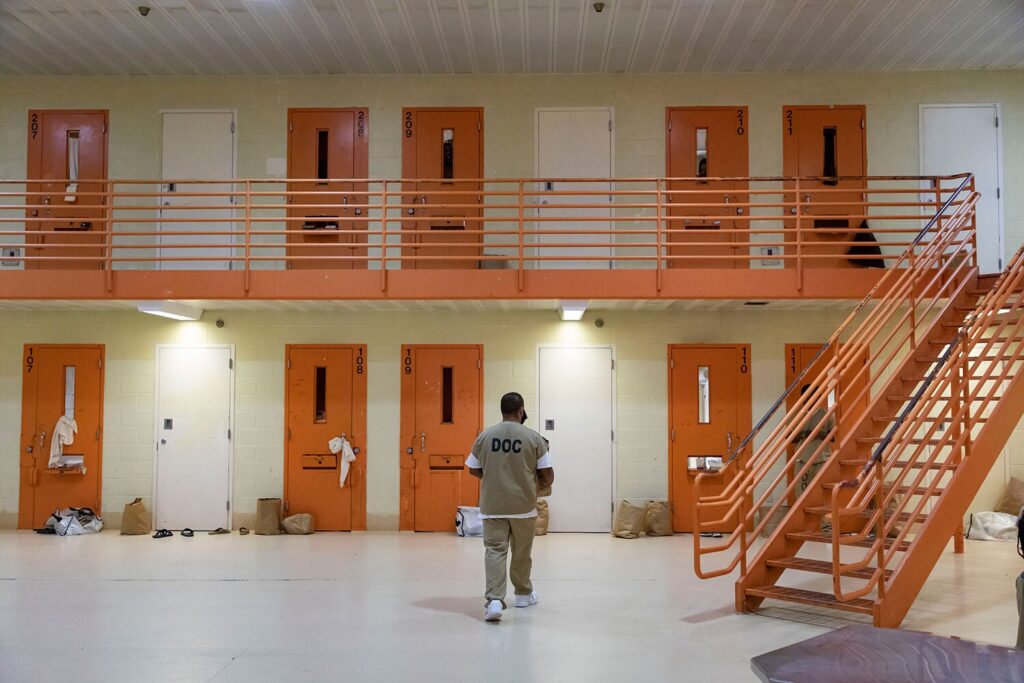
Table of Contents
The Machinery of ‘Disposal’
For those operating within the Cook County legal system between 1996 and 2004, the process of criminal defense often felt less like a pursuit of justice and more like a conveyor belt. Allen Goodman, a former public defender who handled cases across Chicago’s North and West Sides, describes a professional environment where the sheer volume of cases transformed human beings into data points to be ‘disposed’ of by courthouse apparatchiks.
In his reflections on the era, Goodman highlights a stark reality: the American legal system is designed for efficiency over equity. This efficiency is most evident in the revolving door of the Cook County Jail, a facility characterized by systemic sleep deprivation, noise, and violence. For many defendants, the environment is so punitive that the legal process becomes a secondary concern to the immediate need for escape. The result is a form of institutional blackmail where defendants waive procedural rights or accept draconian probation conditions simply to leave the county jail, regardless of the merits of their case.
The Resource Gap and the ‘Jury Tax’
While the prosecution typically operates with an expansive array of specialists and investigative resources, the public defender’s office often relies on a skeletal staff. Goodman recalls sharing a single investigator among multiple attorneys—a resource gap that creates a fundamental imbalance in the adversarial system. This lack of infrastructure transforms the role of the public defender into a hybrid of psychologist, medic, and cleric, tasked with building trust with clients who view their own lawyer as just another extension of the state.
Beyond the lack of resources, the system operates under a set of unwritten, often punitive, rules. In Cook County, practitioners frequently reference a strategy of taking ‘winners’ to a bench trial and ‘losers’ to a jury. However, those who choose to exercise their right to a trial often face what is known as the ‘jury tax’ or the ‘asshole penalty’—a phenomenon where judges impose harsher sentences following a jury loss than they would have if the defendant had simply pleaded guilty.
A System Stacked Against the Advocate
The psychological toll on the attorneys is as significant as the one on the accused. Goodman describes a ‘split in reality’ that occurs based on the outcome of a trial. In a system where the line between freedom and incarceration is razor-thin, the emotional weight of a loss can be devastating, particularly when the lawyer believes the evidence favored the defendant.
This environment attracts a diverse range of practitioners. While many view public defense as a noble calling to counteract state abuses, Goodman acknowledges that the office can also become a place where the ‘flotsam of lawyers’ washes up—individuals uninterested in the intricate details of procedure or the evolving nature of case law. This internal disparity further weakens the defense for those who are already marginalized by class and race.
The Human Element in a Mechanical Process
Despite the mechanistic nature of the courts, the impact remains deeply personal. Goodman recounts the importance of individuals like Ralph, an investigator from the Far South Side whose own life experiences provided a crucial bridge between the legal world and the streets of Chicago. These human connections are often the only thing standing between a defendant and a streamlined, automated path to incarceration.
The narrative provided by Goodman serves as a reminder that while the legal field is increasingly discussing the integration of AI and automated discovery tools, the underlying infrastructure of the public defense system remains plagued by antiquated pressures and systemic biases that no amount of software can solve without fundamental reform.