The Death of the App Icon: Google’s Pivot Toward an Agentic OS
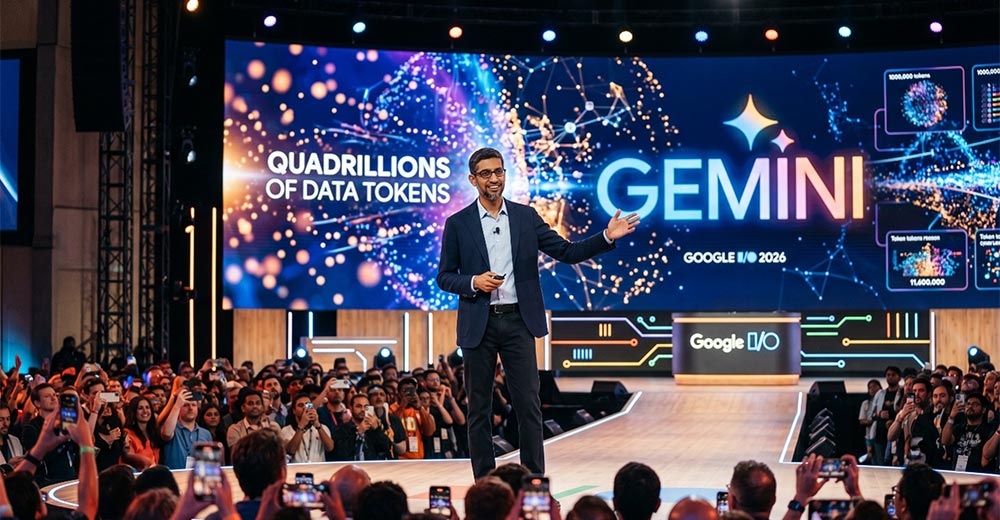
Table of Contents
The End of the Grid
For nearly two decades, the primary interface of the smartphone has been the grid: a collection of static icons representing siloed functions. You open Uber to get a ride, Spotify to listen to music, and Gmail to send a message. But the demonstrations at Google I/O 2026 suggest that this paradigm is reaching its expiration date. Google is no longer just adding AI features to its apps; it is building an “Agentic OS” where the app itself becomes a background utility rather than a destination.
The shift is centered on a new orchestration layer that sits above the Android kernel. Instead of a user navigating a UI to trigger a specific function, Google’s updated Gemini integration now acts as the primary interface, executing complex workflows across multiple services without the user ever seeing a traditional app splash screen. This isn’t just a smarter voice assistant; it is a fundamental re-architecting of the mobile experience where intent replaces navigation.
From Silos to Services
Historically, apps have functioned as walled gardens of data. If you wanted to organize a dinner party, you would manually jump between Calendar, Maps, and Messages. The new framework revealed by Google suggests a move toward “headless’ software.” In this model, an app is essentially a set of APIs that an AI agent calls upon to complete a task. The user provides the goal—”Organize a dinner for six on Thursday and invite the group”—and the OS handles the logistics in the background.
This transition creates a precarious situation for developers. For years, the App Store and Play Store economies have been built on user acquisition and attention. If the user never actually “opens” the app, the traditional monetization models—specifically in-app advertising and engagement-driven metrics—collapse. We are moving from a world of User Experience (UX) to a world of Agent Experience (AX).
The Technical Pivot: Semantic Indexing
The engine driving this is a massive leap in semantic indexing. Google has moved beyond simple keyword searches to a system that understands the state of every app on a device. By leveraging on-device multimodal models, the OS can effectively “see” and “understand” the available actions within a third-party app without needing a dedicated plugin for every single function. This allows Gemini to perform actions like “find the specific flight confirmation email and add the hotel check-in time to my alert system” without the user manually bridging the gap between Gmail and the Clock app.
The Ecosystem Conflict
This pivot puts Google in a strange position with its own partners. While this agentic approach streamlines the user experience, it strips power away from the developers who built the Android ecosystem. If the AI agent is the only thing the user interacts with, the brand identity of the individual app disappears. The “app icon” becomes a legacy artifact, much like the physical keyboard on a laptop.
Industry analysts are already drawing parallels to the way the web evolved from static pages to dynamic platforms. However, the stakes here are higher. We are seeing the potential emergence of a “Winner-Take-All” interface. If Google controls the agent that mediates all interactions, they effectively control the gateway to every service on the phone, further consolidating their grip on the digital economy.
As the first wave of these agentic updates rolls out to Pixel devices, the question is no longer whether apps will survive, but what form they will take. They are evolving from destinations we visit into tools that work for us in the shadows.


