The BTU Lie: Lab Tests Reveal Why Your Portable AC Is Losing the Battle Against the Heat
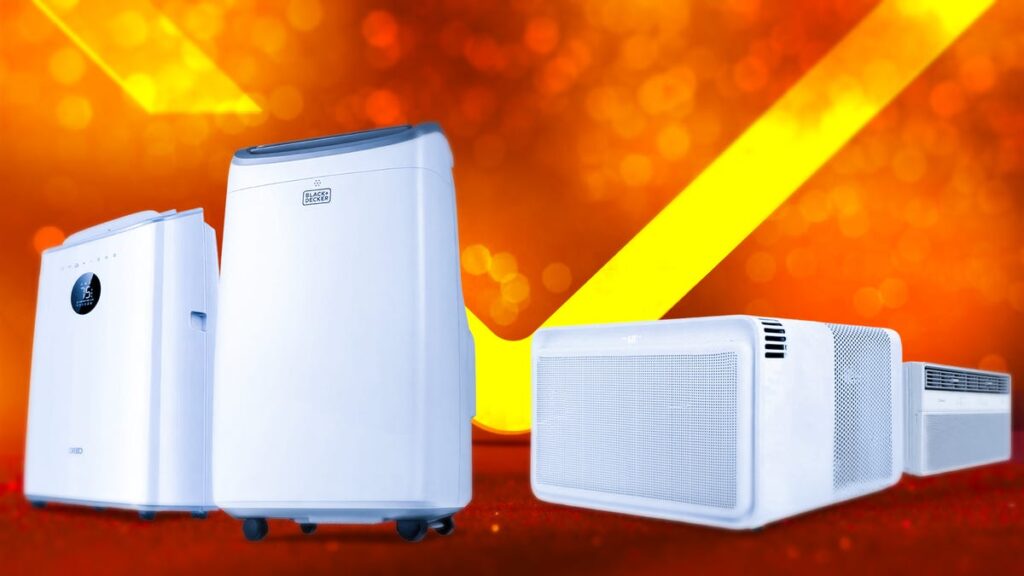
Table of Contents
The BTU Paradox
For many renters and homeowners, the choice between a window air conditioner and a portable unit comes down to a trade-off between convenience and cooling power. On paper, the decision seems simple: look for the highest BTU (British Thermal Unit) rating. However, recent lab testing reveals that these numbers are often misleading. In a head-to-head comparison, units with significantly higher BTU ratings frequently underperform compared to smaller, more efficient window-mounted alternatives.
The discrepancy lies in the physics of heat displacement. A window AC is designed to bifurcate airflow, keeping the cooling mechanism inside the room while venting the hot exhaust air directly outside. Portable units, by contrast, reside entirely within the living space. They rely on an exhaust hose to push heat out through a window—a process that introduces a critical flaw in thermal dynamics: negative air pressure.
The Negative Pressure Problem
According to Bryan Adams, a senior lab engineer and former HVAC configuration manager, portable ACs essentially fight against themselves. As the unit pumps hot air out through the exhaust hose, it creates a vacuum effect in the room. To equalize this pressure, warm outdoor air is naturally sucked back into the home through gaps in doors, windows, and vents.
“When air pressure is a little lower, other air is going to come in and fill that space,” Adams explains. “If you’re in a room, the easiest place for other air to get in is from outside.” This cycle creates a constant stream of heat entering the room, forcing the portable unit to work significantly harder to maintain a target temperature. Compounding this issue is the poor insulation of the exhaust hoses themselves, which often radiate heat back into the room they are supposed to be cooling.
Lab Results: Benchmarking Performance
To quantify this efficiency gap, tests were conducted in a controlled environment in Louisville, Kentucky. An enclosed room was heated to 90 degrees Fahrenheit, and various units were tasked with cooling the space to a target of 68 degrees. The units were split into three categories: window units, large portable units (over 8,000 BTU), and small portable units (8,000 BTU or lower).
The results were definitive. The Windmill window unit emerged as the top performer, dropping the room temperature from 90 to 72 degrees faster than any other model and maintaining a consistent range between 65 and 71 degrees throughout the 2.5-hour test.
Among portable options, the Dreo AC516S (a large unit over 8,000 BTU) was the most effective, taking 52 minutes to reach 72 degrees. The Black & Decker BPP08WTB, representing the small portable category, took 66 minutes to reach the same mark. However, the gap in real-world efficiency is most apparent when comparing a high-BTU portable to a standard window unit. Despite the Dreo AC516S boasting 14,000 BTUs—nearly double the 8,000 BTUs of the Windmill—the window unit outperformed it in both speed of cooling and long-term temperature stability.
When Portability Trumps Power
Despite the performance deficit, portable ACs maintain a significant market share due to installation flexibility. For those with non-standard window sizes, casement windows, or strict rental agreements that forbid altering window frames, portables are often the only viable option. They offer the ability to move cooling power between a home office and a bedroom, a feat impossible with a fixed window unit.
But for those prioritizing sheer cooling capacity during extreme heat waves, the data suggests that the BTU rating of a portable unit is an imperfect metric. The structural advantage of a window-mounted system—physically separating the heat source from the cooled environment—remains the gold standard for efficiency.