The Ancient Architecture of Modern Vaccine Skepticism
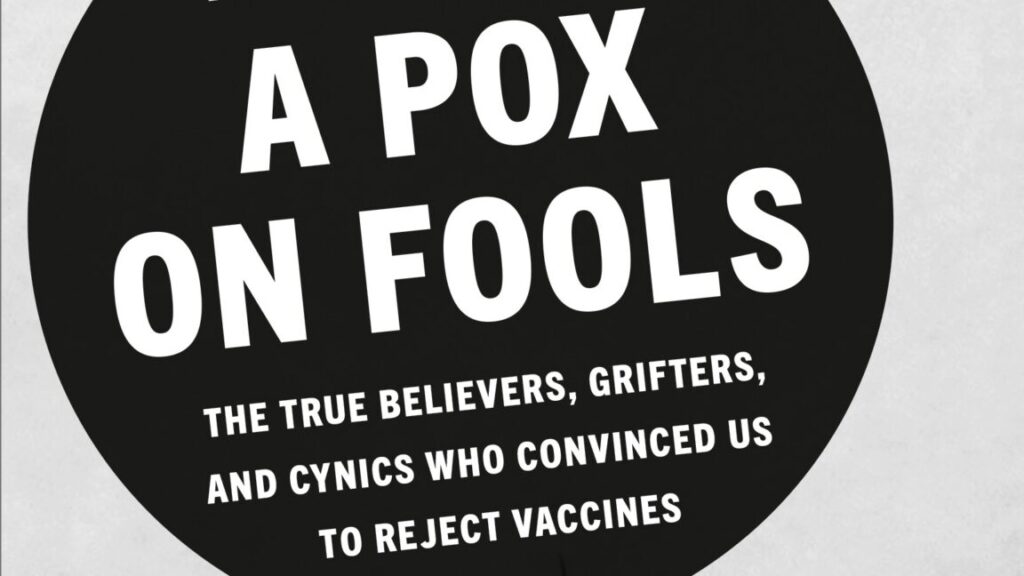
Table of Contents
The Persistence of Medical Skepticism
Stanley Plotkin, a titan of vaccinology whose career spans the development of some of the world’s most critical immunizations, recently remarked on a poignant frustration: the feeling that public health is moving backward. To an observer of the current digital landscape, where medical misinformation spreads with algorithmic efficiency, Plotkin’s sentiment is understandable. However, a deeper look at the history of immunology suggests that we aren’t facing a new phenomenon, but rather a recurring cycle of resistance.
In his recent analysis, A Pox on Fools, historian Thomas Levenson argues that the modern anti-vaccine movement is not a product of the internet era, but a continuation of a centuries-old lineage. By categorizing opponents into “True Believers,” “Grifters,” and “Cynics,” Levenson reveals that the arguments used to fight mRNA technology today are nearly identical to those used against smallpox inoculations in the 1700s.
From Divine Will to “Natural Living”
The roots of this resistance date back to the early 18th century. When Lady Mary Wortley Montagu and Cotton Mather introduced smallpox inoculation—a crude process involving the transfer of pus from an infected patient into a healthy person’s arm—the backlash was immediate and visceral. At the time, infectious diseases were the primary cause of death; in the 19th century, nearly 40% of children died before age five.
The opposition then was framed as a theological crisis. Critics argued that interfering with disease was a defiance of divine will, suggesting that sickness was a punishment for sin. Over time, the terminology shifted, but the logic remained. By the mid-19th century, the Romantics and Transcendentalists replaced “God” with “Nature.” The argument evolved into the belief that vaccines were an affront to the natural order and that “clean living” was a sufficient shield against pathogens.
This narrative remains potent today. The modern appeal of “natural immunity” often ignores the brutal reality of the pre-vaccine era. The success of biotechnology has created a paradox: because vaccines have effectively erased the visibility of the diseases they prevent, the lack of child-sized coffins is taken for granted, making the perceived risks of the vaccine seem larger than the risks of the disease.
The Calculus of Risk and the Mandate Conflict
Modern skepticism, often championed by figures like Robert F. Kennedy Jr., frequently focuses on the claim that vaccines are actively harmful. While every medical intervention carries some risk, the scale of the trade-off is often misrepresented. In specific populations—such as the immunocompromised or the very elderly—certain vaccines are indeed contraindicated. However, for the healthy general population, the risk-benefit ratio is overwhelmingly positive.
The danger of this narrative is that it erodes herd immunity. When healthy individuals opt out based on a skewed perception of risk, they remove the protective layer for those who cannot be vaccinated for medical reasons.
Beyond the biological debate lies a philosophical one: the tension between individual autonomy and collective safety. This is not a scientific argument, but a legal and political one. The landmark Supreme Court case Jacobson v. Massachusetts (1905) addressed this directly. Henning Jacobson refused a mandatory smallpox vaccination, arguing that the law violated his right to care for his own body. The Court ultimately ruled that individual liberties are not absolute and can be curtailed to protect the broader public health.
The Digital Echo Chamber
What has changed is not the argument, but the delivery system. Where 18th-century opposition lived in pamphlets and sermons, modern skepticism is amplified by social media algorithms that prioritize engagement over accuracy. The “grifters” Levenson identifies now have a global platform to monetize fear, while the “true believers” find validation in digital echo chambers.
As biotechnology continues to advance toward personalized vaccines and CRISPR-based therapies, the friction between scientific progress and ancestral skepticism is likely to intensify. The challenge for public health is no longer just the development of the medicine, but the communication of its necessity to a public that has forgotten the cost of its absence.