The Analog Insurgency: How India’s Maoist Rebellion is Finally Collapsing
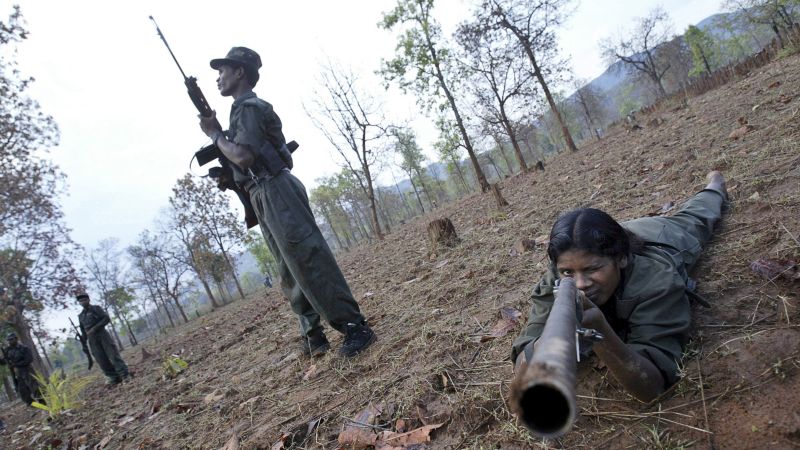
Table of Contents
The Final Retreat from the Red Corridor
Papa Rao emerged from the dense jungles of central India not as a conquering revolutionary, but as a man out of time. Clad in a faded checkered shirt and scuffed sports shoes, he carried a rifle and a $26,000 bounty on his head. Behind him followed a small troop of men and women armed with L1A1 and Lee-Enfield rifles—weapons that belong more in a museum than a modern conflict zone. They were the remnants of the Maoist insurgency, and they were walking toward a surrender ceremony.
For decades, this movement—known in India as the Naxalites—represented the last gasp of a global 20th-century revolutionary fervor. Inspired by the doctrines of Mao Zedong, these insurgents sought to overthrow the Indian state through protracted people’s war, aiming to replace a capitalist democracy with a classless utopia. At its peak nearly two decades ago, the insurgency was labeled the country’s most significant internal security threat, creating a volatile belt of violence known as the ‘Red Corridor’ across central and eastern India.
The scene of Rao’s surrender in Chhattisgarh was a stark contrast to the ideology of the jungle. Former combatants stood before a backdrop announcing their ‘return to the mainstream,’ while their antiquated weaponry was laid out on blue cloth like curated exhibits. In a choreographed gesture of state absorption, each former rebel was handed a rose and a copy of the Indian constitution.
The Mechanics of a Dying Rebellion
The Naxalite movement began in 1967 in the village of Naxalbari, born from a peasant uprising against oppressive landlords. While the movement drew ideological inspiration from Beijing, the tactical execution was purely local: hit-and-run raids, bombings, and the systematic targeting of police stations. For the Adivasi tribal communities, the rebels provided a violent alternative to the systemic neglect and harassment by the Indian Forest Department and rural administrators.
Sukhmati Dhruv, 45, who joined the movement in her teens, recalled a landscape defined by poverty and predation. “They used to collect tax on building houses, they used to collect tax on chopping wood,” she told CNN, describing the oppressive environment that made the rebels’ promise of liberation appealing. The strategy was simple: raid a police station, steal two weapons, and vanish back into the canopy. Success was measured in small-arms acquisitions and the ability to maintain mobility against a numerically superior state force.
The Asymmetric Shift
The collapse of the movement is not merely a result of military pressure, but a failure of the insurgency to adapt to the 21st century. While the Maoists relied on the invisibility of the jungle and outdated bolt-action rifles, the Indian state has modernized its surveillance and counter-insurgency capabilities. The asymmetric advantage that once favored the guerrilla—knowledge of the terrain and surprise—has been eroded by better intelligence and improved infrastructure in the hinterlands.
Furthermore, the economic landscape has shifted. India’s booming capitalist economy has created a gravitational pull that ideology can no longer resist. The promise of a theoretical utopia is losing ground to the tangible reality of economic integration and state-led development. The ruling government has signaled that the era of the Naxalites is over, claiming the movement will be completely eradicated this year as rank-and-file fighters increasingly choose surrender over starvation in the bush.
As the remaining cadres lay down their arms, the ‘Red Corridor’ is fading into a historical footnote. The rebellion, once a terrifying prospect for New Delhi, has been defeated not just by the bullet, but by the slow, relentless march of modernization and the failure of a century-old ideology to offer a viable alternative to the modern state.