The Ammonia Gap: How Conflict in the Strait of Hormuz is Stress-Testing EU Agriculture
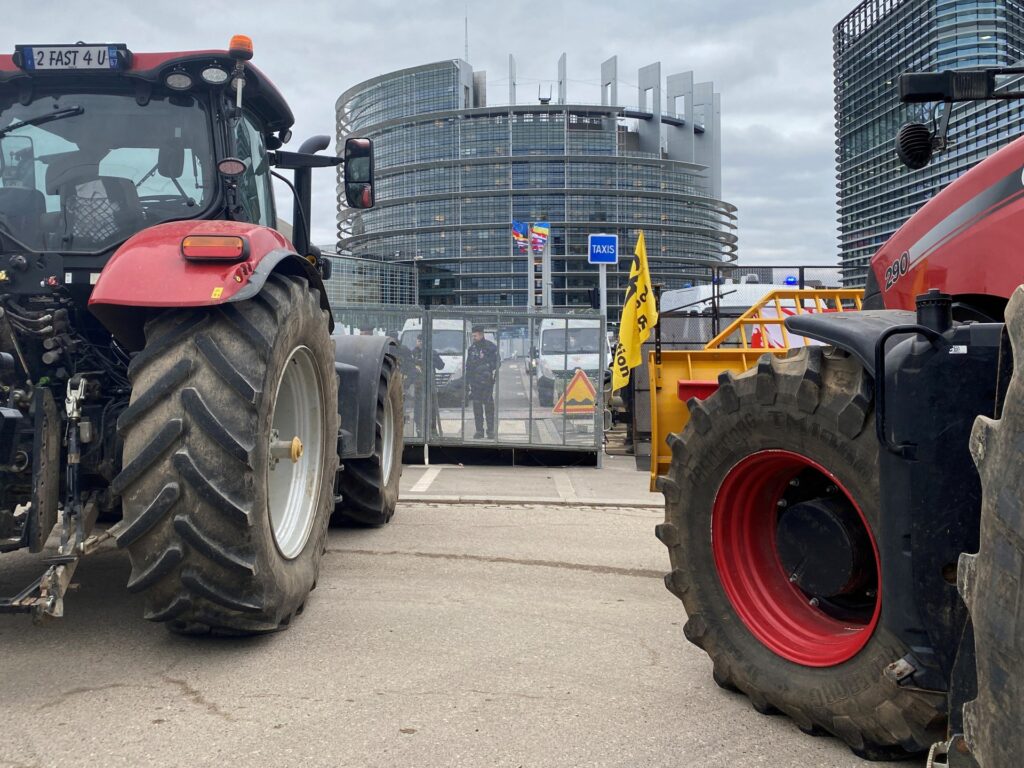
Table of Contents
Brussels Scrambles as Gulf Volatility Hits Nitrogen Costs
European Union agriculture ministers have convened in Brussels to address a growing vulnerability in the continent’s food security: the skyrocketing cost of synthetic fertilisers. While the EU is not the primary destination for the volume of goods flowing through the Strait of Hormuz, the geopolitical fallout from the US-Israel war on Iran has triggered a price contagion that is hitting European farmers where it hurts most—the bottom line.
The European Commission is now pushing a comprehensive Fertiliser Action Plan designed to insulate growers from extreme price volatility. The move comes as nitrogen fertiliser prices in Europe have surged approximately 70% above their 2024 average. Though the direct physical shortage is less acute in Europe than in South Asia or Africa, the economic ripple effect is significant. The Strait of Hormuz typically handles one-third of the world’s seaborne fertiliser trade; when that artery is constricted, global benchmarks rise, regardless of where the fertilisers are actually landing.
The Gas-Fertiliser Feedback Loop
To understand why a conflict in the Middle East disrupts a farm in Ireland or Poland, one has to look at the chemistry of production. Nitrogen fertilisers are produced using natural gas as a primary feedstock. When instability in the Gulf pushes global gas prices higher, the cost of domestic production within Europe climbs simultaneously.
This is a precarious dynamic the EU encountered during the 2022 Russian invasion of Ukraine, which saw several European plants shutter or scale back operations because production simply ceased to be profitable. The current crisis has reignited these fears, proving that Europe’s shift away from Russian and Belarusian imports has not yet solved its underlying energy dependency.
A Bloc Divided by Geography and Policy
The impact of the current crisis is not uniform across the member states, creating a friction point within the Commission’s deliberations. Ireland, for instance, is particularly exposed. With minimal domestic production and a livestock-heavy farming system that relies on nitrogen for grassland maintenance, the Irish agricultural sector is essentially at the mercy of international price swings. In 2025, Ireland imported 1.7 million tonnes of fertiliser, leaving its farmers vulnerable to the current spikes.
In contrast, Nordic nations like Finland and Sweden are leaning into “total defence” strategies. Finland has long maintained strategic stockpiles of fuel and fertiliser, while Sweden is currently expanding its reserves of seeds and grains as part of its post-NATO accession security framework.
The policy response in Brussels is also facing internal resistance. Poland and Germany, which host significant nitrogen production facilities, are hesitant to support the removal of import levies, fearing it would undercut their own domestic industries. Meanwhile, France and Italy are lobbying for exemptions from the Carbon Border Adjustment Mechanism (CBAM), arguing that the carbon levy is an undue burden during a supply crisis.
The Path to Decoupling
Commission President Ursula von der Leyen has framed the new action plan as a transition toward a “stronger European fertiliser industry.” The immediate relief package includes:
- Tariff Suspensions: The EU has suspended duties (ranging from 5.5% to 6.5%) on nitrogen fertilisers, including urea and ammonia, from non-Russian and non-Belarusian sources—a move estimated to save importers roughly 60 million euros.
- Liquidity Support: Increased flexibility in advance payments under the Common Agricultural Policy (CAP) to help farmers manage cash flow.
- Bio-based Pivots: Incentives for farmers to shift from synthetic nitrogen to bio-based alternatives and more precision-focused application methods.
Despite these measures, the tension remains high. Irish Agriculture Minister Martin Heydon has warned that the rising costs of production will inevitably impact the economic sustainability of European farmers and, potentially, the price of food for consumers. While officials insist there is no immediate food price shock—largely because many farmers are still using stocks purchased before the conflict—the long-term trajectory suggests a costly restructuring of how Europe feeds itself.