Spotify pivots to ‘Personal Podcasts’ and AI Q&A in bid to deepen user engagement
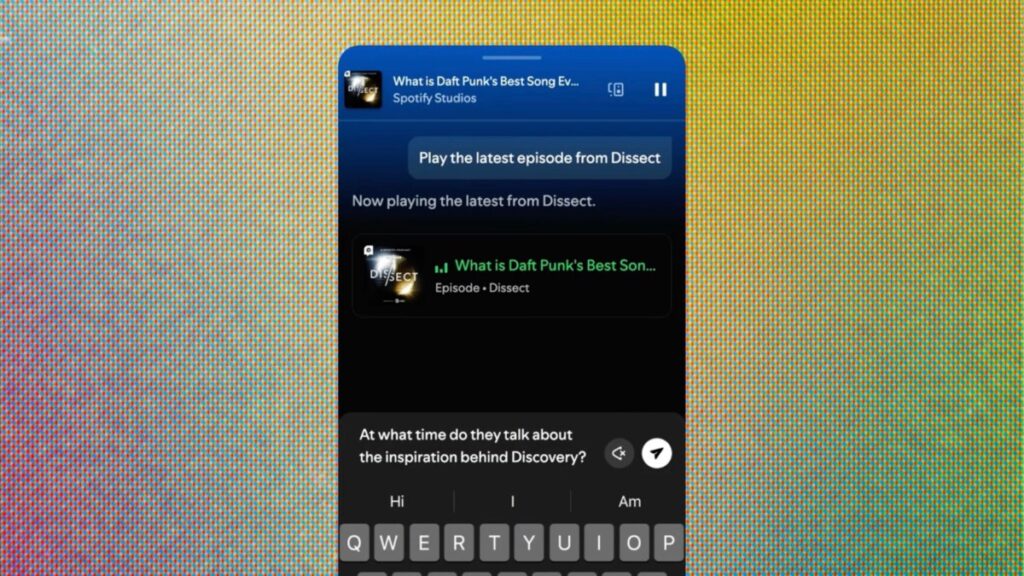
Table of Contents
Beyond the Play Button
For years, Spotify has functioned primarily as a distribution hub—a place where users go to find and consume content curated by others. But the company is now attempting to shift that dynamic, moving from a passive listening experience to one where the AI actually builds the content for the user. The cornerstone of this shift is a new ‘personal podcast’ feature that allows users to generate audio briefings based on custom prompts or specific datasets.
The rollout follows a recent experiment involving a GitHub-based command-line tool for Claude Code and Codex, which allowed early testers to synthesize podcasts and save them directly to their libraries. Now, Spotify is bringing that functionality directly into the app. Users can effectively commission their own audio content, requesting things like a five-minute primer on macroeconomic trends or a daily summary of local concert dates for their favorite artists.
This isn’t just about text-to-speech. Spotify is allowing users to upload PDFs, links, and raw text, then select a custom voice to narrate the material. The move puts Spotify in direct competition with Google’s NotebookLM and the ElevenLabs reader, as well as Huxe, an app built by former NotebookLM developers. The goal is to turn the app into a productivity tool, not just an entertainment source.
The ‘Studio’ Ecosystem
To support these ambitions, Spotify has launched a dedicated desktop application called Studio by Spotify Labs. Unlike the standard consumer app, Studio is designed to integrate with a user’s email and calendar. This allows the AI to synthesize real-world schedules and communications into personalized morning briefings, effectively attempting to replace the traditional news podcast with a hyper-individualized audio stream.
While the personal podcasting tools target the ‘creator’ in every user, a new AI-powered Q&A feature targets the listener. Currently rolling out to Premium mobile users in the U.S., Sweden, and Ireland, the tool allows listeners to ask questions about a specific episode in real-time. If a host mentions an obscure historical event or a complex technical concept, users can prompt the AI for a clarification without leaving the audio stream.
This interactive layer is a clear response to the evolving landscape of AI search and discovery. It mirrors Google’s recent ‘Ask YouTube’ functionality, suggesting that the industry is moving toward a model where the media we consume is no longer a static file, but a conversational interface.
New Rails for Creators
While the AI tools focus on the end-user, Spotify is also updating its infrastructure for professional podcasters. The company is expanding its creator sponsorship tool, streamlining how hosts manage brand partnerships. More importantly, Spotify is introducing a native subscription mechanism, allowing creators to lock exclusive content and experiences behind a paywall.
This brings Spotify’s monetization suite closer to the models used by Instagram and Facebook, acknowledging that the ‘creator economy’ requires more flexible revenue streams than traditional ad-reads alone. It’s a strategic pivot that balances the push toward AI-generated content with the need to keep high-value human creators on the platform.
The company’s push into AI comes at a time when it is also aggressively expanding into video. Spotify reported a 50% year-on-year increase in video podcast streaming, indicating that the company wants to be the primary screen for all forms of long-form digital storytelling, whether that content is filmed, recorded, or entirely synthesized by a machine.