SpaceX’s Starship V3 Marks a Major Leap Forward With Successful Indian Ocean Splashdown
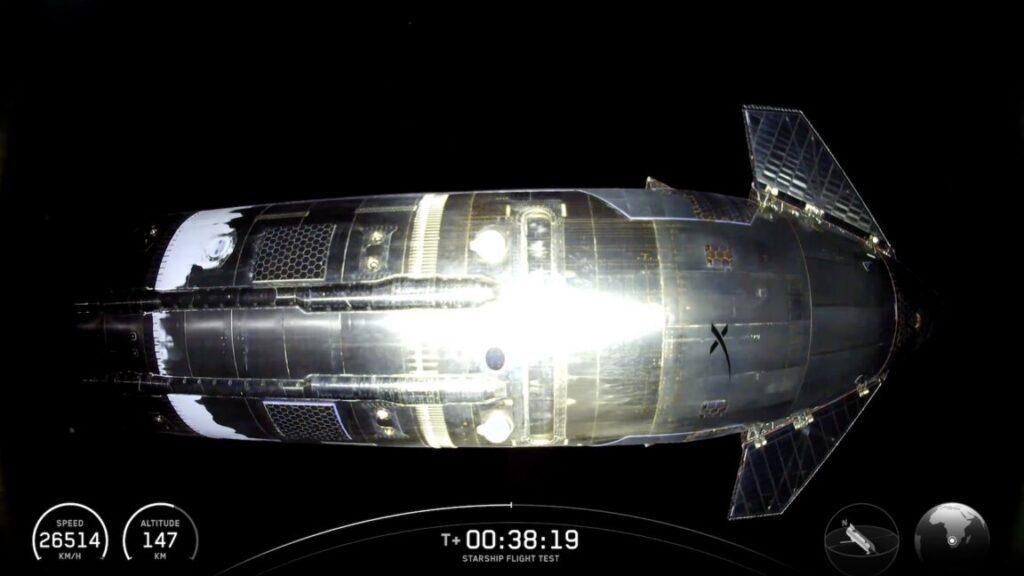
Table of Contents
A New Iteration Takes Flight
After a seven-month hiatus—the longest gap in the program since its inception in 2023—SpaceX returned to the pad at Starbase, Texas, on Friday to debut Starship V3. The launch was more than just a return to flight; it was a rigorous test of the largest rocket ever built, featuring critical hardware upgrades designed to move the company closer to its goal of interplanetary travel and a human return to the Moon.
The 408-foot-tall vehicle, powered by 33 methane-fueled engines, cleared the tower at 5:30 pm CDT, banking eastward over the Gulf of Mexico. Unlike the inaugural flights of V1 and V2, which ended in dramatic structural failures during ascent, V3 maintained its integrity, eventually splashing down on target in the Indian Ocean roughly an hour later.
The successful trajectory provided an immediate win for the engineering team. Elon Musk took to X to congratulate the crew, calling the flight a “goal for humanity,” while SpaceX COO Gwynne Shotwell emphasized that the successful debut of a brand new vehicle brings the future of deep-space exploration significantly closer.
Heat Shields and Atmospheric Reentry
One of the most scrutinized aspects of the flight was the performance of the ship’s heat shield. In previous iterations, the plasma-induced heat of reentry often compromised the ship’s aerodynamic flaps or melted through the protective tiles. This time, onboard cameras revealed a different story. The flaps remained intact throughout the descent, and the vehicle successfully executed a series of banking maneuvers to simulate the path it will eventually take when returning to the Texas coast.
The descent culminated in a high-stakes transition from horizontal to vertical flight. The Starship executed a precision landing burn, throttling down from three engines to one as it settled into the water. While the ship predictably tipped over and exploded upon impact—a standard outcome for these uncrewed test flights—the data gathered from the flip maneuver and the splashdown is a vital milestone for the program.
Payload and Power: The Raptor 3 Debut
Beyond the flight path, Starship V3 served as a proof-of-concept for a new, faster payload deployment mechanism. Designed specifically for the company’s flat-packed Starlink satellites, the “Pez-like” dispenser released 20 mockups and two specialized camera-equipped spacecraft to inspect the hull in vacuum. This upgrade is central to SpaceX’s business model, as V3 is rated to haul up to 100 metric tons into low-Earth orbit—double the capacity of its predecessor.
However, the flight wasn’t without its hiccups. The mission marked the first real-world application of the Raptor 3 engine, which boasts higher thrust and improved efficiency. Despite the upgrades, two engines—one on the Super Heavy booster and one on the Starship upper stage—failed during the sequence. While this sounds alarming, SpaceX designed the system with “engine-out capability,” allowing the rocket to compensate by burning the remaining engines longer to maintain the planned trajectory.
Infrastructure and the NASA Connection
The launch also served as a stress test for Starbase’s second launch pad. Initial inspections suggest the facility weathered the 18 million pounds of thrust with no significant damage, providing a blueprint for future pads at Cape Canaveral in Florida.
NASA is watching these tests with intense focus. With NASA Administrator Jared Isaacman attending in person, the agency’s reliance on Starship as the Human Landing System (HLS) for the Artemis missions makes every successful splashdown critical. While the Super Heavy booster failed to complete its return maneuvers and ended in a high-speed impact in the Gulf, the overall success of the upper stage keeps the timeline for lunar missions cautiously on track.