SpaceX’s Starship V3 Hits Major Milestones in Successful Debut Flight
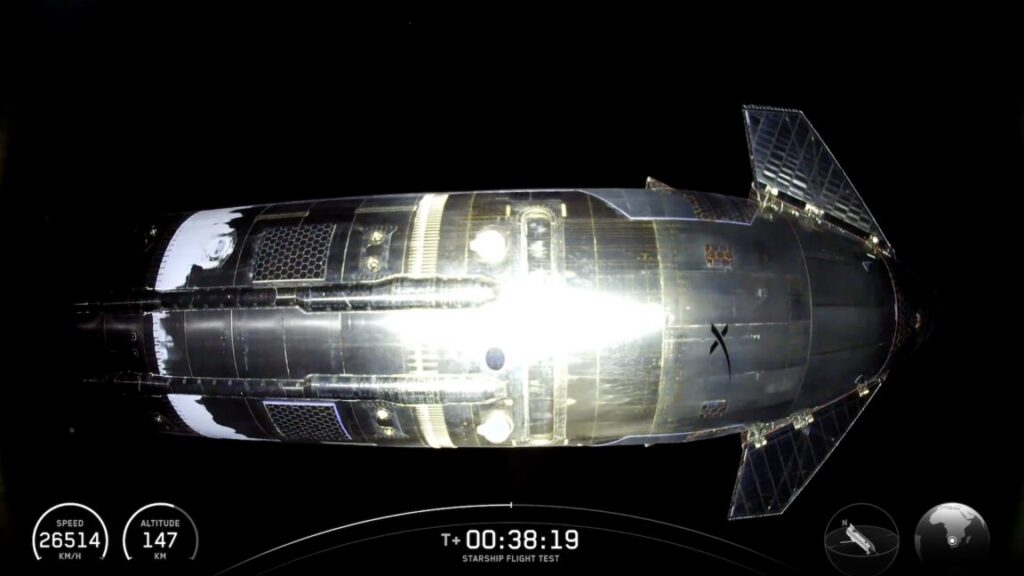
Table of Contents
A New Baseline for the Mega-Rocket
SpaceX has successfully flown the first iteration of Starship V3, marking a significant leap in the development of the world’s largest rocket. Launching Friday afternoon from the Starbase facility in South Texas, the 408-foot stainless steel vehicle cleared the tower at 5:30 pm CDT, heading east over the Gulf of Mexico. Unlike the inaugural flights of the V1 and V2 versions—both of which ended in mid-air breakups—V3 maintained structural integrity throughout the majority of its journey, eventually splashing down on target in the Indian Ocean.
The flight was not just a test of altitude, but a validation of several critical engineering upgrades. Most notably, the ship’s heat shield and aerodynamic flaps remained intact during the brutal reentry phase. Onboard imagery showed the vehicle executing a series of banking maneuvers over the Indian Ocean, simulating the precise flight path required for future missions returning to Texas. The descent culminated in a dramatic flip from horizontal to vertical, followed by a landing burn that transitioned from three engines down to one, resulting in a gentle water landing northwest of Australia.
Pushing the Payload Ceiling
Beyond the flight dynamics, SpaceX used the mission to test a revamped payload deployment mechanism. The new system is specifically designed for the high-volume release of flat-packed Starlink satellites. During the ascent to a peak altitude of 121 miles, the dispenser successfully released 20 mockups of next-generation Starlink satellites along with two specialized inspector spacecraft equipped with cameras.
According to SpaceX, the V3 architecture is designed to haul up to 100 metric tons into low-Earth orbit—effectively doubling the capacity of the previous V2 model. This increase in lift capacity is central to NASA’s Artemis program, where Starship is slated to serve as the human-rated lunar lander.
Raptor 3 Performance and Engine Anomalies
The flight also served as the first real-world test for the Raptor 3 engines. These redesigned powerplants boast higher thrust and improved efficiency, with the Super Heavy booster’s 33 engines generating roughly 18 million pounds of thrust. For context, that is nearly double the power of the Space Launch System (SLS) rocket used in NASA’s recent Artemis II mission.
The flight was not without its glitches. Two Raptor engines—one on the Super Heavy booster and one on the Starship upper stage—failed during the launch sequence. However, the vehicle’s “engine-out” capability allowed it to compensate. The Starship upper stage simply extended its burn time with the remaining five engines to maintain its trajectory. The booster, however, suffered a more critical failure during its boost-back burn, preventing a controlled splashdown near Starbase and resulting in a high-speed impact in the Gulf.
Infrastructure Validation
While the focus remains on the rocket, the launch also tested SpaceX’s new second launch pad at Starbase. After a seven-month gap between flights—the longest since April 2023—the new facility weathered the intensity of the V3 liftoff without significant damage. This is a key win for the company, as the Starbase pad serves as the architectural blueprint for future launch sites at Cape Canaveral, Florida.
Elon Musk took to X to congratulate the team, calling the mission a “goal for humanity,” while NASA Administrator Jared Isaacman, who witnessed the launch in person, described the event as a “hell of a V3 Starship launch.”


